Horseshoe Crabs Confirmed in Tawi-Tawi, a Second Philippine Province
Interviews with 142 residents place horseshoe crabs in Tawi-Tawi, the second Philippine province known to have them. The species and the threats they face.
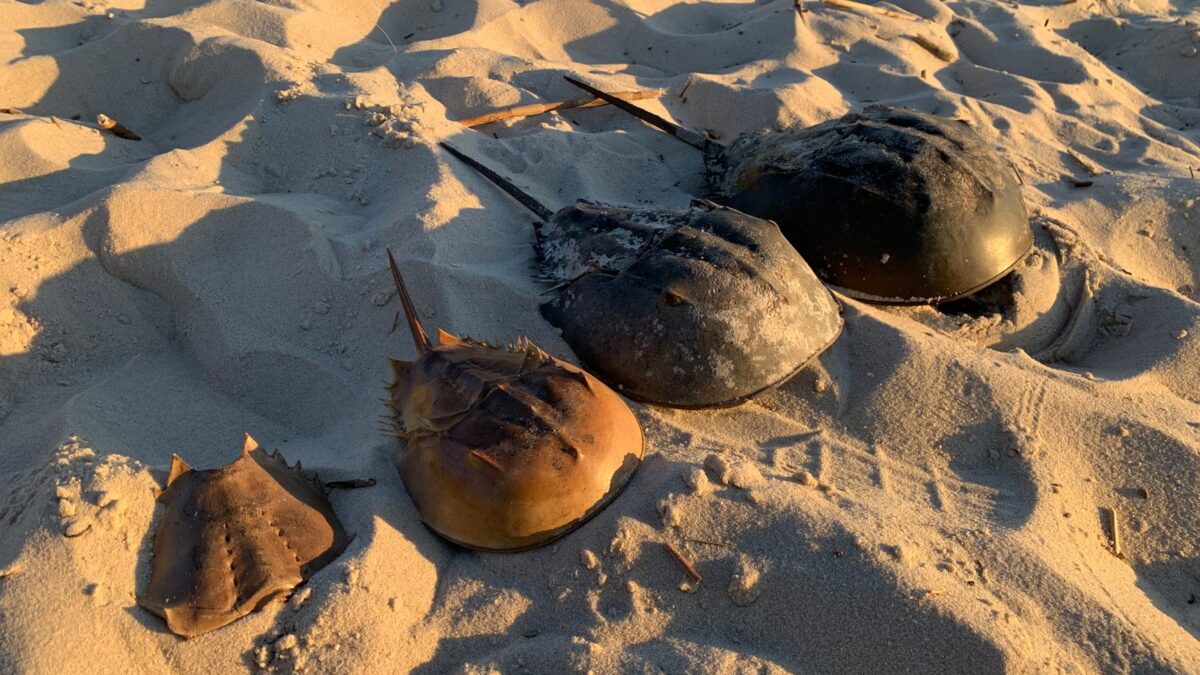
Horseshoe crabs live in Tawi-Tawi, an island province in the southern Philippines, according to a study based on interviews with 142 local residents. Until now, scientists had documented the animals in only one Philippine province, Palawan, Mongabay reported.
The residents described two distinct kinds of horseshoe crab. One resembles the tri-spine horseshoe crab, which the IUCN Red List classifies as endangered, and more than half of the people interviewed said they think local numbers are going down.
How a market visit led to a survey of 142 people
The project began in December 2023, when Ivane Pedrosa-Gerasmio, an associate professor in marine sciences at the Mindanao State University-Iligan Institute of Technology, visited a market in Bongao, the provincial capital. Locals there told her they had seen horseshoe crabs. She passed the tip to her student Quesie Tolero Omnos, and the two decided to look into it. Pedrosa-Gerasmio is the study’s corresponding author.
Instead of searching the coast themselves, the team asked the people who know it best. They spoke with fishers and coastal residents in four municipalities about where and how often they saw the animals, whether they thought the population was changing, and how they caught and ate them. Locals call horseshoe crabs “bangkas,” a name that refers to their boat-like shape.
Residents reported seeing the crabs on sandy beaches, in mangroves, among rocky coral and seagrass, and in water 10-15 meters (32.8-49.2 feet) deep. Sightings came from Bongao and from other coastal towns, including Simunul, Sitangkai and Panglima Sugala.
Which species live in Tawi-Tawi
From the descriptions, the researchers matched the animals to two species: the tri-spine horseshoe crab (Tachypleus tridentatus) and the mangrove horseshoe crab (Carcinoscorpius rotundicauda). The mangrove species is listed as data deficient, a category used when too little is known to judge how threatened it is.
These identifications rest on what people said they saw, not on specimens collected and examined by the team. Omnos described the two species as “potentially documented,” and she framed the work as baseline information for later research.
Why it matters for animals older than the dinosaurs
Horseshoe crabs are often called “living fossils.” Their lineage goes back 450 million years, which means it outlasted the dinosaurs. Only four species exist today, and three of them live in Asia.
All Asian horseshoe crab populations are shrinking, Mongabay reported. The threats vary by country: habitat loss in Japan, bycatch and beach litter in Indonesia, and overharvesting, pollution and coastal reclamation in China.
In Tawi-Tawi, residents told the researchers that people catch the crabs for medicine, including remedies for asthma and other illnesses, and for rituals meant to help people believed to be possessed by bad spirits. Interviewees offered possible reasons for the decline they perceive: collection for medicine, climate change and industrial pollution. These are local opinions, not measured population counts.
What scientists want to learn next
Omnos said the two species deserve protection because of their role in the ecosystem, their possible pharmaceutical uses and their cultural value to local communities. She told Mongabay that conservation should start with solid evidence on where the crabs occur, how many there are and what threatens them. That kind of data, she said, could help local government units write management plans grounded in science.
Source: Mongabay