Shrinking Water Can Spread Disease, Review of 100 Studies Finds
A review of 100 studies finds drought can raise some disease risks as animals and pathogens crowd into shrinking water. Brazil and Senegal show how.
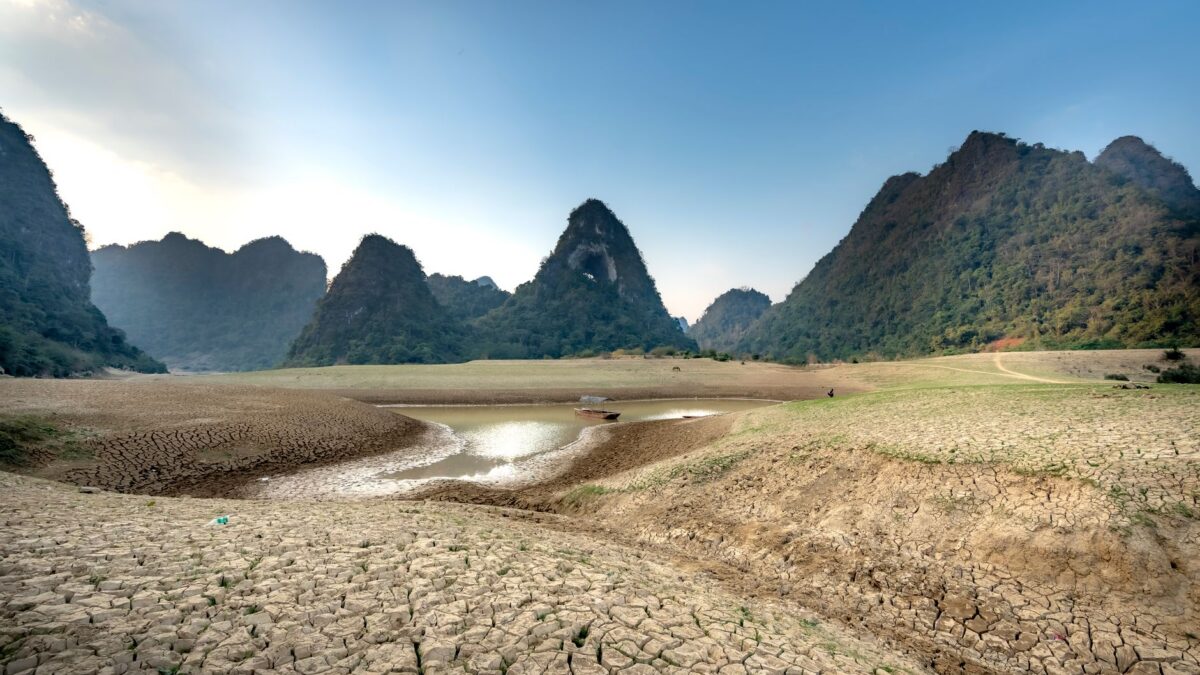
Drought can make some infectious diseases more common, according to a review of 100 earlier studies published in the journal Trends in Ecology & Evolution. When ponds and rivers shrink, animals, insects and the microbes they carry pack into the water that is left, and infections pass more easily.
The authors call this the drought-disease paradox. It matters because drought is growing: in 2025 it affected about 30% of the planet’s land surface, close to double the area affected in 2000, Mongabay reported.
How 100 studies point to a middle danger zone
The review was written by Pieter Johnson, a disease ecologist at the University of Colorado Boulder, and Tara Stewart Merrill, an aquatic disease ecologist at the Cary Institute of Ecosystem Studies (DOI 10.1016/j.tree.2026.07.002). They did not run a new experiment. They looked only at studies of parasites and pathogens that need water for part or all of their life cycle.
Scientists long assumed that less water would mean less waterborne disease. The review found a more mixed picture. Drought hurts some water-dependent pathogens, but others do better. Stewart Merrill told Mongabay the risk peaks in the range between a water body’s normal level and its complete drying, which she described as a “counterintuitive sweet spot” for aquatic disease.
She listed three repeating processes. Drought pushes hosts together, which raises transmission. It changes water quality in ways that affect whether hosts and pathogens survive. And when it dries up whole ponds or streams, it can wipe out host and pathogen populations entirely.
Why mosquitoes can thrive in a dry year
Johnson told Mongabay that drought simplifies aquatic habitats, leaving fewer predators and competitors and sometimes more nutrients, conditions that can feed mosquito growth. Small pools of standing water suit mosquito larvae. If those pools lose the species that eat or compete with them, more adult mosquitoes can emerge and more of them can pick up and pass on infections.
A separate study in Science Advances, led by Jamie Caldwell of Princeton University, tied Brazil’s 2017 urban yellow fever outbreak to drought. The 2014-2017 drought in Brazil was the worst in at least 80 years. Combined with deforestation and land use change, it drove forest mosquitoes, howler monkeys and marmosets toward cities in search of water. Yellow fever normally stays in Brazil’s forests. The outbreak infected more than 2,000 people and killed 700.
Predators as a check on disease
Stewart Merrill pointed to the Senegal River as an example of how ecology can work in both directions. After the Diama Dam was finished in 1986, it blocked native river prawns from moving upstream. The prawns eat the snails that carry schistosomiasis, a disease caused by parasitic blood flukes. Positive test results in the basin rose from 1.9% to 71.5% between 1988 and 1989.
Once prawns were brought back to parts of the river, according to a 2015 study in the Proceedings of the National Academy of Sciences, infected snails in those areas fell by 80%, infections dropped by about 18% and roughly 50% fewer parasite eggs were found in infected people. People also fish and eat the larger prawns.
Dragonflies could play a similar part against mosquitoes. Their nymphs eat mosquito larvae underwater, and a single adult can eat dozens of mosquitoes a day. A 2023 meta-analysis in the Journal of Animal Ecology found dragonflies and damselflies can control mosquitoes. Yet 16% of dragonfly and damselfly species are at risk of extinction, partly because of farming practices, deforestation and falling water levels.
Why it matters
Waterborne disease already kills one child every 90 seconds, Mongabay reported. Over the past 30 years, 77.6% of global land was drier than in the 30 years before. The review notes the paradox has been reported for anthrax, cholera, dengue, trypanosomiasis, hemorrhagic disease, whirling disease and black spot disease, and Johnson said avian botulism can also rise with drought.
The work is a synthesis of past research, so it sets out a framework rather than a forecast for any one place. Johnson said in a press release that some infections will vanish locally while others may spread intensely enough to offset those losses. Caldwell said vaccination, vector control and conservation will all be needed to guard against future outbreaks, and Stewart Merrill argued that a shared theory of how drought shapes parasites could help scientists anticipate outbreaks like the one in Brazil.
Source: Mongabay