Cougar-Size Mammal Left 130-Million-Year-Old Paw Prints in Brazil
Five-inch paw prints in 130-million-year-old Brazilian rock suggest a cougar-size mammal lived among dinosaurs, challenging an old idea.
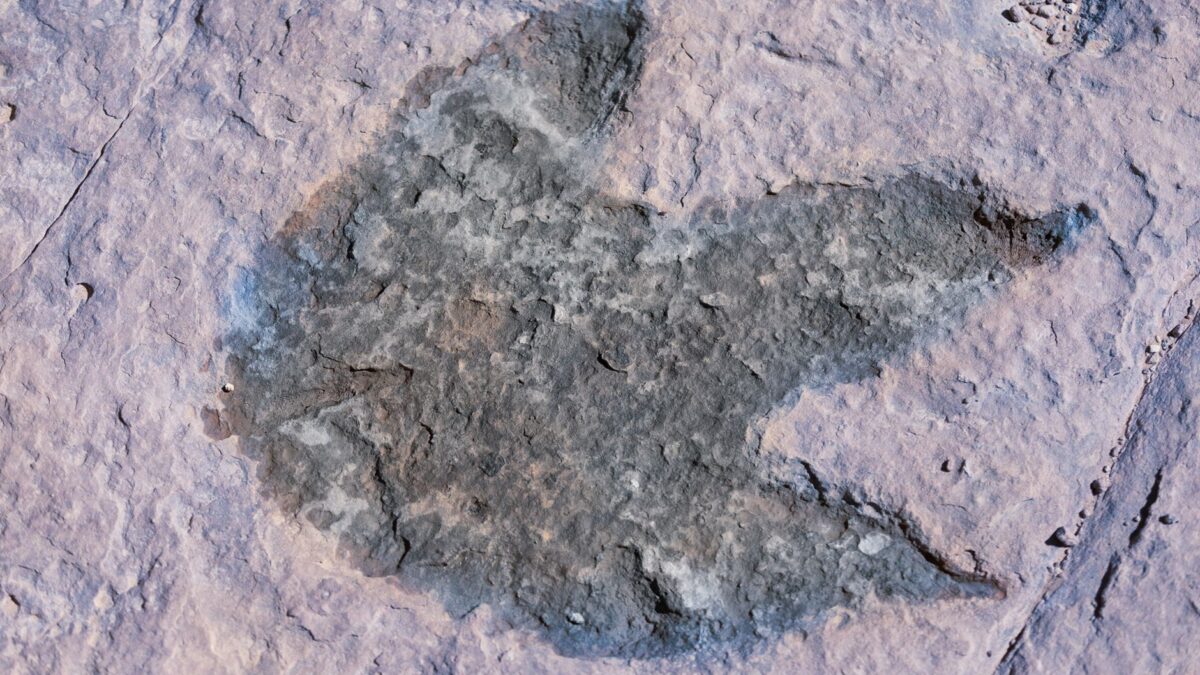
Fossil paw prints about five inches wide, found in 130-million-year-old rock in southern Brazil, point to a mammal roughly the size of a cougar living in the age of dinosaurs. The tracks are nearly twice as large as the next-biggest mammal prints from the same rock layers, according to a study in the Journal of South American Earth Sciences reported by Smithsonian Magazine.
If the reading holds, the animal was larger than any other mammal known from that time. That cuts against a picture paleontologists have used since the 19th century, in which mammals stayed small and hid from dinosaurs until an asteroid wiped the giant reptiles out.
How a set of tracks gives away body size
Quarry workers uncovered the prints in 2019 in ancient sand dune deposits. No bones were found with them, so the species that made the marks is still unknown. Hermínio Ismael de Araújo-Júnior, a paleontologist at Rio de Janeiro State University and a co-author of the study, said the size of the prints stood out right away.
By studying the shape and spacing of the impressions, the team concluded that the animal moved on all four legs, and that those legs were short and ended in paws. From the track size, they estimated a body about as big as a cougar. This is an inference from trace fossils, which record how an animal walked, not from a skeleton.
What other scientists say about the limits
Elsa Panciroli, a paleontologist at National Museums Scotland who was not part of the study, called the find “very exciting” if the prints belong to mammals or their close relatives. That condition matters: footprints alone cannot settle exactly which group the trackmaker belonged to. Panciroli also noted that the fossil record is very incomplete, and that badger-size mammals from the same broad era have already turned up elsewhere in the world.
Most known mammals from the Mesozoic, the age of dinosaurs, were smaller than a housecat. De Araújo-Júnior said competition with dinosaurs and their predation may well have shaped mammal evolution, but that the Brazilian tracks show those pressures did not set a fixed upper limit on body size. He added that large size may have appeared earlier, and perhaps more often, than skeletons alone suggest.
Why it matters for the story of early mammals
The prints add to a short list of finds showing that some mammals and their relatives grew big while dinosaurs dominated. In 2018, researchers Tomasz Sulej and Grzegorz Niedźwiedzki named Lisowicia, a plant-eater from roughly 205-million-year-old rock in Poland. It stood over eight feet tall at the shoulder and weighed more than five tons. It was not a true mammal but belonged to the synapsids, the wider group mammals came from.
In 2023, a team led by Gang Han of Hainan Tropical Ocean University described a fossil from eastern China, about 125 million years old, in which a badger-like mammal called Repenomamus had its teeth sunk into the ribs of a small horned dinosaur roughly three times its size. Earlier Repenomamus fossils had already been found with baby dinosaur bones in their stomachs.
The rock formation in Brazil seems to lack large meat-eating dinosaurs. That could mean mammals were the biggest predators there, though the evidence for this is still limited to the tracks.
Small mammals still outnumber big ones
Panciroli pointed out that small animals dominate mammal life even now. Of more than 6,495 living mammal species, over 2,552 are rodents, more than 400 are shrews and over 1,300 are bats. As Smithsonian Magazine notes, a scarcity of large mammals in Mesozoic fossils does not mean none existed, and the researchers say bones and teeth of other large mammals from that era may still be waiting in the rock.
Source: Smithsonian Magazine