NASA Mars Missions Explained: What Is Working at Mars Now
Two rovers and two orbiters are still working at Mars for NASA. Here is what each one does, which missions have ended, and what the agency has announced next.
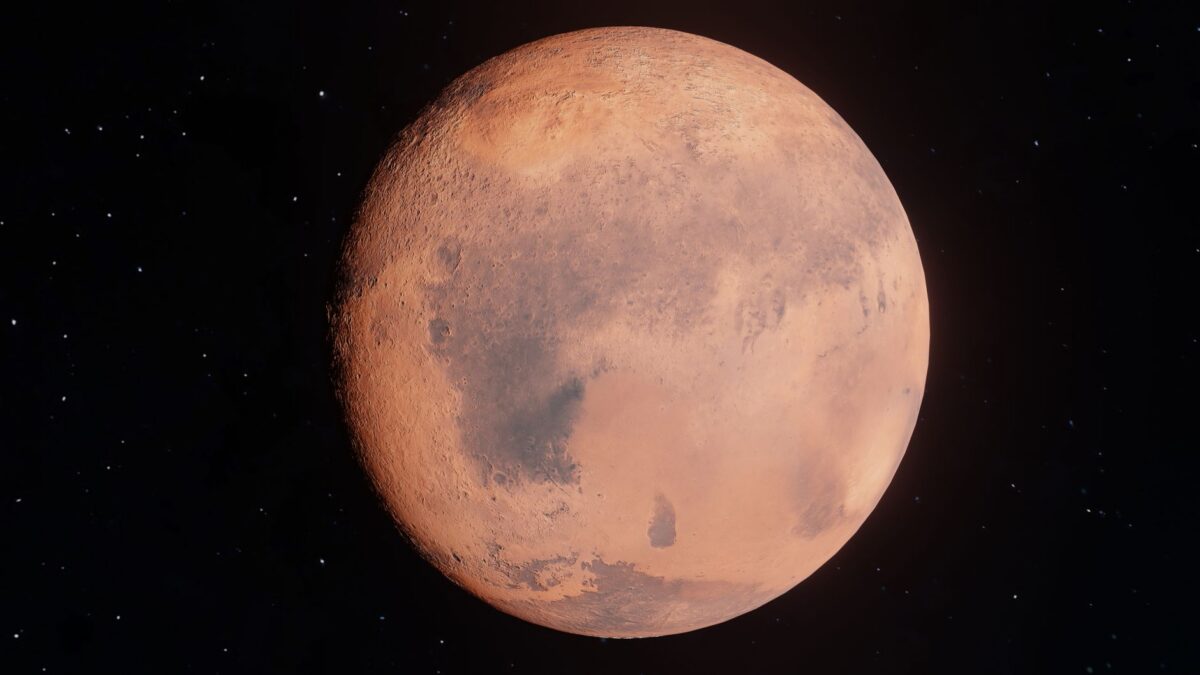
NASA has four active missions at Mars as of November 2026: the Perseverance and Curiosity rovers on the surface, and the Mars Reconnaissance Orbiter and Mars Odyssey in orbit. The MAVEN orbiter and the Ingenuity helicopter have ended. New NASA-backed missions, including a communications orbiter and a set of helicopters, are planned for launch around 2028.
Which NASA spacecraft are working at Mars right now?
Four NASA spacecraft are operating at Mars, according to the agency’s Mars exploration page. Each has a different job, and the two orbiters also relay data from the rovers to Earth.
| Mission | Type | Arrived | Main job |
|---|---|---|---|
| Mars Odyssey | Orbiter | Oct. 24, 2001 | Maps minerals and hydrogen; relays rover data |
| Mars Reconnaissance Orbiter (MRO) | Orbiter | March 10, 2006 | High-resolution imaging, signs of past water, landing site scouting; relays data |
| Curiosity | Rover | Aug. 6, 2012 | Studies whether Gale Crater could once have supported microbial life |
| Perseverance | Rover | Feb. 18, 2021 | Searches for signs of ancient life in Jezero Crater and collects rock samples |
European spacecraft at Mars, including Mars Express and the ExoMars Trace Gas Orbiter, also help relay data from NASA’s rovers.
What are the Perseverance and Curiosity rovers doing?
Perseverance is exploring the rim and surroundings of Jezero Crater, an ancient lake bed, and sealing rock and soil samples in tubes. NASA says it is “the first step of a proposed roundtrip journey” to return Mars samples to Earth. NASA has reported that Perseverance has now driven farther than any other vehicle on another world.
Curiosity has been climbing Mount Sharp inside Gale Crater since 2012. Its instruments read the layers of rock like pages in a record of how Mars’s climate and water changed over time. Both rovers run on nuclear power sources, so they do not depend on sunlight or dust-free solar panels.
Which NASA Mars missions have ended?
MAVEN, which studied how Mars lost most of its atmosphere to space, ended in 2026. The spacecraft was last heard from on Dec. 6, 2025, after it passed behind Mars, and NASA announced on June 3, 2026, that a review board found it was not recoverable (NASA). It had worked in orbit for more than 11 years.
Ingenuity, the small helicopter that flew with Perseverance, ended its mission in January 2024 after rotor damage. It had been designed for up to five test flights and flew 72.
Earlier missions that have ended include the InSight lander, the Phoenix lander, the Spirit and Opportunity rovers, and the Mars Global Surveyor orbiter.
What is the status of Mars Sample Return?
NASA has no funded plan to bring Perseverance’s samples to Earth as of November 2026. The Mars Sample Return program planned with the European Space Agency ran into large cost increases, and an independent review in 2023 found it far over budget. The congressional agreement on NASA’s fiscal 2026 budget stated that it “does not support the existing Mars Sample Return” program.
The samples themselves remain safe in their tubes, some carried aboard Perseverance and some left in a depot on the surface. NASA’s Mars pages still describe sample return as a proposed future step, without a date. Any new plan would need a decision and funding from NASA and Congress.
Which Mars missions are planned next?
NASA has announced several Mars missions for the late 2020s, many built with commercial partners:
- ESCAPADE: twin small spacecraft built by Rocket Lab for a University of California, Berkeley science team. They launched on Blue Origin’s New Glenn on Nov. 13, 2025, and use an Earth flyby in November 2026 on their way to Mars, where they will study how the solar wind strips away the atmosphere.
- Mars Telecommunications Network: in September 2026 NASA picked Blue Origin to build and operate a communications orbiter, under a contract worth up to about $700 million, with delivery due no later than Dec. 31, 2028.
- Aeolus: a NASA instrument suite to map Martian winds, temperatures, dust and clouds, carried by a Relativity Space spacecraft and rocket under a public-private partnership announced in June 2026. It is scheduled to launch in 2028.
- SkyFall: a JPL-managed mission that will drop three helicopters, based on the Ingenuity design, during descent to map hidden ice and study weather. NASA plans to launch it in late 2028 aboard the SR-1 Freedom nuclear-powered spacecraft.
NASA’s Mars page also mentions work on a next-generation Mars helicopter and a planned mission to study the moons of Mars. Launch dates for missions this far out often move, so treat these as targets.
When will NASA send people to Mars?
NASA calls Mars its “horizon goal” for human exploration and has not set a date for a crewed landing. The agency’s near-term crewed work centers on the Moon through the Artemis program, which it describes as preparation for Mars. Our explainer on the Artemis program covers the current Moon plans, and the robotic missions above are meant to gather the weather, ice and landing data future crews would need.
Bottom line
NASA’s working fleet at Mars is two rovers, Perseverance and Curiosity, and two orbiters, MRO and Odyssey. MAVEN and Ingenuity are finished, and Mars Sample Return has no funded path as of November 2026. The next wave of NASA-backed missions, from ESCAPADE to SkyFall, leans on commercial partners and targets the late 2020s.
FAQ
How many rovers are on Mars?
Two NASA rovers are active: Curiosity, since 2012, and Perseverance, since 2021. China’s Zhurong rover landed in 2021 but has been inactive since 2022, and several older rovers remain on the surface after their missions ended.
How long does it take to get to Mars?
Most robotic missions take about seven months. Launches are timed to windows that open about every 26 months, when Earth and Mars line up for an efficient trip.
Can I see new pictures from the Mars rovers?
Yes. NASA posts raw images from Perseverance and Curiosity online, usually within days of download, alongside processed images in its official galleries. Our guide on how to follow NASA missions shows where to find them.
What happened to Mars Sample Return?
Congress’s fiscal 2026 budget agreement did not support the existing program after years of cost growth. The samples remain on Mars, and NASA has not announced a funded replacement plan.