Sealed Pompeii Wardrobe Holds Necklace With 24 Amulets and 38 Coins
Archaeologists opened a wooden wardrobe in Pompeii holding 38 coins and a necklace with at least 24 amulets. What was inside and who may have owned it.
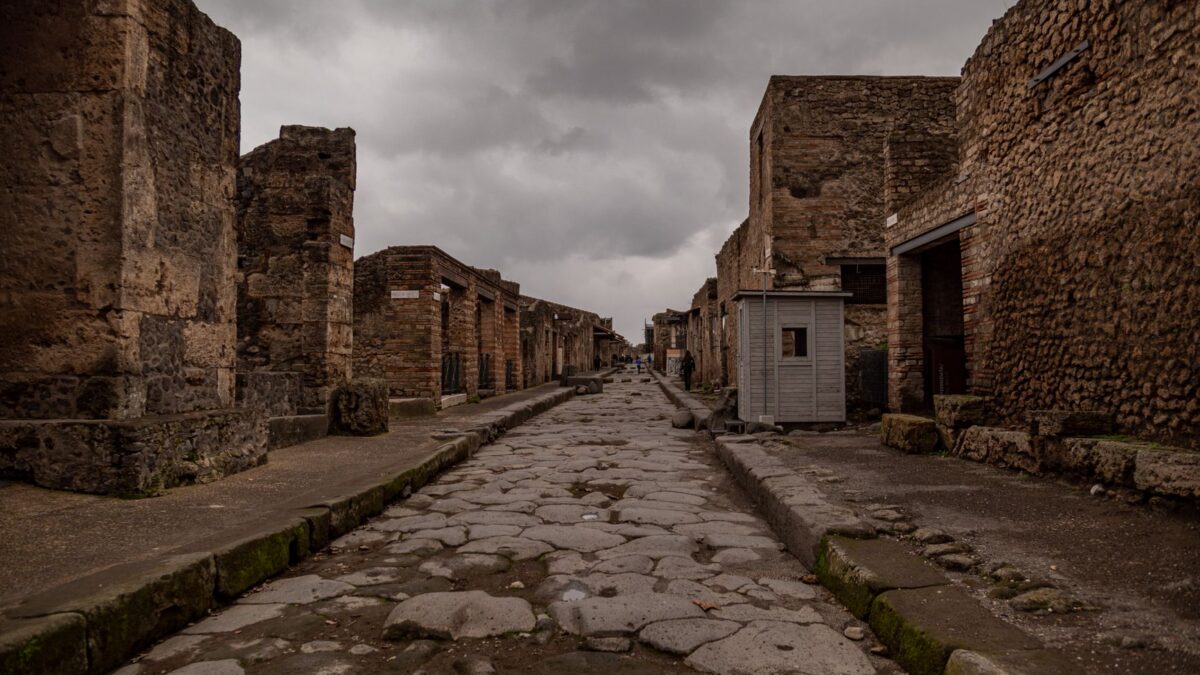
A wooden wardrobe left closed in a Pompeii house since the eruption of Mount Vesuvius in 79 C.E. held a necklace hung with at least 24 small amulets, a stash of 38 coins and dozens of household objects, according to the Archaeological Park of Pompeii. The find, reported by Smithsonian Magazine, Reuters, Discover and the Guardian, gives a close look at what one Roman household kept in a single cupboard.
The large number of valuables left behind suggests the residents fled in a hurry and never came back for their things, the archaeologists said.
Where the wardrobe was found
The cabinet stood in the House of Cornelius Maximus, a building in central Pompeii on one of the city’s busiest streets. The house was first excavated in 1912, and the wardrobe turned up during a new survey of the site. Gabriel Zuchtriegel, director of the archaeological park, and his colleagues described the contents in the park’s online journal.
Two lines of evidence date the house to the city’s final years. Most of the bronze coins were minted under the emperor Nero, who ruled from 54 to 68. The wall paintings belong to the fourth style of Roman fresco, which was in fashion between 20 and 79. The team also found signs that the house was being renovated when the volcano erupted.
Tweezers, perfume and a mouse problem
Several objects belong to what Romans called mundus muliebris, the tools women used for grooming and decoration. The wardrobe held a pair of tweezers, a small mortar for grinding makeup pigments and a glass bottle called a balsamarium that once contained perfume or scented oil. There was also an incense burner and a bronze lamp.
Kitchen and dining ware made of bronze, glass and ceramic filled more of the space. The set included a cup with two handles, six lids of different sizes and several pots. Inside one amphora, a tall storage jar, researchers counted 117 bone fragments that probably came from field mice, a sign the household had rodents.
A wooden box with eight lead weights hints at how someone in the house earned a living. Weights like these could have been used by a trader to balance a set of scales.
The necklace of charms
The most striking object is a crepundia, a necklace of charms that Roman parents often gave to children. Parents chose the pieces to carry personal meaning, and the charms also helped identify a child who got lost. In the Roman playwright Plautus’s comedy Rudens, a father recognizes his missing daughter by the one she wears.
The Pompeii necklace has amulets made of faience (a fine glazed pottery), bone, glass paste and crystal. They show the Roman god Mercury and the Egyptian god Bes, along with hands, feet, pine cones and bunches of grapes. Zuchtriegel told Discover that each piece on its own is common in Pompeii, but the combination is unusual.
The owner may have been an adult who had kept the necklace since childhood. Zuchtriegel told the Guardian it could have reminded its owner of parents living far away, since people in the Roman Mediterranean often moved and carried personal objects with them. It is also possible a child in the house wore it.
What is still unknown
The archaeologists say they cannot identify who lived in the house. They also do not know whether the renovation affected the family’s chances of surviving. If the owners stayed nearby while the work went on, they may have been killed by pyroclastic flows, the fast avalanches of hot gas and ash, or by toxic fumes. They may also have escaped and been unable to return to the ruined city.
Why it matters
The wardrobe kept one household’s belongings together, so researchers can see grooming habits, cooking, possible work and keepsakes from the same home side by side. The park’s team wrote that the contents show the range of activities that went on inside Roman homes. Zuchtriegel said in a statement, as translated by Reuters, that the pieces bring researchers closer to the residents’ daily life.
He told Discover that “there’s no other closet exactly like this one.”
Source: Smithsonian Magazine