Blood-Red Flowering Plant Found in India, Only 20-25 Adults Left
Botanists in Arunachal Pradesh have described Aeschynanthus basarensis, a new epiphytic plant with blood-red flowers. Here is how it was identified and why it is at risk.
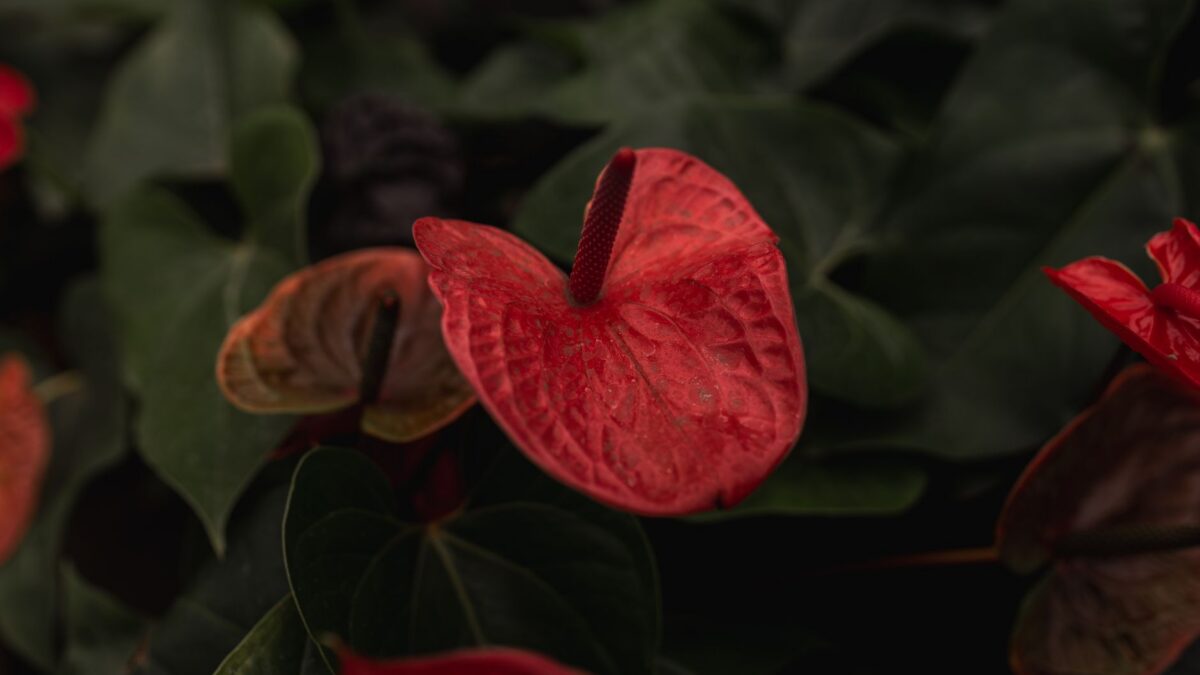
Botanists in northeastern India have named a new flowering plant with blood-red blossoms, and they estimate that only around 20-25 mature plants are left in the wild. The species, Aeschynanthus basarensis, is known from just two spots near Soi village in Arunachal Pradesh’s Leparada district, according to a report by PTI carried by The Assam Tribune.
The research team has provisionally rated the plant as critically endangered under the Red List criteria of the International Union for Conservation of Nature (IUCN). Researchers said the plant is currently known only from those two locations.
A plant that lives on tree bark
The new species belongs to the Gesneriaceae family, a group of flowering plants. It is an epiphyte, meaning it grows on other plants, in this case on the bark of trees, without taking nutrients from them.
Its leaves are thick and fleshy, about 3-4 cm long, green on top and reddish-brown on the underside. The flowers are blood-red and measure roughly 2-2.2 cm. In appearance it is close to two known relatives, Aeschynanthus micranthus and Aeschynanthus buxifolius. The researchers say it can be told apart by the size of its leaves, the structure of its flowers and the length of the style, the stalk that connects the stigma to the ovary.
How scientists confirmed it was new
Scientists from the Botanical Survey of India (BSI) office in Itanagar found the plant during a botanical survey of a conservation site in Soi village. They collected specimens of an unusual epiphyte and compared them with published descriptions and with dried specimens held in herbarium collections. That comparison convinced them the plant had never been formally described.
The story of the plant goes back further than the survey. The first specimen was picked up around eight years ago from a tree that had fallen inside a sacred grove in the project area. About a year ago, conservationist Egam Basar suggested that BSI scientists visit the site to record its plant life. The area holds hundreds of native plant species, and some of them have not yet been identified by science.
The paper describing the species lists four authors: Krishna Chowlu, Egam Basar, Chandramohan Kolagani and Gopal Krishna. Chowlu and the other scientists work for the BSI. Basar directs the State Horticulture Research and Development Institute in Itanagar and founded the EB-Project Nature initiative. The name of the journal that published the paper was not given in the report.
Named after a hometown
The species name refers to Basar, Egam Basar’s birthplace. In a statement he called the name “a living tribute to my native land.” He also said the plant can be seen at a repository run by the conservation project at Gori village.
Why it matters
A species with so few adults in only two places can disappear quickly. The researchers say its habitat is threatened by landslides and by jhum, the local name for shifting cultivation, a farming method in which patches of forest are cleared, farmed for a few seasons and then left while new plots are cut.
The discovery also adds to what is known about a region that matters for this plant family. According to the research paper, Arunachal Pradesh accounts for nearly 70-80% of the recorded diversity of Gesneriaceae in India. The critically endangered rating is still provisional, and the count of 20-25 mature individuals is an estimate based on the two known sites.
Source: The Assam Tribune