Why Are Bees Declining? Mites, Viruses and Record Colony Losses
Commercial beekeepers opened hives in early 2025 to find them nearly empty. The main suspects are a parasitic mite, the viruses it carries and a pesticide it has learned to survive.
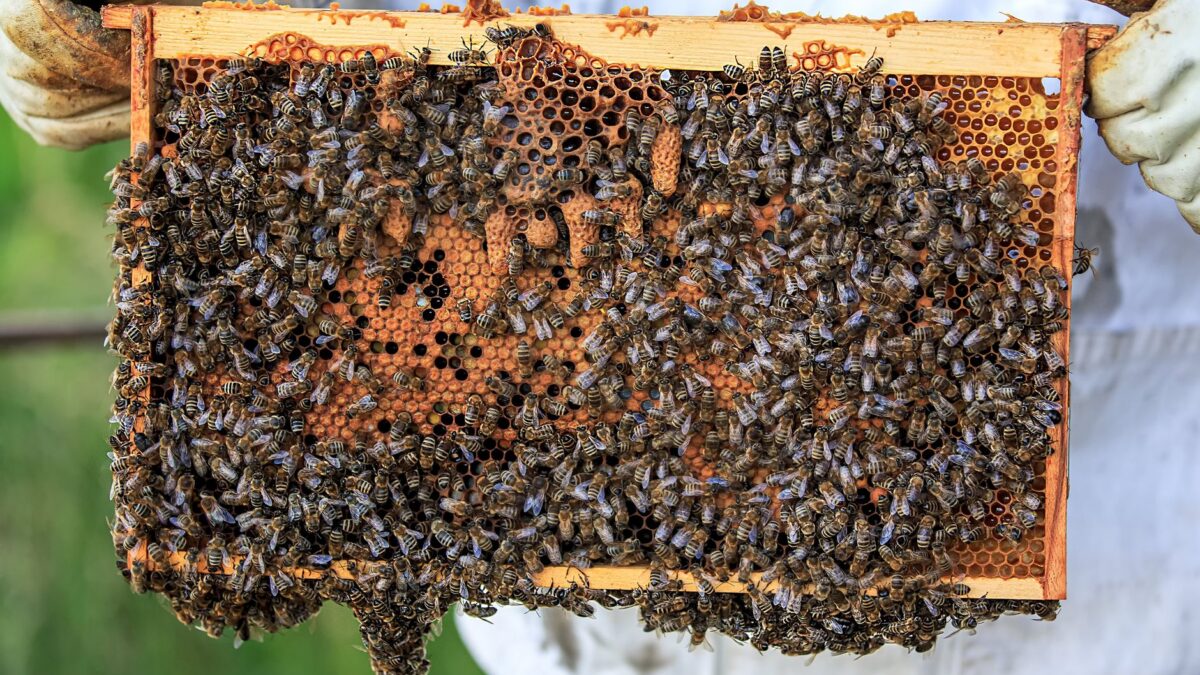
Honey bee colonies in the US are dying mainly because of Varroa mites and the viruses they spread, with pesticides, poor nutrition, habitat loss and weather adding stress. Beekeepers lost a record 55.6% of their managed colonies between April 2024 and April 2025, according to the preliminary US Beekeeping Survey. Wild native bees, a separate group of about 4,000 US species, face mostly different pressures.
Picture a white-box hive in February that should hold tens of thousands of bees clustered for warmth. In the bad years, beekeepers lift the lid to find a handful of workers, stores of honey and almost no one left to eat it.
How many honey bee colonies are being lost?
Annual losses have been high for more than a decade, and 2024–25 was the worst on record. The survey run by Auburn University and the Apiary Inspectors of America, with support from Oregon State University, collected answers from 2,453 beekeepers managing about 219,000 colonies. Its 2024–2025 results put annual loss at 55.6%, the highest since the survey began in 2010–11 and 14.2 percentage points above the 14-year average of 41.4%.
The next year was better but still heavy. The 2025–2026 results, also preliminary, show an annual loss of 39.9%, based on 2,327 beekeepers.
| Survey year (April to April) | Annual loss | Winter loss | Summer loss |
|---|---|---|---|
| 2024–2025 | 55.6% | 40.2% | 28.3% |
| 2025–2026 | 39.9% | 30.3% | 23.3% |
Both sets of figures are preliminary, as of November 2026; the authors plan final peer-reviewed reports. The surveys are voluntary and cover a share of all US colonies (about 8% in 2024–25 and 13% in 2025–26), so they estimate the national picture rather than count every hive.
Why do Varroa mites cause so much harm?
Varroa destructor is a small parasitic mite that feeds on developing and adult bees. The bigger problem is what it carries. Mites spread viruses through a colony, and some of those viruses become far more dangerous once the mite is spreading them.
After commercial beekeepers reported severe losses in January 2025, USDA Agricultural Research Service scientists tested bees and mites from collapsed colonies collected in February 2025, mostly from California and other western states. In a June 2025 release, ARS reported high levels of deformed wing virus A and B and acute bee paralysis virus in all the sampled bees. Virtually all the mites they collected showed signs of resistance to amitraz, a miticide widely used by beekeepers.
The researchers called the viruses a likely end-stage cause of colony death and said the results do not rule out other stresses. When the release came out, the work was a preprint submitted for peer review. The release put losses at more than 60% of commercial colonies since the previous summer, about 1.7 million colonies, with an estimated $600 million in financial impact.
What other threats do honey bees face?
The US Environmental Protection Agency lists the factors under study in its page on colony collapse disorder:
- the invasive Varroa mite;
- new or emerging diseases, such as viruses and the Nosema gut parasite;
- pesticide exposure, from crops or from treatments used inside the hive;
- stress from management, such as trucking hives across the country for pollination;
- changes to foraging habitat and too little or poor-quality forage;
- immune-suppressing stress from a combination of these.
These factors interact. A colony weakened by poor food or pesticide exposure may cope less well with mites and viruses. Weather matters too: winters and droughts affect how much forage is available and how long colonies must survive on stored food.
Is colony collapse disorder the same as today’s losses?
No. Colony collapse disorder (CCD) is a specific pattern: most worker bees disappear from a hive, often leaving the queen, the young bees and food stores behind, with few dead bees nearby. The EPA says beekeepers began reporting unusually high losses in the winter of 2006–07, with some losing 30 to 90% of their hives.
CCD’s share of losses has since fallen. According to the EPA, it accounted for about 60% of lost hives in 2008 and 31.1% in 2013, and early reports for the 2014–15 winter did not mention it. Today’s high losses are mostly put down to mites, viruses and the other stresses above, not to the mysterious vanishings that made headlines in 2007.
How are wild bees different from honey bees?
Honey bees are livestock: managed, moved and replaced by beekeepers. They are not native to North America; the US Geological Survey says they were brought from Europe in the 17th century. Wild bees are a different story. The USGS estimates about 4,000 native bee species in the United States, out of more than 20,000 known worldwide (USGS).
Most native bees live alone rather than in hives, nesting in the ground or in hollow stems. Colony collapse disorder affects only honey bees, but the USGS notes that wild bees face many stressors that have led to declining health. For most native species, the honest answer is that data are thin: the USGS says there is still much we do not know about native bees, and about 10% of US bee species have not yet been named.
That gap fits a wider pattern. Scientists still do not know how many species of any kind exist in total, a question we look at in how many species exist.
Are bees going extinct?
Honey bees are not going extinct. Beekeepers rebuild losses by splitting surviving colonies and buying new queens and packages of bees, so colony numbers can recover even after a bad year, at a high cost. The 2025–26 survey estimated about 2.41 million managed honey-producing colonies in the US in 2025.
Native bees are harder to judge. Some species are known to be declining, but for many there is no long-term monitoring at all. How social insects organize their colonies is explained in how ant colonies work.
Bottom line
US honey bee losses hit a record 55.6% in 2024–25 and eased to 39.9% in 2025–26, both preliminary figures. Varroa mites and the viruses they spread are the leading cause, made worse by mites that survive a common miticide, with pesticides, poor forage and transport stress adding pressure. Native bees face their own threats, and for most species the data are still too thin to say how they are doing.
FAQ
What is the main cause of honey bee colony losses?
Researchers point to Varroa mites and the viruses they spread as the leading cause. USDA scientists linked the 2025 collapses to high virus levels and mites resistant to the miticide amitraz.
How many native bee species live in the US?
The USGS estimates about 4,000 native bee species in the United States. Honey bees are not one of them; they were brought from Europe.
Does colony collapse disorder still happen?
It is now a small part of the picture. The EPA says CCD’s share of hive losses fell from about 60% in 2008 to 31.1% in 2013, while overall losses stayed high for other reasons.
Who runs the US Beekeeping Survey?
The 2024–25 report names Auburn University and the Apiary Inspectors of America, with support from Oregon State University. Results are released as preliminary figures first, followed by peer-reviewed reports.