How NASA Selects Astronauts: Requirements, Odds and Timeline
NASA picks a new astronaut class every few years from thousands of applicants. Here are the official requirements, how selection works, and how private astronaut missions differ.
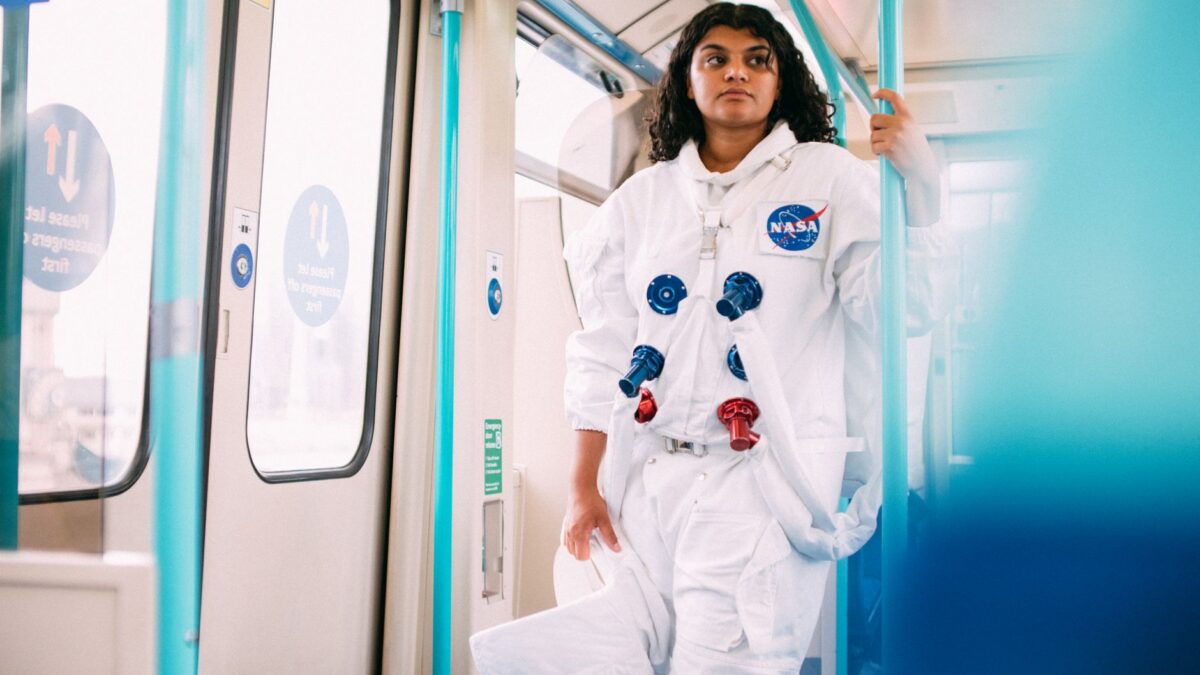
NASA selects astronauts through an open competition held every few years, with applications filed through the federal USAJOBS site. Applicants must be U.S. citizens, hold a master’s degree in a STEM field or an accepted equivalent, have two years of related experience or 1,000 hours as pilot in command of jet aircraft, and pass NASA’s long-duration flight physical. The most recent class, announced Sept. 22, 2025, has 10 candidates chosen from more than 8,000 applicants.
What are the basic requirements to become a NASA astronaut?
NASA’s official astronaut requirements page lists four basic conditions. Meeting them makes you eligible to apply, not likely to be picked.
| Requirement | What NASA asks for |
|---|---|
| Citizenship | U.S. citizen |
| Education | Master’s degree in a STEM field (engineering, biological, physical or computer science, or mathematics) from an accredited school, or one of these alternatives: two years of work toward a STEM doctorate, a completed medical degree (MD or DO), or completion of a nationally recognized test pilot school program |
| Experience | At least two years of related professional experience after the degree, or at least 1,000 hours of pilot-in-command time in jet aircraft |
| Physical | Able to pass the NASA long-duration flight astronaut physical |
Requirements as of November 2026; NASA’s page was last updated in January 2024. Check it again before any new application period.
How often does NASA choose a new astronaut class?
NASA has picked a new class about every four years recently, in 2013, 2017, 2021 and 2025. The 2025 group is NASA’s 24th astronaut class, and the agency says it has recruited 370 astronaut candidates since choosing the Mercury Seven in 1959.
Applications are open only during announced windows, and NASA posts them as a job listing on USAJOBS. The timing of the next window had not been announced as of November 2026. NASA usually publicizes an opening on its website and social channels when it begins.
How does the astronaut selection process work?
The process takes well over a year from the application deadline to the announcement. In outline:
- Application: candidates apply through USAJOBS during the open window, with résumé, transcripts and an assessment questionnaire.
- Qualification review: human resources staff confirm that each applicant meets the basic requirements.
- Board review: an astronaut selection board, made up mostly of current and former astronauts, rates the qualified applicants and asks some to take further assessments.
- Interviews and medical tests: a small share of applicants is invited for initial interviews, and a smaller group comes to NASA’s Johnson Space Center in Houston for final interviews, medical screening and team exercises.
- Selection: NASA announces the new astronaut candidates, who report to Johnson to begin training.
The odds are long. The 2025 class drew more than 8,000 applicants for 10 places.
What happens after someone is selected?
New astronaut candidates train for nearly two years before they can be assigned to a flight, according to NASA. Training for the 2025 class covers robotics, land and water survival, geology, foreign language, space medicine, simulated spacewalks and flying high-performance jets.
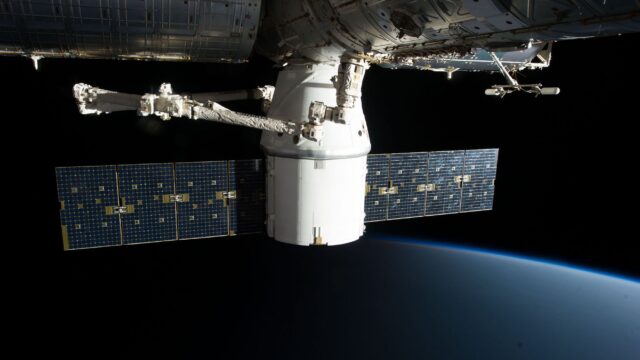
After training, they become eligible for missions to the International Space Station on Crew Dragon or Russia’s Soyuz, and for future Artemis missions to the Moon. Many astronauts wait several years for a first flight. Our explainer on how long astronauts stay on the ISS covers what a typical station mission looks like, and the Artemis program guide covers Moon missions.
Civilian astronauts are federal employees paid on the government’s General Schedule pay scale. Military officers selected as astronauts stay on active duty and are assigned to NASA.
How are private astronaut missions different?
Private astronauts are not selected by NASA. They are customers or employees of a company that buys or runs the mission, and they do not need to meet NASA’s degree or experience requirements. They do go through medical screening and training required by the company and, for the space station, by NASA and the other partners.
| NASA astronaut | Private astronaut | |
|---|---|---|
| Chosen by | NASA, in an open competition | A company or the customer paying for the flight |
| Who pays | U.S. government | The customer or their sponsor |
| Typical missions | Six-month station rotations, Artemis | Short station visits, free-flying Crew Dragon flights, suborbital flights |
| Training | About two years, then mission training | Several months focused on one mission |
NASA allows commercial companies to fly private astronaut missions to the space station, and those flights have been led by a former NASA astronaut. For suborbital tourist flights, the FAA treats people on board as spaceflight participants, who fly under informed consent rules.
How can you improve your chances of becoming an astronaut?
NASA does not publish a formula, but its classes show patterns. Recent candidates include engineers, scientists, physicians, test pilots and military aviators, often with experience in demanding field work such as research expeditions, flight testing, emergency medicine or operational roles. Skills that the training covers, such as scuba diving, flying, wilderness experience and languages, are common in candidates’ backgrounds. Above all, applicants must first meet the official requirements and then apply when the window opens.
Bottom line
To become a NASA astronaut, you need U.S. citizenship, a STEM master’s or an accepted equivalent, two years of related experience or 1,000 jet pilot hours, and a passing flight physical. NASA opens applications every few years on USAJOBS and picks about 10 people from thousands. Private astronauts fly through companies and skip NASA’s selection entirely.
FAQ
Is there an age limit to become a NASA astronaut?
NASA’s requirements page lists no age limit. Recent candidates have usually been in their 30s or early 40s when selected, since the experience requirement and the long training take years.
Do you need to be a pilot to become an astronaut?
No. Pilot experience is one route, but most candidates qualify through a STEM degree and professional experience. All astronauts learn to fly NASA’s jet trainers during candidate training.
Can non-US citizens become NASA astronauts?
No, NASA requires U.S. citizenship. Citizens of other countries can apply to their own agencies, such as the European Space Agency, the Canadian Space Agency or Japan’s JAXA, whose astronauts also fly to the space station.
How many people apply to be NASA astronauts?
Recent rounds have drawn thousands of applicants. NASA received more than 8,000 applications for the 2025 class, which ended with 10 selections.