Hydrogen Chloride Gas Near Mars Volcano Alba Mons Hints at Magma
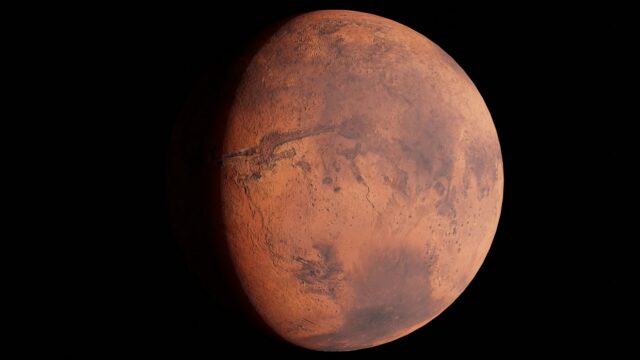
Orbiter detections of hydrogen chloride gas near Alba Mons, out of season, may point to magma under Mars. The study is in Science Advances.
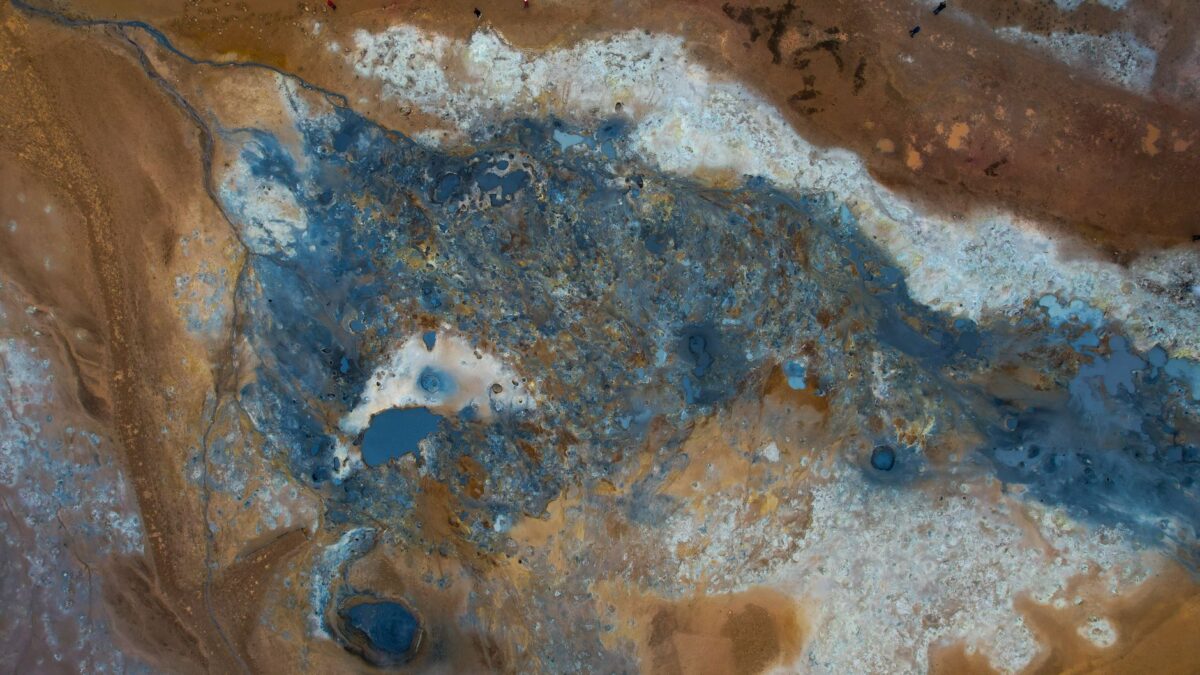
Hydrogen chloride (HCl) gas has been detected within 6 miles (10 kilometers) of the surface near Alba Mons, one of the largest volcanoes on Mars, at concentrations up to 1.5 parts per billion. The authors of a study published Nov. 4 in Science Advances say the best explanation is volcanic outgassing from magma still present at depth, according to Astronomy Magazine.
If confirmed, it would be among the clearest hints that the martian interior is still active. The authors stop short of a firm conclusion.
How the gas was found
The detections come from the Atmospheric Chemistry Suite, three infrared spectrometers on the Trace Gas Orbiter, a joint mission of the European Space Agency and Roscosmos that began science operations in 2018. The instruments analyze sunlight passing through the martian atmosphere and pick out the wavelengths each gas absorbs, which reveals what is in the air and at what altitude.
The same instrument made the first HCl detection on Mars in 2020. That gas appeared planetwide during the warm, dusty season near perihelion, when Mars is closest to the Sun, at 4 to 5 parts per billion. Researchers attributed it to reactions involving dust, ice and water vapor, not volcanoes.
The new signal is different. It appeared near aphelion, when Mars is farthest from the Sun and the gas is otherwise absent. It was also local, centered on the area around Alba Mons at the northern edge of the Tharsis plateau. Two tentative detections in one Mars year were followed, in a dedicated search two Mars years later, by six more, mostly northeast of the volcano.
Ruling out other sources
The team excluded atmospheric processes and considered three ground sources: volcanic activity, mud volcanoes, and the breakdown of chlorine-bearing salts called perchlorates. Mud volcanoes and perchlorates are both widespread across the northern lowlands, so neither would explain gas in one isolated place. Even active mud volcanism, the authors note, would probably still imply magma below.
Daniel Mège of the Space Research Centre of the Polish Academy of Sciences, a co-author, said HCl should be detected throughout the northern hemisphere if perchlorates were responsible.
HCl is also a sensible gas to hunt for. On Earth, sulfur dioxide dominates during eruptions but drops sharply between them, when HCl becomes more abundant. Mars is about 2.5 times richer in chlorine than Earth, and some martian volcanic meteorites are up to four times richer in chlorine than sulfur.
Fissures near the volcano
Images from the HiRISE camera on NASA’s Mars Reconnaissance Orbiter and the CaSSIS camera on the Trace Gas Orbiter revealed a group of narrow fissures not previously identified. Many are only tens of centimeters wide, and some run up to 6.21 miles (10 km). Some have dark halos, which may mean material was recently thrown out. Seasonal dust and ice should have buried such thin cracks unless something kept them open.
The authors did not confirm that the gas came from these fissures. They suggest the cracks may reach from icy near-surface ground down to magma, with gas either escaping directly or being trapped in ice and released as it turns to vapor.
What is still unclear
The team did not catch gas leaving any specific fissure. The cracks also appear in older orbital images with no visible change since. Mège said that after weighing the alternatives, volcanic activity is “the best explanation.” Confirming it, he said, would need a robot or person with a multidisciplinary set of instruments.
Earlier lines of evidence are suggestive but not conclusive. NASA’s InSight lander recorded more than 1,300 marsquakes before its mission ended in 2022, and most were traced to Cerberus Fossae, a system of young volcanic fissures where ash deposits date to as recently as 53,000 years ago. R. Aileen Yingst of the Planetary Science Institute, who was not part of the study, noted that marsquakes have several causes, including meteoroid impacts and a cooling, contracting crust. Orbiters have not found conclusive surface signs of active volcanism, and sulfur dioxide has never been seen at levels that would indicate magma.
Why it matters
Mars is smaller than Earth and should have lost its internal heat faster. Yingst said that if the planet is still volcanically active, thermal models of Mars would probably need to be revisited. Mège added that where magma meets groundwater, hydrothermal systems usually follow, and if stable conditions lasted long enough, life could have arisen there. That remains speculation, not a finding of the study.
The authors’ next step is continued monitoring, since future searches could reveal more pockets of gas.
Source: Astronomy Magazine