Gut-to-Brain Dopamine Signal Teaches Mice to Like New Flavors
A slow dopamine signal from the gut taught mice to prefer flavors tied to calories, a Nature study reports. Similar brain patterns appeared in people.

A slow dopamine signal that travels from the gut to a brain region called the basolateral amygdala teaches mice which flavors are worth liking, researchers at the University of California, San Francisco (UCSF) report in a study published Nov. 4 in Nature. Brain-imaging data from 13 men and a separate group of 38 adults showed a similar pattern in people.
Zachary Knight, a professor of physiology and the study’s senior author, says the system helps explain how bitter coffee becomes a favorite. Once the brain connects the taste with caffeine’s stimulating effects, he explained, “that coffee starts to taste a lot better.” That is his interpretation. The experiments themselves used sugar water and a milkshake-like liquid in mice.
How the experiments worked
Dopamine is a chemical messenger involved in motivation, reward and learning. Most earlier studies looked at fast dopamine signals that appear within seconds of something rewarding, such as the sight of a favorite meal. The new work examines a slower pathway that responds to information from inside the body and lets the brain learn about the benefits of food after it is eaten. According to Knight, this process largely happens outside conscious awareness.
Knight and James Grove, then a graduate student, delivered sugar water or the milkshake-like liquid directly into the stomachs of mice while monitoring dopamine activity across their brains. Putting the nutrients straight into the stomach separated their effects from the experience of tasting food. The team recorded a strong, prolonged dopamine response in the anterior basolateral amygdala (BLA), a region involved in emotional processing and in linking experiences to their consequences. Scientists already knew dopamine was released there, but its purpose was unclear.
Switching the signal off and on
To test whether the signal shapes preferences, the researchers first interrupted the pathway. The mice kept eating normally but lost the ability to learn that an unfamiliar flavor went with calories.
In the reverse experiment, mice tasted a flavor with no calories while the team artificially activated dopamine fibers in the BLA. The animals came to prefer that flavor anyway, as if the pathway had delivered the learning signal that nutrients normally produce.
Similar patterns in people
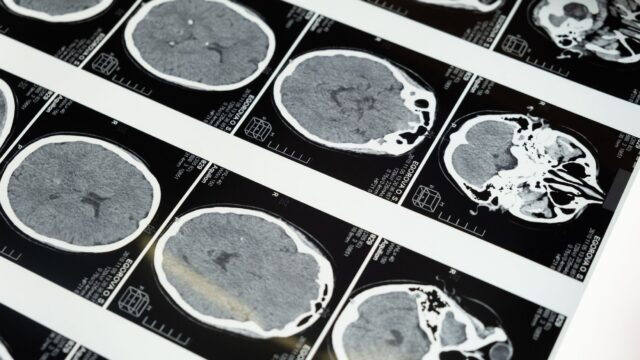
Dana Small, a psychologist at Yale University, reanalyzed data from an earlier positron emission tomography (PET) study of 13 men who drank either a milkshake or a drink without calories. Dopamine release after nutrient delivery was concentrated in the left side of the BLA. A separate study led by Marc Tittgemeyer used functional magnetic resonance imaging (fMRI), which tracks changes in blood flow, to examine 38 adults after they consumed glucose, a simple sugar. It found increased activity in the same region.
In both mice and humans, nutrients produced a considerably stronger dopamine response in the left BLA than in the right. Knight said this surprised him, because brain networks that control essential functions such as feeding are usually expected to work fairly symmetrically. Why the left side dominates is unanswered, and his laboratory is now investigating it.
What remains unknown
The experiments that switched the pathway off and on were done only in mice. The human evidence comes from imaging studies.
GLP-1 medications, a class of drugs that mimic a gut hormone and can change appetite and eating behavior, were not tested. Knight suggests one possible explanation for some of their effects is a reduction in the dopamine signals generated when nutrients reach the digestive system, which would make foods gradually less rewarding. That remains a hypothesis, and it is unknown whether the drugs affect this pathway at all.
What this means for food preferences
The work gives researchers a clearer picture of how the digestive system influences what the brain learns to like. Many approaches to changing eating behavior aim to reduce appetite or increase satisfaction after a meal. Knight says that by understanding the steps between nutrient detection in the gut and learning in the brain, it might be possible to fine-tune them to subtly shift preferences. The study did not test any treatment.
The research was supported by the National Institutes of Health. The paper, “The neural basis of flavour-nutrient learning,” is in Nature (DOI: 10.1038/s41586-026-11229-5).
Source: ScienceDaily