DNA From 45 Early Montreal Burials Shows No Indigenous Ancestry
Ancient DNA from 45 people buried in colonial Montreal pointed only to France, a PNAS study found. What the small sample can and cannot show.
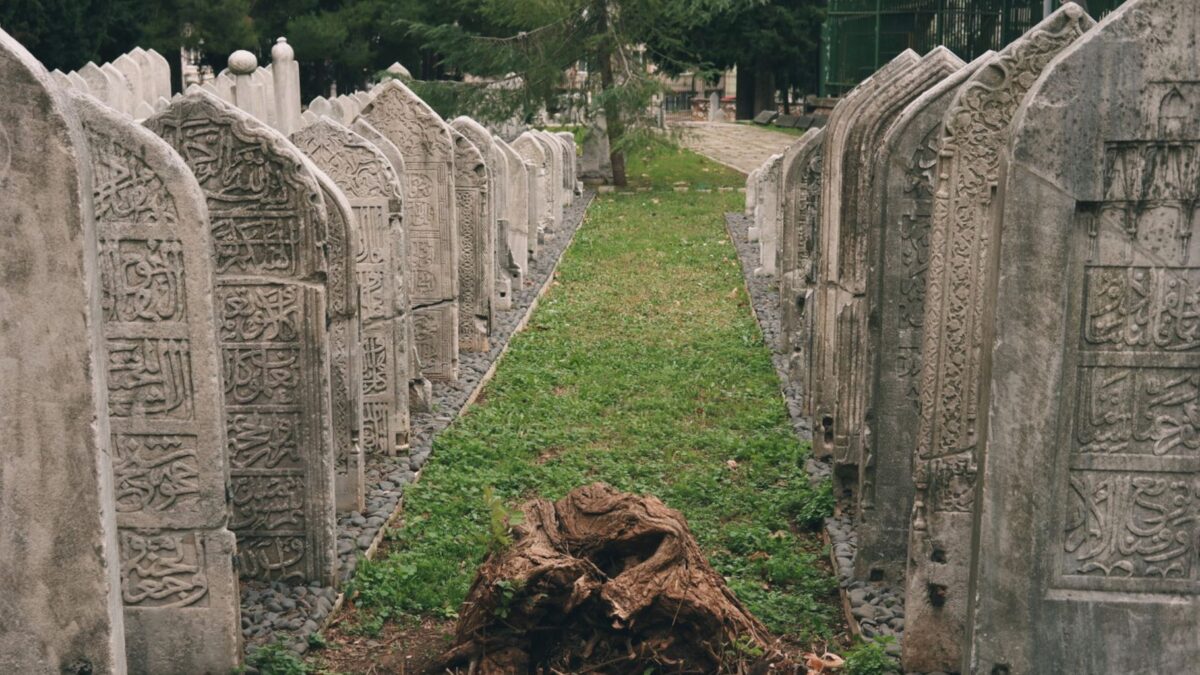
Genomes from 45 people buried in Montreal’s Notre-Dame cemetery show French European ancestry and nothing else: no recent Indigenous or African forebears turned up in any of them, Earth.com reported. The work appeared in the Proceedings of the National Academy of Sciences.
Many Quebec families tell of an Indigenous ancestor, and the finding sits awkwardly beside that story. The authors stress that it describes one burial ground and does not rule out mixed unions elsewhere.
How the bones were tested
Burials began in 1683 beside the city’s first Notre-Dame church, in today’s Old Montreal, and continued to 1796. Excavations from 2006 to 2012 brought the remains up. Biological anthropologist Diane Martin-Moya, who works at the Université de Montréal and the Université du Québec à Trois-Rivières, led the study. Geneticists at McGill University and the University of Copenhagen, where the DNA was extracted, joined her.
From 60 petrous bones (the hard part of the skull near the ear) and 33 teeth, the team dropped specimens that were badly contaminated or held too little DNA. That left 45 individuals usable. Background on how DNA carries genetic information helps explain why this kind of comparison works.
What the genomes matched
Reference sets were 900 European genomes, 751 from West Africa and 673 from Indigenous groups in the Americas. All 45 sat with the Europeans, and within 647 Western European genomes they were nearest to French people.
Mixing models combined French with Indigenous ancestry, and French with West African ancestry. None of the combinations explained any single person. The Y chromosomes, inherited from fathers, were all European.
Two individuals had a rare maternal lineage: an African-type one in one case, an Indigenous American type in the other. Both types also appear in under 1 percent of Western Europeans. The rest of their DNA was European, so the authors interpret these as ancient gene flow into Europe that predates Montreal.
Where the family story may come from
Colonial policy gave the tale a real footing. The settlers were mostly men, and the crown offered dowries to encourage marriages with women of allied Indigenous nations. When few took up the offer, about 800 French women, the King’s Daughters, were shipped over between 1663 and 1673.
French numbers climbed quickly after that, while Indigenous populations fell because of disease, missions, war and the fur trade. Records from 1632 to 1760 name more than 4,000 enslaved people in New France, mostly Indigenous. Martin-Moya said the cemetery’s lack of Indigenous people fits a growing separation, with land taken and missions moved out of the town. Living French Canadians carry under 1 percent Indigenous ancestry, according to earlier genealogical and genetic work cited in the report.
Relatives and burial patterns
The genomes also exposed kin. One uncle lay near his sister’s son, and a grandparent near a paternal grandchild. Distant ties tied the group into five extended families. Martin-Moya called these family trees hypotheses, since most genomes were read at low coverage.
Kin were scattered across sectors and burial phases, which argues against the idea that families were laid to rest together. Wealthy people and clergy had single graves inside the church, and the rest were placed in overlapping group graves outdoors. None of the 45 had long identical DNA stretches that signal parents who were close relatives, so inbreeding was not evident in this small colony.
Why it matters
Indigenous stakeholders told the researchers they feared old-bone genetics might become another “truth” turned against Indigenous rights. The authors noted that identity claims resting on a single distant ancestor have grown in Quebec in recent decades, at times to gain land-related rights. In Martin-Moya’s view, an ancestor, documented or handed down as lore, gives at most a genealogical link, and Indigeneity is “political, cultural and relational.”
Limits of the study
Forty-five people are a sliver of colonial Montreal, and all were buried in one place. The raw genetic data has not been released. The cemetery says nothing about where Indigenous and African-descended residents were buried or how they lived. Earlier work on the same skeletons split: tooth shape and bone chemistry hinted that some people were not European, while a three-dimensional skull analysis found no such sign.
Martin-Moya’s next project is sedimentary ancient DNA, the genetic traces kept in soil, which she hopes to combine with archives and oral traditions.
Source: Earth.com