Simulations Show Comets Rarely Delivered Life’s Ingredient to Earth
Computer simulations suggest comets rarely, if ever, delivered hydrogen cyanide to young Earth intact, a Scientific Reports study found. Mars fares slightly better.
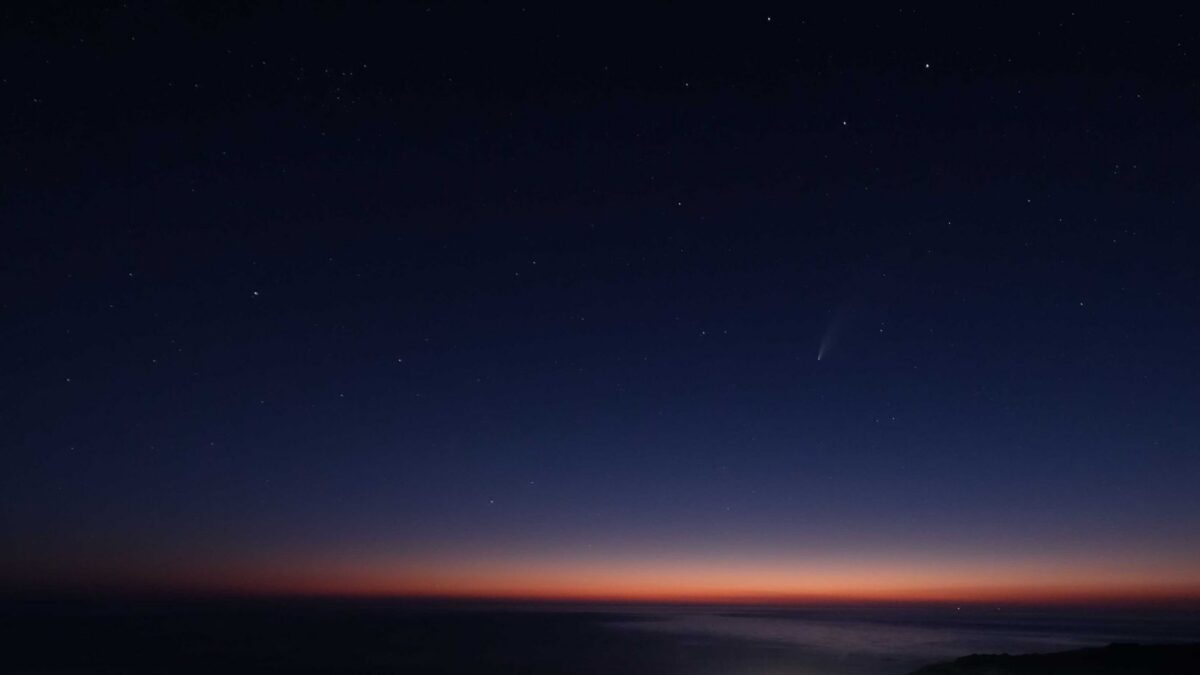
Comets probably did not deliver the chemical ingredient that many scientists have thought helped start life on Earth. In computer simulations, 54 percent of the runs produced no comet impacts at all on the young planet, and only a “tiny minority” produced as many as three, according to a study published Oct. 28 in the journal Scientific Reports and reported by Smithsonian Magazine.
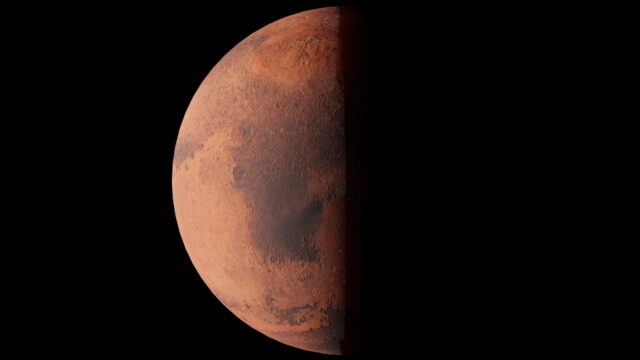
The result weakens a longstanding idea that comets seeded early Earth with the starting material for life. It also points to a slightly better candidate for such a delivery: Mars.
The molecule at the center of the test
The team, led by planetary scientist Richard Anslow, who did the work at the University of Cambridge in England, focused on hydrogen cyanide (HCN). The molecule contains hydrogen, carbon and nitrogen and would have formed from leftover material from the solar system’s formation 4.6 billion years ago. Astronomers have detected it on many comets.
HCN can act as a precursor for several of life’s building blocks, including lipids, sugars and nucleotides. Its very strong chemical bond can drive later reactions, and the same bond makes the molecule stable, so it is more likely than other organic molecules to survive an impact.
That stability is why the team used it as a test case. Anslow told Science News that if the outlook is poor for hydrogen cyanide, it is likely to be worse for more complicated molecules that break down more easily in impacts.
How the researchers tested the idea
This was a modeling study, not an experiment with real comets. The researchers analyzed simulations of comet impacts, simulations of how comets interact with the atmosphere, and models of how comets formed and changed over time.
Several problems showed up. The rate of comet impacts on Earth dropped quickly during the planet’s first 500 million years, which left few chances for an HCN-carrying comet to land. When impacts did occur, most comets were traveling too fast and hit the atmosphere at too sharp an angle, which would likely have vaporized any HCN on board. Molecules that survived but fell into the ocean would have been diluted quickly, probably before any chemistry related to life could begin.
Anslow also pointed to what happens right after impact. He told Chemical & Engineering News that high-temperature, high-pressure chemistry immediately after a strike makes HCN less useful for the chemistry that precedes life.
What is still unclear
The authors do not claim the case is closed. “We can’t rule out confidently that there was never a successful impact,” Anslow told CNN, and he said a fluke impact is possible. Even then, other conditions would have had to line up, including liquid water nearby and other life-supporting chemicals.
An outside scientist raised a limit of the work. Queenie Hoi Shan Chan, a planetary scientist at Royal Holloway University of London who was not part of the study, told CNN that the team did not consider whether HCN could react on the comets themselves. Such reactions might have produced sturdier compounds relevant to biology before the comets entered Earth’s atmosphere.
Why it matters: Mars and other options
The simulations showed comets had a better chance of reaching the surface of Mars when the solar system was young. The researchers link this to the planet’s smaller size and thinner atmosphere. Anslow said in a statement that this does not prove delivery happened on Mars, only that it would be unlikely to have happened on Earth and not on Mars. He added that the more probable alternative may be that it happened on neither planet.
The authors name other possible starting points for life on Earth. Asteroids visited the planet more often than comets did, and the precursor molecules may also have formed on Earth without any help from space.
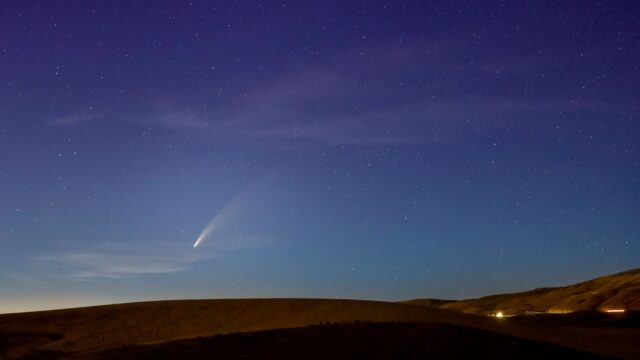
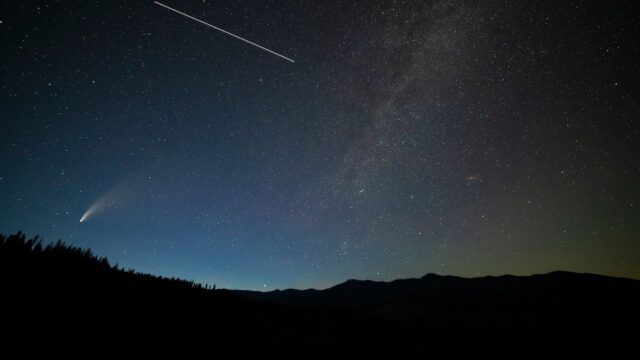
For a general reader, a comet is a mass of frozen gases, rock and dust found mostly in the outer solar system. When its orbit brings it closer to the sun, the material heats up and forms a glowing head and a tail that streaks across the sky. The study treats such objects as one possible delivery route among several, and its simulations rate that route as unlikely for Earth.
Source: Smithsonian Magazine