Cave Paintings in Mexico Point to Teotihuacan Warrior Rites
Red paintings in a small cave above Chalcatzingo, Mexico, carry Teotihuacan symbols that researchers tie to rites for dead warriors 1,500 years ago.
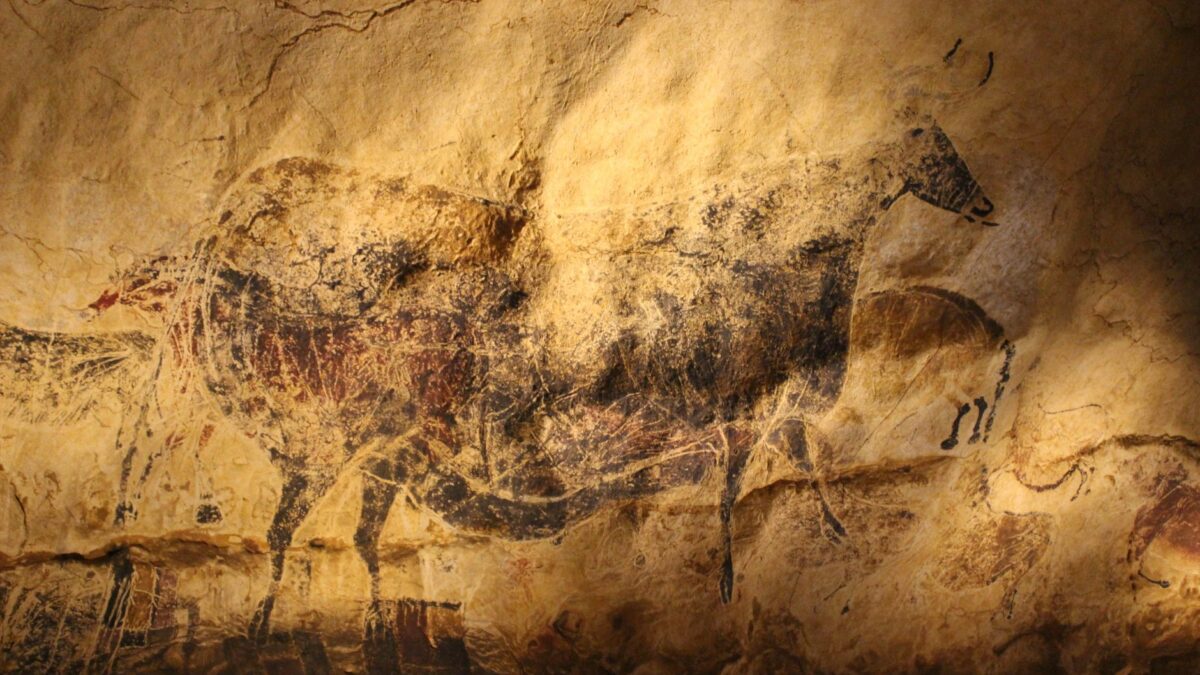
Red paintings inside a small rock shelter in central Mexico carry symbols from the Teotihuacan writing tradition, and researchers say they point to ceremonies for dead warriors more than 1,500 years ago. The cave, known as Cave 19, sits on the western face of Cerro Delgado, a hill above the archaeological site of Chalcatzingo in the state of Morelos.
The work was published in the journal Antiquity (DOI: 10.15184/aqy.2026.10425) and reported by HeritageDaily. The authors date the paintings to roughly the 4th to 6th centuries AD.
Three groups of painted signs
The paintings were already known, but a survey in August 2022 documented them in more detail using digital photography and image-enhancement techniques. The team studied three groups of signs in dark red pigment.
The first shows stylized mountains with scroll-like shapes coming out of an open mouth. The researchers read this combination as a place name meaning “Singing Mountain.” A nearby hill was historically called Cuicatepec in Nahuatl, a name with the same meaning, so the inscription may refer to Cerro Delgado itself. Similar Singing Mountain references appear in murals at Teotihuacan that show priests carrying incense and scattering offerings. Based on these parallels, the authors suggest Chalcatzingo may have been a pilgrimage destination for travelers from Teotihuacan.
The second group appears to have a military meaning. It includes a beaded necklace, a cloth that resembles a ceremonial garment and a dart for an atlatl, a spear-thrower. The researchers suggest the set may stand for a military title or for a specific group of warriors.
The third painting sits above a small stone shelf at the back of the cave. It is a rectangular frame decorated with five-pointed stars, a design known from Teotihuacan incense burners and other objects linked to remembering dead warriors. The rock above the shelf is blackened by fire.
What the burning could mean
According to the study, the shelf could have held an incense burner or a funerary bundle while something burned in the cave. The researchers raise the possibility that cremation was part of the rites. No surviving material confirms what was burned, and the authors treat the cremation idea as tentative.
A hard-to-reach shrine
Cave 19 lies about 330 meters from the center of Chalcatzingo on the steep hillside. The shelter is 5.43 meters wide and reaches about 2.24 meters into the rock, with a floor area of roughly 7.4 square meters. Researchers currently reach it from the far side of the mountain and abseil down the western escarpment.
Ancient visitors may have climbed from below on scaffold-like ladders. Carved footholds and rough steps near the site suggest people tried to ease the approach. The 2022 survey also recorded scattered pottery fragments and part of a stone grinding tool.
Why it matters for Teotihuacan studies
Chalcatzingo is best known for Olmec-style monuments from around 900 to 500 BC. Its earlier carvings show caves, rain clouds, supernatural beings and maize, which indicates the landscape was already treated as sacred long before the Teotihuacan paintings were made. Caves and mountains had an important place in Mesoamerican religion and were often connected with fertility, rain, creation and the origins of life.
Researchers have identified almost 120 signs in the wider Teotihuacan writing corpus, including place names, personal names, titles, calendar information and actions. According to the study, the Cave 19 inscriptions show that this script was not confined to monuments inside Teotihuacan itself.
Teotihuacan influence is already documented elsewhere in Morelos. At San Ignacio, about 13 kilometers south of Chalcatzingo, pottery, architecture and ceremonial objects point to a substantial Teotihuacan presence. The authors suggest some settlements in the region had economic or strategic roles, while Chalcatzingo seems to have kept a particular religious importance.
What remains unsettled
The readings of the signs are interpretations. The Singing Mountain link to Cerro Delgado is stated as a possibility that holds only if the reading is correct. The pilgrimage routes between Teotihuacan and Chalcatzingo are likewise a suggestion from the researchers, not a documented route.
Source: HeritageDaily