5th-Century Warrior Graves and Two Horses Found Near Colmar, France
Inrap archaeologists found 5th-century graves with swords, garnet jewelry and two horses in Alsace. What the burials and the wounds may reveal.
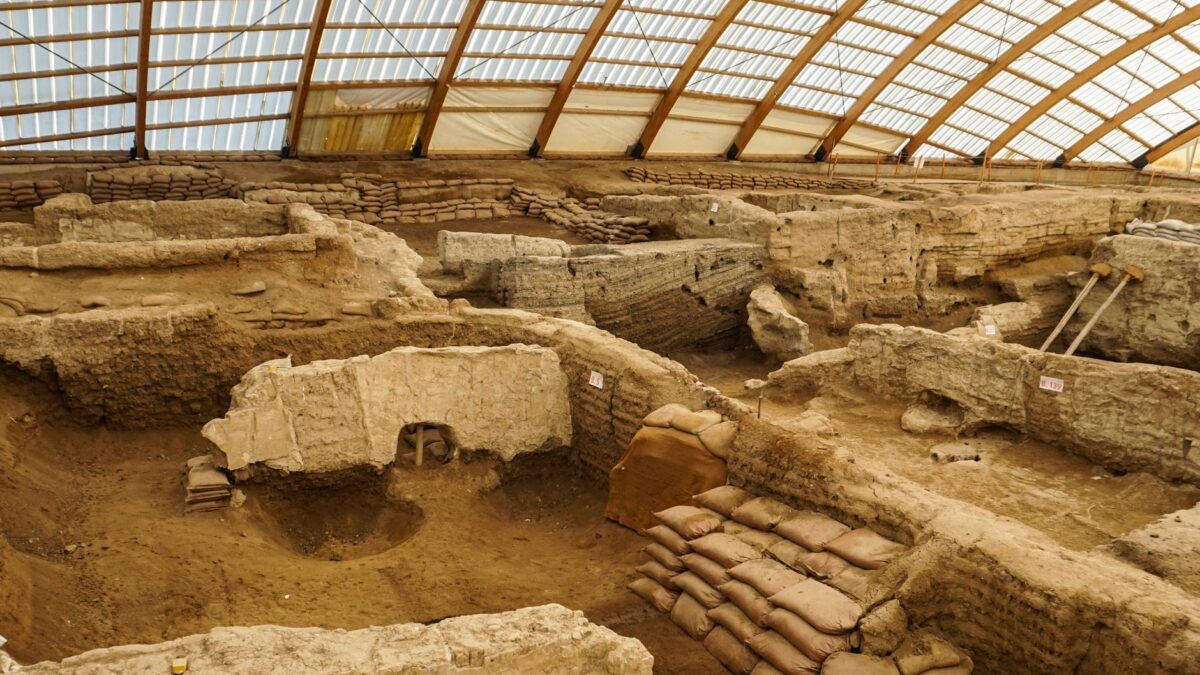
Archaeologists in north-eastern France have uncovered a 5th-century cemetery with warrior graves, gold and silver jewelry set with garnets, and two buried horses, according to France’s National Institute for Preventive Archaeological Research (Inrap), as reported by HeritageDaily. The site at Horbourg-Wihr, near Colmar in the Haut-Rhin department, sits on top of a much older Roman settlement close to the Rhine frontier.
Evidence of Germanic settlement in Alsace during the decades between the end of Roman rule and the start of the Merovingian era is scarce, so a near-complete cemetery from that window gives researchers a rare look at who lived there.
Who was buried at Horbourg-Wihr
The team identified eleven graves of adults or older adolescents, three graves of children and two horse burials. The horses were laid in the ground with parts of their harnesses.
Two men’s graves held the best weapons and objects. The finds include a sword still partly inside its wooden scabbard, a scramasax (a single-edged blade of the Early Medieval period), a shield and an angon, a barbed spear. Inrap says weapons like these are typical of burials of high-status Germanic warriors or foederati, groups the late Roman Empire brought into its military.
Gold and silver cloisonné fittings inlaid with garnets decorated clothing and weapons. Two other graves held objects archaeologists interpret as female-associated: pairs of silver-gilt bow brooches, small silver brooches shaped like birds, glass-bead necklaces, belt buckles and a bone comb.
Signs of injury and violent death
A first look at the skeletons found signs of injury and poor health. At least two had probable fractures that were never properly set. In one, the injury seems to have fused the knee joint, a condition called ankylosis, which would have badly limited movement of the lower leg.
Two individuals show cuts to the bone that the archaeologists attribute to bladed weapons. The bone around these wounds shows no healing, which suggests the injuries happened at or near the time of death. Inrap stresses that this reading is preliminary and needs further anthropological study.
What it means if the wounds are confirmed
If the analysis holds up, the swords and spears in some graves were more than symbols of rank: at least some members of this community met violence in life. The researchers say the mix of Germanic-style weapons, high-status jewelry, horse burials and battle wounds is what makes the site useful for studying how society changed as Western Roman authority weakened and then disappeared in the second half of the 5th century.
The team also cautions that grave goods alone cannot prove the ethnic identity of the dead. Further archaeological and anthropological work is planned to look at their origins and how they were related.
A Roman town beneath the graves
The cemetery was dug into a site with centuries of earlier occupation. Archaeological layers about 1.5 metres thick record a Gallo-Roman vicus, a small Roman town, near the limes, the fortified Rhine frontier.
- Around the middle of the 1st century AD, people dug pits and ditches into the waterlogged ground.
- In the 2nd and 3rd centuries the settlement grew denser, with buildings of perishable materials on stone foundations set along roads running roughly north-east to south-west. The street layout changed as the town developed.
- Excavators also found hearths, wells and large pits whose purpose is not yet known; later analysis will test whether some served crafts or industry.
- In the 4th century a layer of dark silt covered the area, and people seem to have used it only now and then.
- By the second half of the 5th century, part of the old settlement had become a burial ground.
Was the whole cemetery found?
Most of it appears to have been excavated, but its western edge has not been firmly located. Scattered, disturbed fragments of human bone on that side hint that more graves once lay beyond the dig. The graves that were found are rectangular or trapezoid pits cut closely around each body.
Source: HeritageDaily