Starship Flight 15 Launches Nov. 13 With 26 Starlink V3 Satellites
SpaceX plans Starship's 15th flight test for Nov. 13, and skywatchers across the contiguous U.S. may spot the Ship stage in orbit afterward.
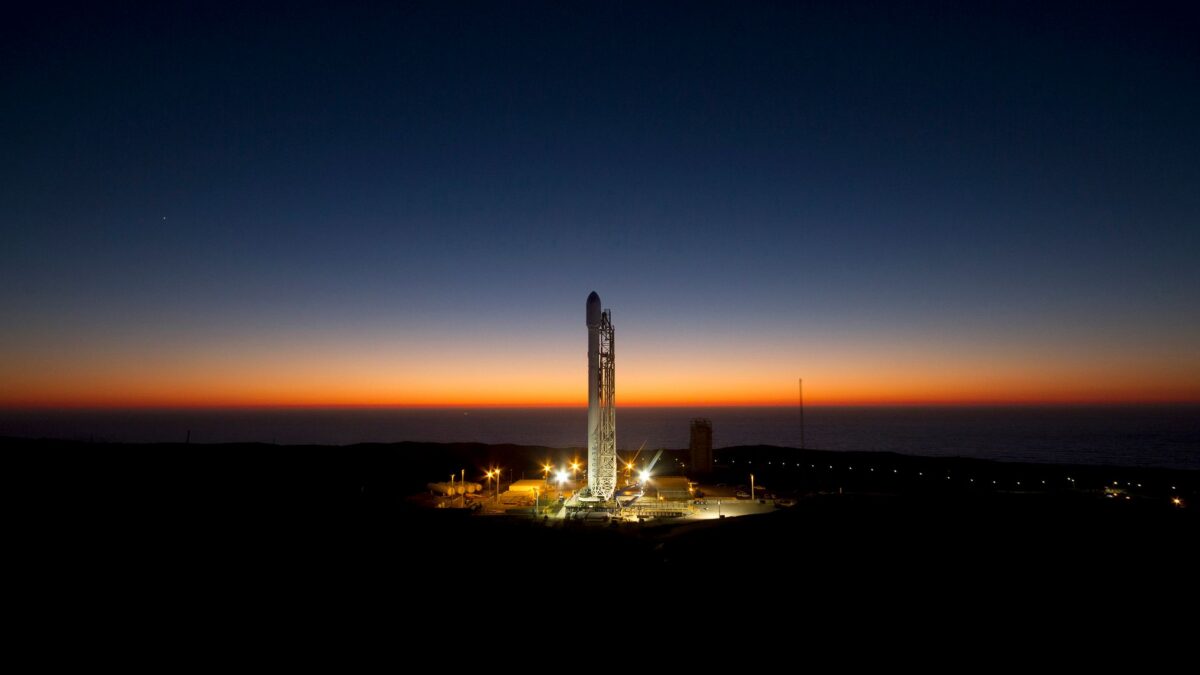
SpaceX plans to send its Starship rocket to orbit on its 15th flight test as soon as Friday, Nov. 13, and the upper stage, called Ship, may be visible to the naked eye from much of the United States, according to Space.com. The 75-minute launch window opens at 5:45 p.m. EST (2245 GMT) from the company’s Starbase site in South Texas.
Ship is planned to release 26 Starlink V3 satellites during the flight. Visibility depends on location, cloud cover and weather, and the exact timing is hard to pin down.
What the flight is meant to do
Per Space.com’s account of the plan, the Super Heavy booster lifts Ship through the thickest part of Earth’s atmosphere and then returns to Starbase. There it is meant to land under power and be caught by the “chopstick” arms of the tower. Ship continues on and circles Earth about 14 times over roughly 22 hours, deploying the Starlink satellites along the way. It then heads back to Starbase for its own catch attempt. Readers who want background on the vehicle can read our explainer on Starship and its test flights.
Seeing the launch from the ground
At the opening of the window it will be 4:45 p.m. at Starbase, about an hour before sunset. Robert Massey, deputy executive director of the Royal Astronomical Society, told Space.com that the rocket flies toward the southeast in daylight, so the best views from the U.S. are in Texas and the states along the Gulf of Mexico. Those observers could see the exhaust plume, which he called the “jellyfish.” The sky is darker for observers farther east.
Spotting Ship and the Starlink train in orbit
Ship stands about 171 feet (52 meters) tall, which makes it an easy target. Professor James Osborn of Durham University told Space.com it will certainly show in twilight and should be considerably brighter than the Starlink satellites because of its size. He added that predicting where and when is trickier, since little public data on the flight is available.
Ship and the satellites may catch sunlight during the 90 minutes after sunset on Nov. 13 and again before sunrise on Nov. 14. At those hours they sit on either side of Earth’s shadow while crossing the twilight sky. At first they should look like a line of evenly spaced bright lights, with Ship the brightest.
Massey said the spacecraft stays between 30.5 degrees north and south of the equator during its orbits. Viewing is best between those latitudes and lower in the sky out to 40 north and 40 south, which he said covers nearly all of the contiguous U.S.
Space.com columnist and meteorologist Joe Rao described the sight as a bright, fast-moving star, similar to the International Space Station but possibly brighter depending on the angle of the sunlight. He said the smaller Starlink V3 satellites may range from 2nd to 4th magnitude. Magnitude is the astronomers’ brightness scale, where lower numbers mean brighter objects. The unaided eye reaches about +6.5 under ideal dark skies. Rao said the train of satellites will fall farther behind Ship and stretch out as the mission goes on.
Where Ship makes a high arc overhead, Rao said it should stay in view for at least a few minutes. Its orbit is lower than the station’s, at 170 miles (275 km), so it probably crosses the sky somewhat faster. For background on orbit altitudes, see our guide to low, medium and geostationary orbits.
Why it matters
This is a chance for people on the ground to see a very large spacecraft in orbit without any equipment. Space.com lists several tracking sites for the passes: Heavens-Above, Star Dash, Orbital Radar and Find Starlink. The launch is scheduled for “as soon as” Nov. 13, so the time of any pass could shift if the date does. Readers should check the latest launch status before planning to look up.
Source: Space.com