How the Pyramids Were Built: Quarries, Ramps, Boats and Workers
A 4,500-year-old logbook, a ramp with post holes and a buried branch of the Nile have filled in how Egyptians built the Great Pyramid of Giza. Here is what the evidence says.
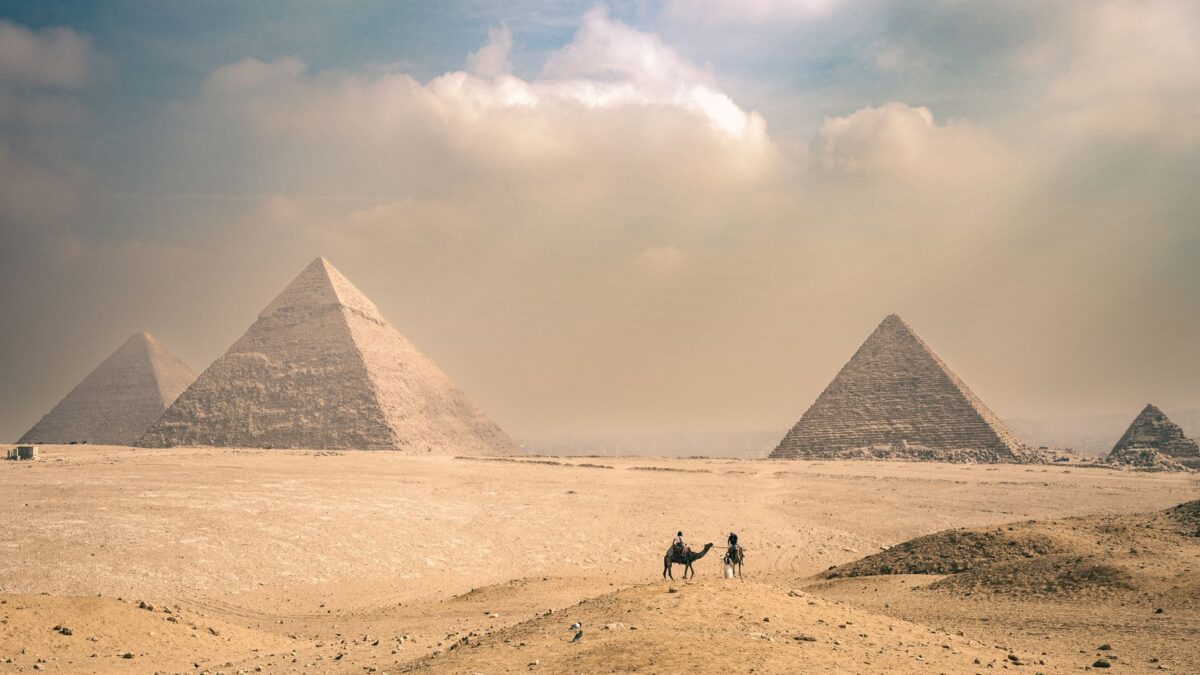
The Great Pyramid of Giza was built for the pharaoh Khufu around 2600 to 2560 BC by organized crews of Egyptian workers. They cut most of the stone at Giza itself, shipped fine white limestone by boat from quarries across the Nile, dragged blocks on sledges and raised them with ramps, a picture supported by papyri, quarries and the workers’ own town.
Imagine the site at full speed: boats unloading pale limestone at a harbor near the plateau, teams hauling sledges up earthen ramps, bakeries and breweries feeding the crews in a town just south of the monument. Archaeologists have found traces of almost every part of that scene. No single text explains the whole method, so some details, especially how the top courses were raised, are still debated.
How big is the Great Pyramid?
The Great Pyramid originally stood about 146.6 meters (481 feet) tall and is now about 138.5 meters (454 feet), because its smooth outer casing stones were later stripped away. It is usually estimated to contain around 2.3 million blocks, though published estimates range from about 2 million to 2.8 million.
Its date is approximate. Egyptologists place Khufu’s reign in the 26th century BC, and different chronologies shift it by a few decades. That is also why you will see the pyramid dated anywhere from about 2600 BC to 2560 BC.
Where did the stone come from?
Most of the core stone was quarried on the Giza plateau, close to the pyramid. The bright outer casing was finer white limestone from Tura, on the other side of the Nile. Harder granite used inside the pyramid came from Aswan, far to the south, and also traveled by river.
The best direct evidence for the Tura shipments is a set of papyri found in 2013 at Wadi al-Jarf, an ancient harbor on the Red Sea coast, by a French mission led by Egyptologist Pierre Tallet. Part of them is a logbook kept by an inspector named Merer, who recorded his crew sailing limestone blocks from Tura toward Giza, which the text calls Akhet-Khufu, “Horizon of Khufu.” The papyri date to about the 26th or 27th year of Khufu’s reign and are among the oldest inscribed papyri ever found.
How did they move blocks to Giza?
They used the river. During the annual flood, and through canals and basins, boats could reach close to the plateau. Merer’s logbook describes this traffic in plain entries, sailing downstream and loading stone.
A 2024 study added a new piece of the landscape. Using radar satellite images, geophysical surveys and sediment cores, a team led by Eman Ghoneim of the University of North Carolina Wilmington mapped a now-buried branch of the Nile running about 64 kilometers (40 miles) along the edge of the Western Desert, past Giza and many other pyramid fields. The paper in Communications Earth & Environment (doi.org/10.1038/s43247-024-01379-7) named it the Ahramat Branch, from the Arabic word for pyramids. The authors propose that it served as a waterway for stone and workers and note that several pyramid causeways end near its former banks. That role is a well-supported hypothesis rather than a proven fact.
How were the blocks lifted into place?
The evidence points to ramps, sledges and large teams pulling on ropes, but not to one agreed design. Several ramp layouts have been proposed:
- A straight ramp running up one face, which would have had to grow very long and massive near the top.
- A ramp spiraling around the outside of the pyramid.
- Short ramps or ramps inside the structure, combined with levers for the final courses.
Hard evidence for how such ramps worked came from Hatnub, an ancient alabaster quarry. In 2018, a team from the French Institute for Oriental Archaeology in Cairo and the University of Liverpool described a steep central ramp flanked by two staircases with rows of post holes. The researchers suggested that wooden posts anchored ropes, letting workers haul sledges up slopes of 20% or more. Inscriptions dated the system to Khufu’s reign. Some Egyptologists caution that a quarry ramp for alabaster does not show exactly how the pyramid itself was built.
Who built the pyramids, and where did they live?
The builders were Egyptian workers, not enslaved masses. Excavations by Mark Lehner’s team at Ancient Egypt Research Associates (AERA) at Heit el-Ghurab, about 400 meters south of the Sphinx, have uncovered a 4th-dynasty settlement with houses, barracks-like galleries, bakeries, workshops and a cattle corral. AERA describes the site as the “Lost City of the Pyramids,” and the team’s later work suggests it also served as a port and administrative center.
The bakeries and the corral matter because they show planning on a large scale: someone had to grind grain, bake bread and supply meat for a workforce every day, year after year. That is the work of a state, organized through officials like Merer, who kept careful records.
How many people worked at once is not recorded in any surviving document, so published estimates vary widely and depend on assumptions about the building pace.
How long did it take to build the Great Pyramid?
About two decades is the most common estimate, roughly matching Khufu’s reign, but it is not documented directly. Some construction analyses suggest a shorter build, and others a longer one. The Wadi al-Jarf papyri show that work on the casing was still underway late in Khufu’s reign.
| Evidence | What it shows | Source |
|---|---|---|
| Wadi al-Jarf papyri (found 2013) | Boats carried Tura limestone to Giza late in Khufu’s reign | French mission led by Pierre Tallet |
| Hatnub quarry ramp (reported 2018) | Steep ramps with post holes for hauling blocks under Khufu | IFAO and University of Liverpool |
| Ahramat Branch of the Nile (2024) | A buried river channel ran beside Giza and other pyramid fields | Communications Earth & Environment |
| Heit el-Ghurab settlement | A planned town fed and housed the workforce | Ancient Egypt Research Associates |
Dates for sites like these come from inscriptions, king lists and radiocarbon dating of organic material such as charcoal and plant remains; see our explainer on how carbon dating works.
Bottom line
The Great Pyramid was built by organized Egyptian crews using local stone, boats on the Nile and its branches, sledges and ramps over roughly two decades in Khufu’s reign. The exact ramp design and the method for the top courses are still argued over, but there is no gap in the evidence that needs an outside explanation.
FAQ
Were the pyramids built by slaves?
The evidence points to organized crews of Egyptian workers who were housed and fed in a planned town beside the pyramids. The idea of huge slave armies comes from later stories, not from Old Kingdom records.
How old is the Great Pyramid?
It was built in Khufu’s reign in the 26th century BC, which makes it about 4,500 years old. It is roughly the same age as Stonehenge’s great sarsen circle, while Stonehenge’s first earthwork is older; compare the dates in our article on how old Stonehenge is.
Why did the Egyptians build pyramids?
The pyramids were royal tombs and part of large temple complexes meant to secure the king’s afterlife. The name Akhet-Khufu, “Horizon of Khufu,” reflects that religious purpose.