How Big Was Megalodon? New Size Estimates and Why They Changed
The biggest shark that ever lived is known mostly from teeth the size of a hand. Here is how scientists estimate its size, why the numbers keep changing, when it died out, and why it is not hiding in the deep sea.
Megalodon (Otodus megalodon) was the largest shark known, and a 2025 study estimates the biggest individuals may have reached about 24.3 m (80 feet) and around 94 tonnes. Older estimates based on its teeth gave 15 to 18 m (49 to 59 feet). The giant shark lived from about 23 million years ago until about 3.6 million years ago, and there is no evidence it survives today.
Megalodon’s size has been argued over for more than a century because almost none of its skeleton survives. Each new estimate depends on which fossils are used and which living shark it is compared with.
Why is megalodon’s size so hard to measure?
Megalodon’s size is hard to measure because sharks have skeletons of cartilage, not bone, and cartilage rarely fossilizes. What survives are teeth, which are very hard, and a few sets of vertebrae. No complete megalodon skeleton has ever been found.
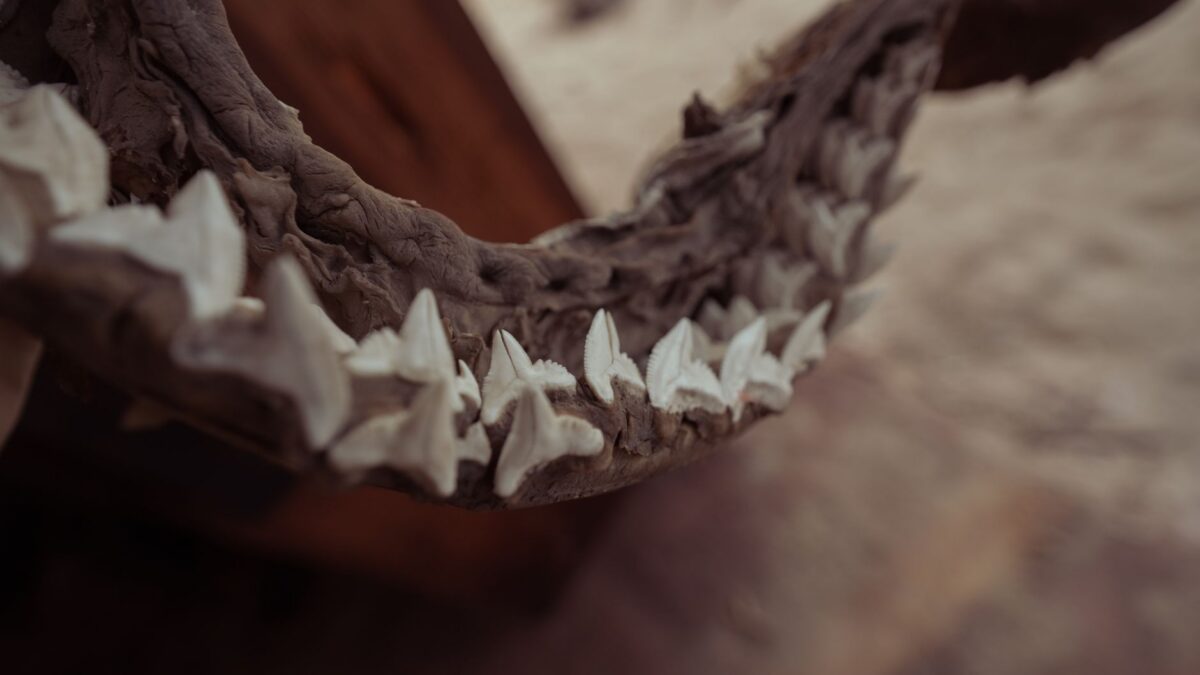
Teeth are plentiful because sharks shed them all their lives. The Natural History Museum in London says sharks lose a set of teeth every one to two weeks and can go through up to 40,000 in a lifetime. The largest megalodon teeth are almost 18 cm (7 inches) long, against about 5 cm (2 inches) for a great white shark’s. The name megalodon means “large tooth.”
How did scientists estimate megalodon’s size from teeth?
For decades, researchers estimated megalodon’s length by scaling up from great white sharks: measure a great white’s tooth and body, then apply the same ratio to a megalodon tooth. Those methods produced estimates of roughly 15 to 18 m, according to the Natural History Museum. The American Museum of Natural History’s educational card for kids gives about 15 m.
The weakness is the assumption that megalodon was shaped like a giant great white. A 2017 classroom project described by the Florida Museum of Natural History had students apply common equations to 3D-printed copies of 46 teeth from one megalodon. Their estimates varied widely, and the team concluded that equations based on great white tooth height do not give accurate body lengths for megalodon.
What does the 2025 study say about megalodon’s size?
A 2025 study in the journal Palaeontologia Electronica, led by Kenshu Shimada of DePaul University, started from vertebrae instead of teeth. The team used a fossil vertebral column from Belgium, about 11.1 m long for the trunk alone, and estimated the head and tail from body proportions in living sharks.
| Estimate | Length | Weight | Source |
|---|---|---|---|
| Older tooth-based estimates | About 15-18 m (49-59 ft) | Varied | Natural History Museum summary |
| Belgian individual (2025) | About 16.4 m (54 ft) | About 30 tonnes | Shimada et al. 2025 |
| Largest reasonable size (2025) | About 24.3 m (80 ft) | About 94 tonnes | Shimada et al. 2025 |
| Newborn (2025) | About 3.6-3.9 m (12-13 ft) | Not given | Shimada et al. 2025 |
The authors argue that megalodon had a more slender body than a great white, closer in shape to a modern lemon shark. A stout great white shape at that size would have been very costly to push through water, they say. The study also estimates a cruising speed of about 2.1 to 3.5 km/h (1.3 to 2.2 mph).
The 24.3 m figure is the largest size the authors think the fossil record can reasonably support, not a measured animal. It rests on assumptions about head and tail proportions, and the authors themselves describe many of their interpretations as tentative. Other researchers may still revise it.
When and why did megalodon go extinct?
Megalodon went extinct about 3.6 million years ago, near the end of the early Pliocene. A 2019 study in PeerJ re-examined megalodon fossils from California and Baja California and found no reliable records younger than that. Earlier work had put the extinction around 2.6 million years ago, but the 2019 team found that many of the younger records were misidentified or poorly dated.
The exact cause is still debated. The Natural History Museum lists several factors scientists have proposed:
- Global cooling that shrank the warm coastal waters megalodon favored
- Declines in prey, or prey moving into cooler waters
- Loss of shallow nursery areas as sea levels fell
- Competition with great white sharks, whose diet overlapped with megalodon’s, according to a 2022 study
Most researchers think a combination of these played a part. Megalodon’s 20-million-year run was long, but it ended well before the first humans.
What did megalodon eat?
Megalodon ate large marine animals, including whales, large fish and probably other sharks. The Natural History Museum says its prey ranged from dolphins to whales the size of humpbacks, and fossil whale bones carry bite marks from megalodon teeth. Its serrated, triangular teeth were built for cutting flesh and bone rather than gripping small prey.
Young megalodons appear to have grown up in shallow coastal nursery areas, which is why the loss of those areas as sea levels fell is one of the proposed reasons for its extinction.
Could megalodon still be alive?
No. The Natural History Museum’s fossil fish experts say megalodon is definitely not alive in the deep ocean. A huge predator would leave clear traces: fresh bite marks on whales, and shed teeth piling up on the seafloor, since every shark drops thousands. No such modern teeth or bites have been found.
The deep sea is also cold and short on food, a poor fit for a giant predator that needed large prey such as whales. Our guide to what lives in the deep sea shows the kinds of animals that thrive there. Teeth sold or found on beaches today are fossils, millions of years old, and are dated with the methods in how fossils are dated.
Bottom line
Megalodon was the largest shark known. A 2025 study puts the biggest individuals at up to about 24.3 m (80 feet) and roughly 94 tonnes, with a slimmer body than a great white, while older tooth-based estimates gave 15 to 18 m. It lived from about 23 million to 3.6 million years ago and is extinct; no modern teeth or bite marks have ever been found.
FAQ
Was megalodon bigger than a blue whale?
No. NOAA Fisheries says blue whales reach up to about 110 feet (33 m), longer than even the largest megalodon estimate of about 80 feet (24 m). Blue whales are also far heavier.
How big were megalodon teeth?
The largest known megalodon teeth are almost 18 cm (7 inches) long, according to the Natural History Museum. A great white’s teeth are usually about 5 cm.
Why do megalodon size estimates keep changing?
Because the estimates depend on which fossils are used and which modern shark is used as the model. Teeth scaled from great whites give one answer; vertebrae combined with slimmer body shapes give a longer one.
Did megalodon live at the same time as dinosaurs?
No. Non-bird dinosaurs died out about 66 million years ago, more than 40 million years before megalodon appeared. See what killed the dinosaurs for that story.