Why Volcanoes Erupt and How Scientists Forecast Eruptions
Kilauea pours out glowing lava while Mount St. Helens blew its top off. The difference comes down to gas and how sticky the magma is.
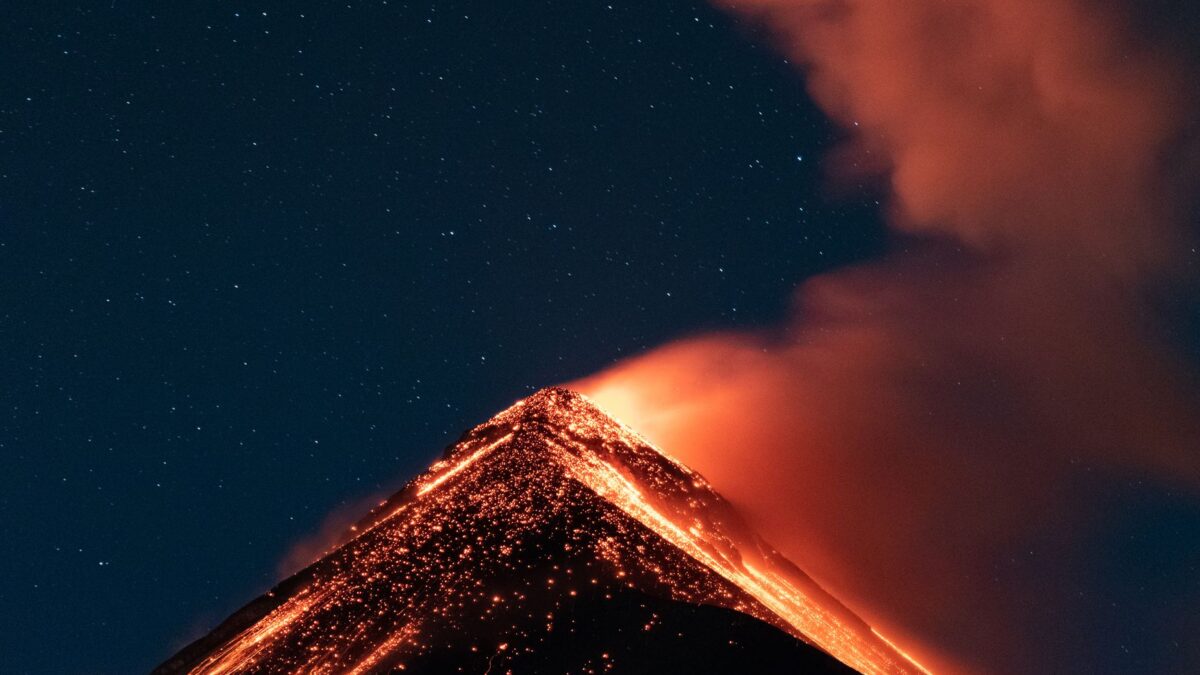
Volcanoes erupt when magma, molten rock that is lighter than the rock around it, rises toward the surface and the gas dissolved in it forms bubbles that push it out. Runny, gas-poor magma tends to pour out as lava, as at Kīlauea in Hawaiʻi. Thick, gas-rich magma traps pressure until it explodes, as at Mount St. Helens on May 18, 1980.
The US Geological Survey (USGS) watches active volcanoes with seismometers, GPS and gas sensors, and reports their state on a four-step alert scale from Normal to Warning.
What makes magma rise and erupt?
Magma rises because it is less dense than the solid rock above it, the same way a cork floats up through water. It collects in chambers and cracks a few kilometers below the surface. As it moves upward, the pressure on it drops.
That pressure drop is what turns an underground body of melt into an eruption. Magma carries dissolved water vapor, carbon dioxide and sulfur gases. Deep down they stay in solution. Closer to the surface they come out as bubbles, the magma swells, and the bubbles push it up the conduit faster. If the rock above cracks or the gas finds a path, the volcano erupts.
Other triggers can tip the balance. A fresh batch of magma from below can heat and stir a chamber, and a landslide can suddenly remove the weight that held pressure in, which is what happened at Mount St. Helens.
Why are some eruptions explosive and others gentle?
The main difference is how sticky the magma is and how much gas it holds. Basalt, the dark magma of Hawaiʻi and Iceland, is hot and runny, so gas escapes easily and lava flows or sprays in fountains. Magma richer in silica, common at volcanoes in the Cascades, is cooler and far more viscous. Gas cannot escape it easily, pressure builds, and the magma shatters into ash when it finally breaks out.
| Kīlauea, Hawaiʻi | Mount St. Helens, Washington | |
|---|---|---|
| Volcano type | Shield volcano made of basalt | Steep stratovolcano |
| Typical style | Lava flows and lava fountains | Explosive, with ash columns and pyroclastic flows |
| Signature event | Episodic lava fountaining in Halemaʻumaʻu crater since December 23, 2024 (USGS, as of November 2026) | May 18, 1980: landslide, lateral blast and a 9-hour ash eruption |
| Main hazards | Lava flows, volcanic gas | Blast, ash fall, mudflows (lahars) |
What happened at Mount St. Helens in 1980?
The 1980 eruption shows how fast pressure can be released. According to the USGS account of the eruption, a magnitude 5.1 earthquake at 8:32 a.m. on May 18 shook loose the bulging north side of the mountain. It collapsed in the largest debris avalanche in recorded history.
With the flank gone, the gas-charged magma inside decompressed at once. A sideways blast tore through the sliding debris at speeds of at least 480 km/h (300 mph) and flattened forests across an area nearly 30 km (19 miles) wide. The eruption removed the upper 300 m (nearly 1,000 ft) of the cone. A column of ash then rose more than 24 km (15 miles) and kept erupting for 9 hours, darkening Spokane, about 400 km (250 miles) away. Fifty-seven people died.
How do scientists forecast eruptions?
Scientists forecast eruptions by tracking the signs of magma on the move, then giving probabilities rather than exact dates. The USGS Hawaiian Volcano Observatory lists the main tools:
- Seismometers record small earthquakes and tremor as magma pushes through rock.
- GPS stations and tiltmeters measure the ground swelling as a magma chamber fills, sometimes by only centimeters.
- Gas measurements track sulfur dioxide output and vent temperatures; a rise can mean fresh magma near the surface.
- Webcams, thermal cameras and satellites watch for new vents, lava and ash and map changes in the ground.
No single signal settles it. Volcanoes can show unrest for months and then calm down, while others give only hours of clear warning. What the instruments do well is show when activity is rising above a volcano’s normal background, which is when observatories raise the alert level.
What do the volcano alert levels mean?
The USGS uses two linked scales: a Volcano Alert Level for people on the ground and an Aviation Color Code for aircraft, since volcanic ash can damage jet engines. The definitions below follow the USGS explanation of the two systems.
| Alert level | Color code | Meaning |
|---|---|---|
| Normal | Green | Typical background activity, not erupting |
| Advisory | Yellow | Unrest elevated above background |
| Watch | Orange | Eruption likely, or under way with limited hazards (little or no ash) |
| Warning | Red | Hazardous eruption imminent, under way or suspected (Red: significant ash) |
The two scales usually move together, but not always. A large lava eruption with little ash can be at Warning on the ground and Orange for aviation. Levels change often, so check the current status on the USGS Volcano Hazards Program site rather than an old news story.
Earthquakes are part of almost every eruption story; our explainer on how earthquakes are measured covers magnitude and shaking intensity.
Could a much bigger eruption happen?
Yes, but the largest kind is very rare. Eruptions big enough to leave a caldera tens of kilometers wide have happened at places such as Yellowstone, though the last there was about 640,000 years ago. Our guide to what a supervolcano is explains the odds the USGS gives and what smaller events are more likely.
When a volcano is active, follow closures from park and civil authorities. Lava, gas and ground near vents can change without notice, and closed areas are closed for that reason.
Bottom line
An eruption starts when rising magma loses pressure and its gas forms bubbles that drive it upward. Runny basalt like Kīlauea’s tends to flow; sticky, gas-rich magma like Mount St. Helens’ tends to explode. The USGS forecasts eruptions from earthquakes, ground swelling and gas, and reports them on a Normal, Advisory, Watch, Warning scale with matching aviation colors.
FAQ
Can scientists predict exactly when a volcano will erupt?
Not to the day in most cases. They can see unrest rising and give forecasts in terms of likelihood, and sometimes warnings come hours or days ahead, but some volcanoes stay restless for years without erupting.
What is the difference between magma and lava?
Magma is molten rock underground. Once it reaches the surface and flows out, it is called lava.
Why does the USGS have a separate color code for aviation?
Volcanic ash can damage aircraft engines and instruments. The color code tells pilots and airlines about ash in the air, which can differ from the hazard to people on the ground.
How many US volcanoes are active?
The US has active volcanoes in Hawaiʻi, Alaska, the Cascades of Washington, Oregon and California, and elsewhere in the West. The USGS keeps the current list and alert levels on its Volcano Hazards Program pages.