How Animals Sleep: Half-Brain Naps, Sleeping in Flight and Torpor
Some animals sleep with one eye open, some sleep on the wing and some doze in four-second bursts. Here is what brain recordings in the wild have revealed about animal sleep.
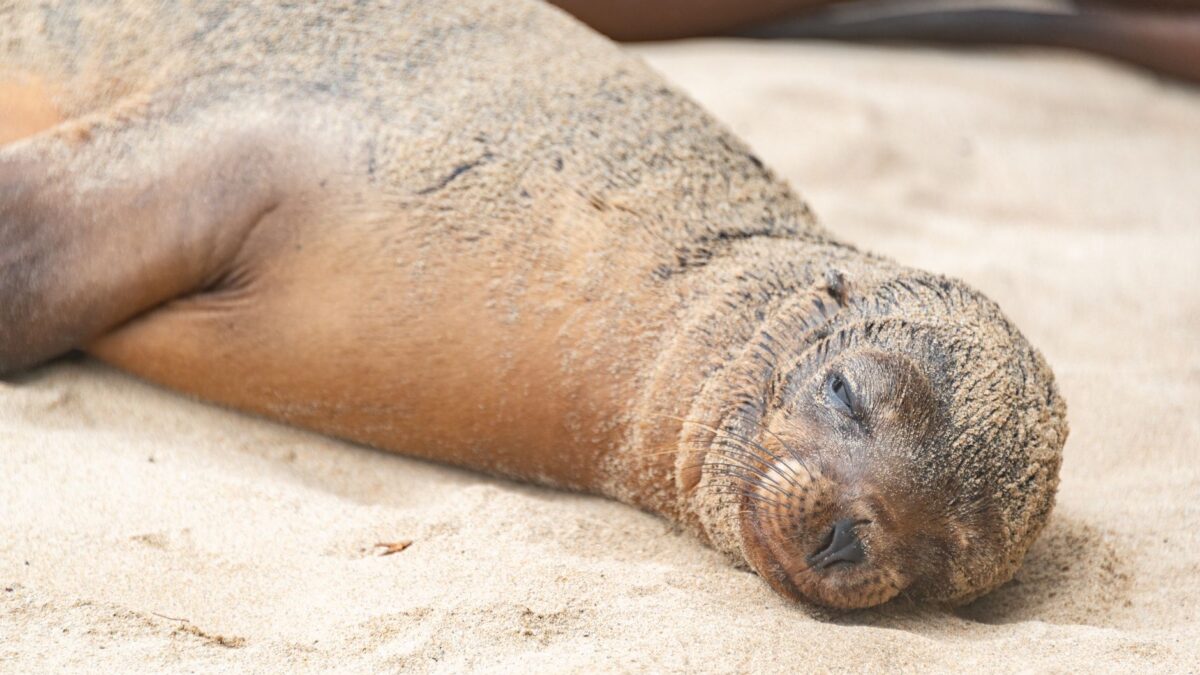
Animals sleep in very different ways. Dolphins rest one half of the brain at a time, frigatebirds sleep about 41 minutes a day while flying over the ocean, chinstrap penguins nod off more than 10,000 times a day in seconds-long naps, and northern elephant seals sleep about two hours a day at sea, according to brain recordings published in peer-reviewed journals.
Picture a bottlenose dolphin drifting slowly in a circle with one eye shut and the other open. Half of its brain is in deep sleep while the other half watches for danger and keeps it coming up to breathe. That trick, called unihemispheric sleep, is one of several solutions animals have found to the same problem: how to get rest without getting eaten, drowning or falling out of the sky.
How do scientists measure sleep in wild animals?
The most reliable method is to record brain activity with an electroencephalogram (EEG). In deep sleep the brain produces slow, large waves that look clearly different from waking activity. Fitting small, waterproof or lightweight EEG recorders to free-living animals has only become practical in recent decades, and many of the most striking results are recent.
Where EEG is not possible, researchers infer sleep from long periods of stillness or from movement sensors. Those estimates are useful but less certain, because an animal can be still without sleeping.
How do dolphins and whales sleep without drowning?
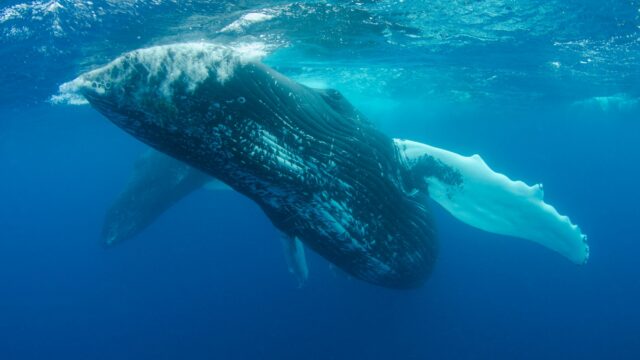
Dolphins and other toothed whales sleep with one brain hemisphere at a time. Published reviews of sleep in aquatic mammals describe one hemisphere showing deep slow-wave sleep while the other stays alert, with the eye linked to the awake side usually open.
This lets a dolphin keep swimming, surface to breathe and watch for predators or its group. Researchers have also found that cetaceans show little or no REM sleep, the dreaming stage common in land mammals. Fur seals and sea lions can switch to one-sided sleep in the water and sleep with both hemispheres on land.
Whales and dolphins communicate constantly, too; our article on how whales communicate covers the calls they use.
Can birds really sleep while flying?
Yes. A 2016 study in Nature Communications (doi.org/10.1038/ncomms12468) recorded the brain activity of frigatebirds during flights over the open ocean that lasted for days. The birds slept only about 0.69 hours a day in flight, roughly 41 minutes, in bouts averaging about 11 seconds. On land, the same birds spent more than half their time asleep.
In flight, the frigatebirds often slept with one hemisphere at a time, but they also slept with both hemispheres at once, mostly while circling in rising air currents. When sleeping on one side, they tended to keep open the eye facing the direction they were flying. The authors suggest the birds can cope with very little sleep at sea, though how they manage without apparent harm is still an open question.
What are microsleeps, and which animals rely on them?
Microsleeps are sleep episodes lasting only seconds. Chinstrap penguins nesting on King George Island in Antarctica take them to the extreme. A team led by Paul-Antoine Libourel reported in Science in 2023 (doi.org/10.1126/science.adh0771) that the birds nodded off more than 10,000 times a day, in bouts averaging about 4 seconds, adding up to more than 11 hours of sleep for each brain hemisphere.
The likely reason is the colony itself. Nesting penguins must guard eggs and chicks from predatory skuas and from neighboring penguins, so a long, deep sleep is risky. The authors suggest the benefits of sleep can build up in tiny pieces, but that is an inference: the study measured the sleep, not how restorative it was.
Which animals sleep the least?
Some of the shortest sleepers measured are large animals that face danger while resting. Northern elephant seals at sea sleep about two hours a day, according to a 2023 study in Science (doi.org/10.1126/science.adf0566) led by Jessica Kendall-Bar while she was a graduate student at the University of California, Santa Cruz. On land during the breeding season, the same seals sleep more than 10 hours a day.
The seals sleep during deep dives, gliding downward while they doze, which the researchers think keeps them away from predators near the surface. Unlike dolphins, they shut down both hemispheres. The team recorded brain activity in 13 young female seals and then used dive patterns to estimate sleep in 334 more.
The seals’ record at sea rivals that of wild African elephants, which researchers estimated from movement data sleep about two hours a day.
| Animal | Sleep measured | Pattern | Study |
|---|---|---|---|
| Frigatebird (in flight) | About 41 minutes a day | Bouts of about 11 seconds; one or both hemispheres | Nature Communications, 2016 (EEG) |
| Frigatebird (on land) | More than half of the time | Longer bouts | Nature Communications, 2016 (EEG) |
| Chinstrap penguin (nesting) | More than 11 hours per hemisphere a day | 10,000+ microsleeps of about 4 seconds | Science, 2023 (EEG) |
| Northern elephant seal (at sea) | About 2 hours a day | During deep dives; both hemispheres | Science, 2023 (EEG and dive data) |
| Northern elephant seal (on land) | More than 10 hours a day | On the beach in breeding season | Science, 2023 |
| African elephant (wild) | About 2 hours a day | Estimated from movement | Movement-based estimate |
Is hibernation the same as sleep?
No. Hibernation is a long period of torpor, a controlled drop in body temperature and metabolism that saves energy when food is scarce. Sleep is a separate state. Small mammals in deep hibernation, such as ground squirrels, let their body temperature fall close to that of their surroundings and wake up briefly every so often.
Bears are a special case. The National Park Service says American black bears do not truly hibernate but enter a shallower torpor, in which body temperature and metabolism drop less than in a true hibernator. Even so, a bear in its den can go months without eating, drinking or passing waste. Some researchers use the word hibernation for bears anyway, so you will see both terms.
Some small birds and mammals use a shorter version, dropping into torpor for part of a cold night and warming up again by morning.
Animals pull off other remarkable feats on little rest, such as long migrations; our guide on how animals navigate explains how they find their way.
Bottom line
Sleep is shaped by risk. Dolphins rest half the brain at a time, frigatebirds snatch seconds of sleep in flight, penguins nap thousands of times a day at the nest and elephant seals sleep on deep dives. Most of these numbers come from single, carefully measured studies of a few animals, so they describe those groups in those settings rather than every member of the species.
FAQ
Do all animals sleep?
Every animal that scientists have studied carefully shows some form of sleep or a sleep-like state, including insects in lab studies. What counts as sleep varies by group, so researchers still debate the edges of the definition.
Do animals dream?
Many mammals and birds show REM sleep, the stage linked to vivid dreams in people. Whether animals experience anything like dreams cannot be tested directly.
Why do penguins take such short naps?
Nesting chinstrap penguins must keep watch over eggs and chicks. Thousands of four-second naps let them add up hours of sleep while staying alert to skuas and neighbors.