Germanic Chieftains Buried With Warhorses Found Near Colmar, France
A fifth-century cemetery near Colmar, France, holds two likely chieftains with swords and warhorses. What the graves show and what is still unclear.
A small fifth-century cemetery in northeastern France holds the graves of two men buried like Germanic chieftains, with swords, a shield and two warhorses laid to rest nearby. The French National Institute for Preventive Archaeological Research (Inrap) described the find in a Nov. 6 statement, reported by Live Science.
The burials date to roughly A.D. 450 to 500, the decades when the Western Roman Empire was falling apart. Germanic cemeteries from that century are scarce, so the site gives researchers a rare look at life on the empire’s fringe during the collapse.
A village, then a cemetery, near the Rhine
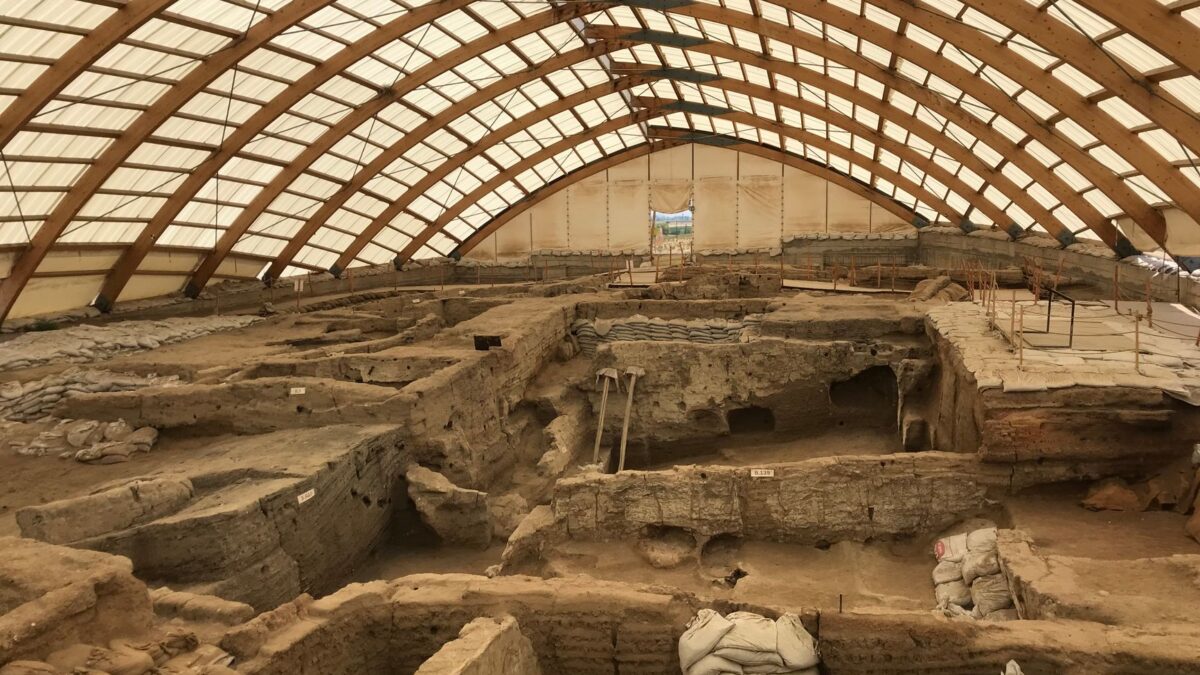
The site lies near the city of Colmar, a few miles from the Rhine River, which today marks the border between France and Germany. From the first to the third centuries a Gallo-Roman village stood there. Excavators found the remains of houses, hearths, wells and craft areas from that settlement.
The cemetery came later. In all, the team recorded 11 adult graves, three graves of children and two horse burials, according to Inrap.
What was buried with the dead
Two of the men stood out for the quality of their grave goods. Their burials included a sword whose wooden scabbard is partly preserved, a shield, a javelin and a scramasax, a Germanic short sword. The scramasax carried a decoration made of gold and garnet. The archaeologists say this set of weapons is typical of graves of Germanic chieftains or mercenaries. The two horses were buried close by, still wearing their harnesses.
Two women’s graves also held fine objects: silver brooches shaped like birds, necklaces of glass beads and a bone comb. Those items suggest the women may have had high status as well.
How the bones point to warriors
The skeletons add evidence beyond the weapons. Two individuals had stab wounds with no sign of healing, which indicates they died quickly and violently, Inrap said. Another man had a right knee whose bones had fused completely, a condition called ankylosis that would have kept him from bending the leg. Ankylosis commonly follows an injury that did not heal properly.
The finding comes from field observation during the dig. The team plans further study of the skeletons to test whether the injuries could have come from fighting. Until then, the link between these wounds and combat remains a working idea.
Why it matters for the end of Rome
Historians have argued for centuries over why the Western Roman Empire fell. One factor was the repeated occupation of Rome in the fifth century by Germanic groups, the Goths and the Vandals. Much less is known about how ordinary communities at the empire’s edge lived through those years, partly because so few Germanic settlements and cemeteries from the period have been found.
The Colmar graves show people of rank, buried with weapons and horses, on the site of an earlier Gallo-Roman village. Inrap expects the site to shed light on the upheavals that followed Rome’s political collapse and how they affected people living along the Rhine.
Source: Live Science