Arctic Ice Cores Trace Arsenic to One Montana Copper Mine
Ice cores from 10 Arctic sites point to one Montana copper mine as the source of heavy metals, a Nature Sustainability study reports.
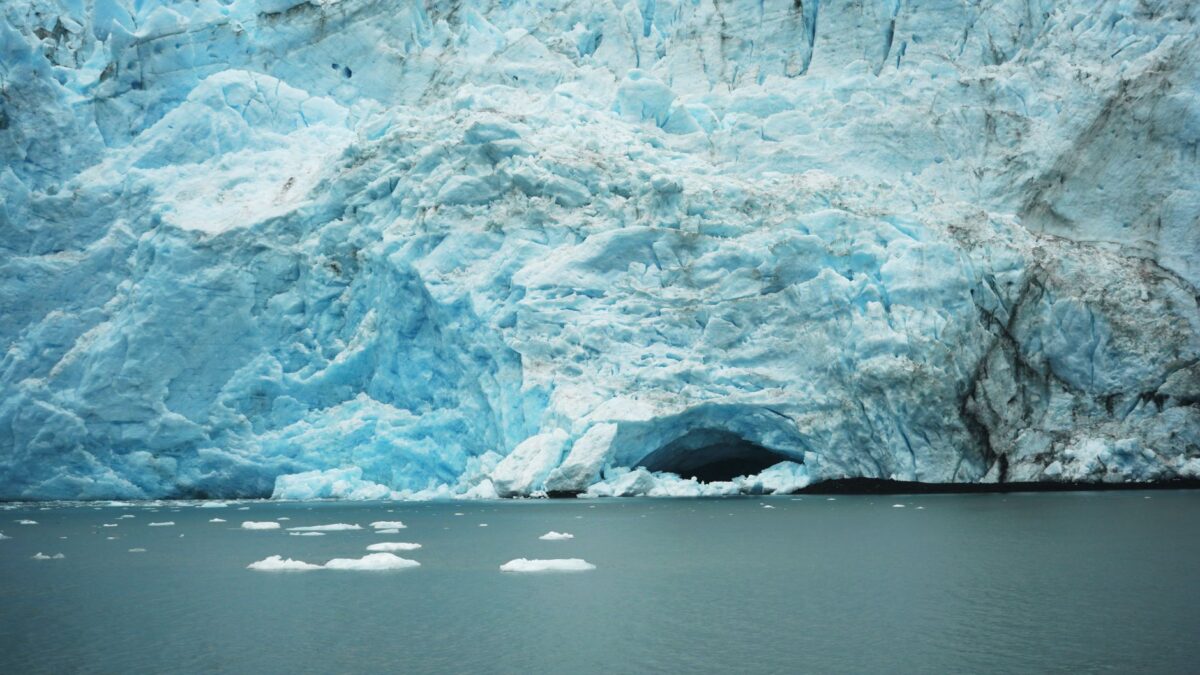
Heavy metals found in 10 Arctic ice cores trace back to one dominant source, the Anaconda Copper Mine in Montana, thousands of kilometers away, according to a study published Nov. 10 in Nature Sustainability. The researchers, including Joe McConnell of the Desert Research Institute, say their results also show how much pollution a delay in installing smelter controls let escape.
The team estimates that the delay released an extra 60,000 tons of arsenic and 24,000 tons of lead. The findings were reported by Eos, the news magazine of the American Geophysical Union.
How the researchers followed the metals
McConnell, a climate and environmental scientist, has studied ice cores from Greenland, northern Canada and the Russian Arctic for decades. His group had long seen rises in bismuth and antimony in the cores from the early 20th century. Both metals can come from mining. The earlier explanation was pollution from the Second Industrial Revolution, but industrial pollution kept rising after the spike, and the metals peaked in the 1910s and 1920s. McConnell said that pattern did not fit.
A few years ago his lab developed a way to measure arsenic in ice. That is hard because arsenic has no isotopic signature and occurs in very small amounts. Like bismuth, antimony and lead, arsenic can be a by-product of copper smelting.
Heavy metals are particles, not gases, so they settle out of the air after days or weeks. The timing of deposition in the ice therefore tracks closely with when the metals were emitted. The pattern across the cores pointed to northern North America, McConnell said.
Why other smelters were ruled out
The team compared U.S. and Canadian copper production records with the ice data. A smelter in Tacoma, Wash., was too small to account for the signal. Lead isotope ratios from mining at Sudbury, Canada, did not match. A mine on Michigan’s Keweenaw Peninsula mostly produced native copper, so its emissions of these metals were relatively low.
Production statistics for Anaconda lined up almost exactly with the arsenic measured in the cores, including a peak in 1914 of about 15 times the preindustrial level.
The cost of delayed pollution controls
Electrostatic precipitators, devices that capture particles from smoke, were likely responsible for lower pollution after 1919, even though the mine ran until 1947. The study suggests they cut heavy metal emissions by about 65%. The device was patented in 1908, and its inventor drew up an installation plan for Anaconda, but it was not installed for years. McConnell said Montana policy at the time required pollution controls only when they were profitable for the polluter.
What this means for exposure history
Using 1910 and 1911 census records and modeling of how the particles traveled, the researchers estimated that between 1898 and 1918 about 55% of Americans at the time (50.5 million people) and 11% of Canadians (600,000 people) were exposed to arsenic levels that raised lung cancer risk. About 1.4 million people were likely affected by elevated lead levels. According to the EPA, no level of lead exposure is safe for children. These figures are model-based estimates, not measurements of individuals.
Historians may find the picture familiar. The mine faced lawsuits from nearby farmers and ranchers and later from the U.S. Forest Service, which alleged damage to agriculture, poisoned livestock and destroyed forests. The area is now the country’s largest Superfund site.
What outside scientists say
Karl Kreutz, an Earth scientist at the University of Maine who was not part of the work, called it “a really neat piece of detective work.” He said the arsenic evidence seemed convincing to him, and that he had not seen anyone try this with arsenic before.
Franciéle Schwanck Carlos, a geoscientist at the Universidade Federal do Rio Grande do Sul in Brazil, who was also not involved, told Eos that tracing emissions to a single source is difficult. She said the authors appear to have shown a good match using their atmospheric transport models.
Source: Eos (AGU)