Dinosaur Bone Shows Possible Blood Cells After 115 Million Years
Researchers report structures resembling red blood cells and heme in a 115-million-year-old dinosaur leg bone, but outside experts doubt it.
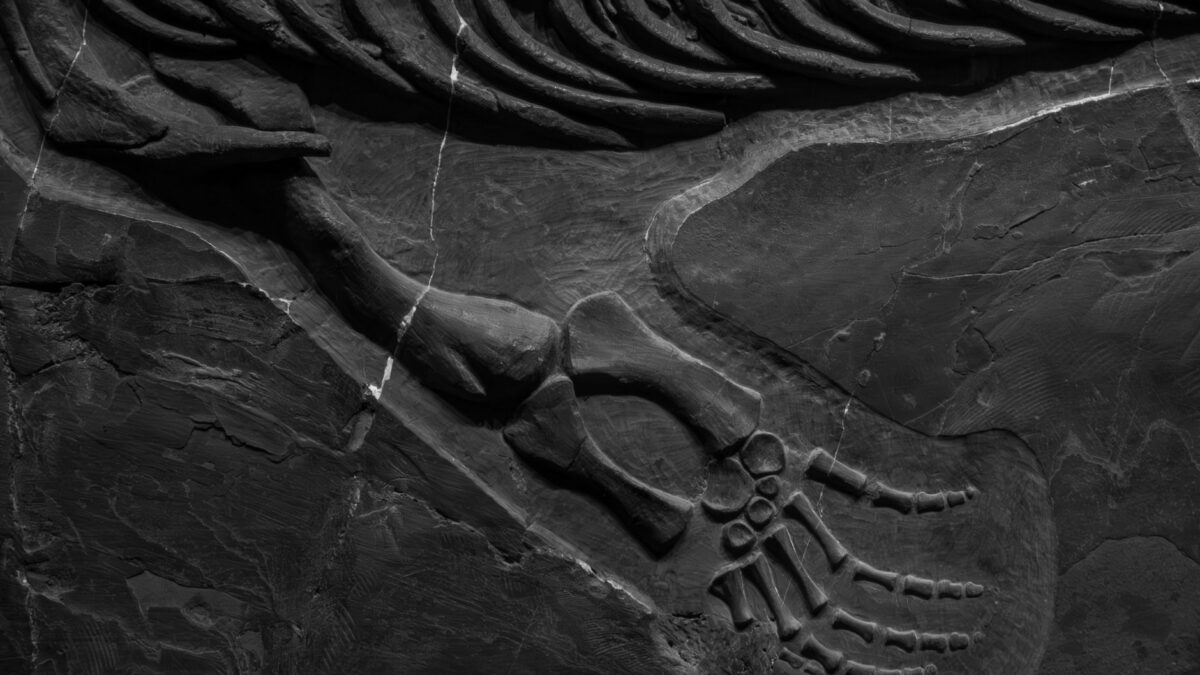
A team in Australia reports finding what looks like red blood cells, along with a degraded form of heme, inside a 115-million-year-old dinosaur fossil. Heme is the iron-containing molecule that lets red blood cells carry oxygen. If the identification holds, it would be the first confirmed dinosaur blood.
The bone comes from Aratasaurus museunacionali, a small, bipedal meat eater from the Cretaceous period. Its fossil was found in a Brazilian mine in 2008. The researchers estimate the animal was about four years old when it died, at roughly 75 pounds and 10 feet long, and not yet fully grown. Microbes in the area helped keep the carcass in unusually good shape after death. The team published its work in the journal Proceedings of the National Academy of Sciences on Nov. 2, according to All That’s Interesting.
How the team tested the hind leg
The researchers cut a hind leg fossil into thin pieces and examined them under a microscope. They saw blob-like structures with sunken centers, about 23 micrometers long and 20 micrometers wide, shaped like red blood cells. The structures sat inside vascular canals, the channels where blood vessels run in living bone.
Looks alone have fooled paleontologists before. Soft tissue breaks down quickly after death, and earlier claims have run into false positives or contaminated samples. So the team ran almost 30 tests. In one, they fired a laser at ground-up bone. That test turned up remnants of heme, part of hemoglobin, the protein that moves oxygen through the blood. The heme was badly degraded, which fits a molecule that has aged for millions of years.
To check for contamination, the scientists ran the same kinds of tests on the sediment around the fossil. The results were very different from those on the bone, which the team reads as a sign the bone samples were clean.
How sure is this?
The study is peer-reviewed, but outside paleontologists are not convinced. According to Science, at least 14 earlier studies tried to identify red blood cells in dinosaur fossils, and none has broadly persuaded experts in the field.
Maria McNamara, a paleobiologist at University College Cork who was not part of the work, called it “probably the most comprehensive effort that’s been done so far.” She still urged caution about calling the structures red blood cells, and she said she wished the team had run more tests to rule out other sources of heme.
Mary Schweitzer, a paleontologist at North Carolina State University who also was not involved, said the Aratasaurus structures are longer and wider than the red blood cells of the dinosaur’s closest living relatives, birds and crocodiles. She added that they show no sign of a nucleus. Schweitzer said the team deserves credit for working hard, but “I just am not convinced that these are red blood cells.”
Lead author Kliti Grice of Curtin University stands by the results. She told Science that the shape, location and chemistry support mineralized dinosaur red blood cells. Grice said it makes sense for cells to change as bone fossilizes, which could leave them looking different from those of living relatives. The animal’s cells may also have been shaped differently to begin with.
Researchers have chased dinosaur blood for decades, because the cells could reveal far more about how these animals adapted to their environments. Whether this fossil settles the question now depends on whether other labs can rule out the alternative sources of heme that McNamara raised.
Source: All That's Interesting
Site editor: Nikita Sheikin