Egyptian Dig Finds Late Period Cemetery With Gold Tongue Amulets
Archaeologists found a cemetery of Late Period and Ptolemaic burials at Tell Atrib Abu Bello in northern Egypt, with gold amulets, falcon burials and coffins.
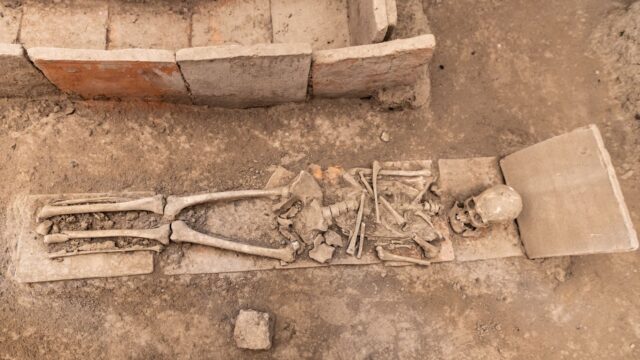
Archaeologists have uncovered a cemetery inside the ancient city of Teranothis, at the Tell Atrib Abu Bello site in Menoufiya Governorate, northern Egypt. Ahram Online reported the find, and Archaeology Magazine summarized the report on Nov. 19. The burials date to the Late Period (712 B.C. to 332 B.C.) and the Ptolemaic era (304 B.C. to 30 B.C.).
Hisham el-Leithy of Egypt’s Supreme Council of Antiquities said the discovery is the first of its kind at the site. He pointed to the large number of burials and coffins found in an open burial courtyard.
A city beside the natron supply
Teranothis stood near an entrance to the Wadi El-Natrun. The valley was a source of natron, the mineral used in the mummification process. That setting makes the embalming traces found in the cemetery easy to place in their landscape, though the reports do not say where the natron used in these burials came from.
What the team found in the tombs
The graves are not uniform. Some people were buried in stone, pottery or wooden coffins, and others in vaulted tombs built of mudbrick. Many of the burials had been looted in antiquity. Even so, examination of the coffins showed traces of embalming materials and resins, along with painted cartonnage and plaster.
Excavators also recovered a range of objects:
- gold tongue amulets
- an earring and a gold necklace pendant
- gold sheets
- scarabs
- faience ushabti figurines
- small sphinx figurines
- statues of the falcon god Horus, and two falcon burials
- terracotta figurines of the goddess Isis
Gold tongue amulets and Isis statuettes have turned up before in Ptolemaic burials at the ancient city of Oxyrhynchus, which Archaeology Magazine covered in an earlier feature titled “Speaking in Golden Tongues.”
How sure is this?
The account comes from Egyptian antiquities officials as relayed by Ahram Online. It is a field announcement, so the dating is given as broad ranges covering the Late Period and the Ptolemaic era rather than a date for each tomb. The number of burials was not disclosed, and looting in antiquity means the original contents of many graves are incomplete.
No laboratory results on the resins or embalming materials were reported, so what the substances are made of remains to be shown. The site’s open burial courtyard, with so many coffins in one place, is the feature officials singled out as new for Tell Atrib Abu Bello.
Source: Archaeology Magazine
Site editor: Nikita Sheikin