Geminid Meteor Shower 2026: Peak Night, Best Time and Where to Look
The Geminid meteor shower peaks on the night of Dec. 13-14, 2026, with up to about 120 meteors an hour. Best hours, where to look and how to watch.
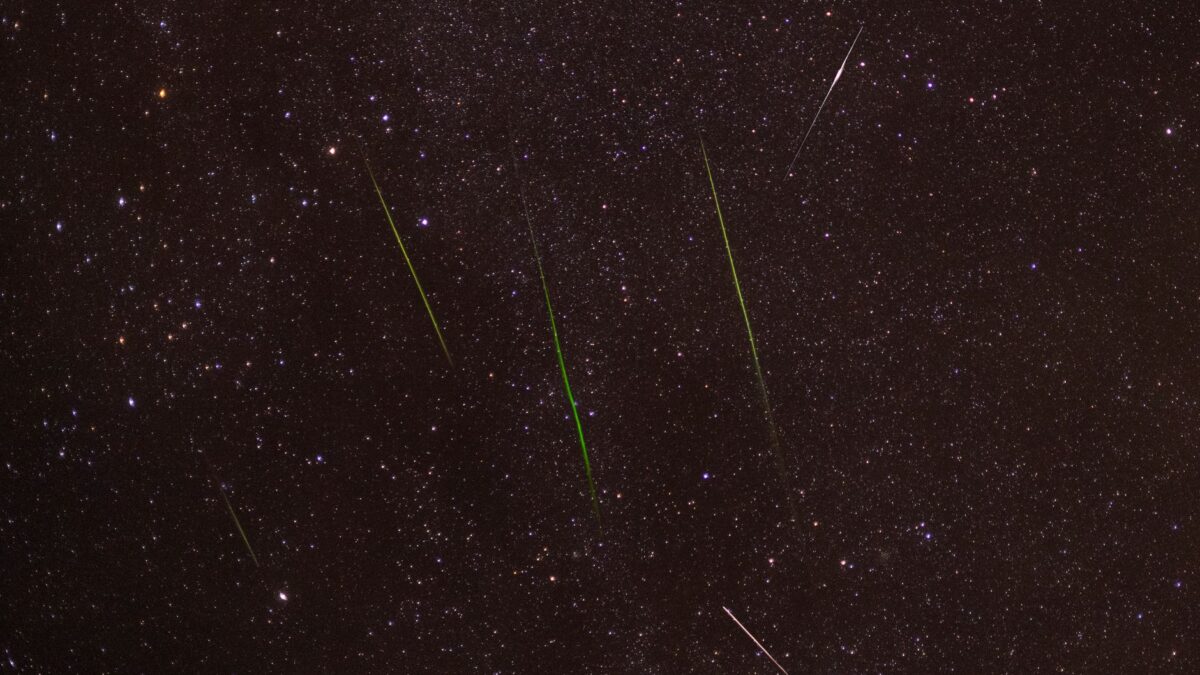
The Geminid meteor shower peaks on the night of Dec. 13 into Dec. 14, 2026, and it is usually the strongest meteor shower of the year. Under a dark, clear sky away from city lights, one observer can see up to about 120 meteors an hour at the peak, though most people in suburbs see far fewer. The best viewing comes after midnight local time, around 2 a.m., when the shower’s radiant in the constellation Gemini is highest. Visibility depends on your location and the weather.
The Moon helps in 2026. New Moon falls on Dec. 9, so on peak night only a thin crescent hangs in the western sky after sunset, and it sets in the evening, leaving the hours after midnight dark.
When is the Geminid peak in 2026?
The peak night is Dec. 13-14, 2026, with good rates on the nights just before and after. The shower is active from about Dec. 4 to Dec. 20 each year, but rates climb slowly and fall off fast after the maximum. If clouds cover the peak night, Dec. 12-13 and Dec. 14-15 are still worth trying.
The exact hour of the maximum shifts a little from year to year. The Geminids have a broad peak, so a few hours either way makes little difference for a casual observer. Our meteor shower calendar with peak dates and rates lists the Geminids alongside the other major showers of the year.
What time should you go out to watch?
Go out any time after about 9 or 10 p.m. local time, and stay out past midnight if you can. Gemini rises in the northeast in early evening, so the Geminids start earlier in the night than most showers. The count improves as the radiant climbs, and it peaks around 2 a.m. local time, when Gemini stands highest.
Early evening has one advantage. While the radiant sits low on the horizon, the few meteors that appear can be “earthgrazers,” long, slow streaks that skim the upper atmosphere at a shallow angle. They are rare, and they are memorable.
Plan on at least an hour outside. Your eyes need 20 to 30 minutes to adapt to the dark, and meteors come in uneven bursts, with quiet stretches between.
Where in the sky should you look?
Look at a wide patch of open sky about halfway up, not straight at Gemini. Geminid meteors appear all over the sky. Their trails point back to a spot near the bright star Castor in Gemini, which is the radiant, but the meteors near the radiant look short, while those farther away look longer.
To find Gemini, look for the two bright stars Castor and Pollux, side by side, to the upper left of Orion in the evening sky from the Northern Hemisphere. Facing east or south and lying back to take in as much sky as possible works well. A trail you can trace backward to Gemini is a Geminid. Meteors that come from other directions belong to minor showers or are random “sporadic” meteors.
Slow, steady points of light moving in a line are satellites, not meteors. Our guide on when Starlink satellite trains are visible explains how to tell them apart.
How many meteors will you actually see?
The figure of about 120 per hour assumes a perfectly dark sky with the radiant overhead. Real counts are lower. From a dark rural site after midnight, a few dozen an hour is a good night. From a suburb with a bright sky glow, expect a handful to perhaps 20 an hour. From inside a city, you may see only the brightest few.
Light pollution costs more meteors than anything else you control. Driving even 30 to 60 minutes away from a city can multiply what you see. Observers in the Southern Hemisphere also see fewer Geminids, because Gemini rises later and stays lower there.
Why are the Geminids so bright and colorful?
Geminid meteors are bits of debris shed by 3200 Phaethon, a small object that behaves partly like an asteroid and partly like a comet. Most meteor showers come from comets. Phaethon’s orbit takes it very close to the Sun, and the heating is thought to crack and shed rocky material along its path. Earth passes through that stream of debris every December.
The particles hit the atmosphere at about 22 miles per second (35 kilometers per second), slower than many other showers. That moderate speed gives the Geminids longer, easier to follow trails. Many are bright and some show a yellowish or greenish tint. NASA has a background page on the shower and its parent body.
What do you need to watch the Geminids?
You need no telescope or binoculars. Both narrow your view, and meteors appear across the whole sky. A short checklist helps more:
- A reclining chair, sleeping pad or blanket, so you can look up for an hour without a stiff neck.
- Warm layers, a hat, gloves and warm socks. December nights in much of the US drop below freezing, and sitting still makes you colder than walking.
- A red flashlight, or a phone set to a red night mode at low brightness, so you do not reset your night vision.
- A hot drink in a thermos.
- A cloud forecast. The National Weather Service gives hourly sky cover forecasts for your area.
Keep your phone screen off as much as you can. One glance at a bright screen can undo several minutes of dark adaptation.
Can you photograph Geminid meteors?
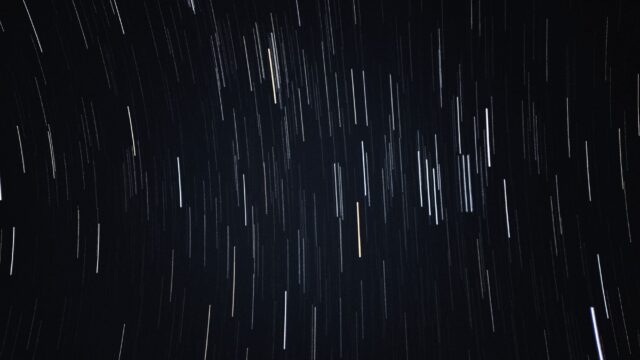
Yes, with a camera that allows long exposures on a tripod. Use a wide-angle lens, focus manually on a bright star, and take a long series of exposures of about 15 to 30 seconds each, aimed at a dark part of the sky roughly 45 degrees from the radiant. Most frames will be empty. Leaving the camera to shoot continuously for an hour or more gives the best chance of catching a bright one. Phones with a night or astro mode can record the brightest meteors, but results are hit and miss.
Quick answers
Is the Moon a problem for the 2026 Geminids?
The Moon is not a problem in 2026. It is a young crescent a few days after New Moon on Dec. 9, and it sets in the evening, so the hours after midnight are moon-free. Our full Moon calendar with Eastern times shows the December full Moon falls later in the month.
Can you see the Geminids from a city?
You can see a few of the brightest ones from a city, especially after midnight. Find the darkest spot available, such as a park or rooftop shielded from streetlights, and give your eyes time to adjust.
Do Geminid meteors ever reach the ground?
Geminid particles are small, mostly sand to pebble sized, and they burn up completely high in the atmosphere. No meteorite has been tied to the Geminid stream.
What is the next big meteor shower after the Geminids?
The Quadrantids peak in early January. Their peak is short, lasting only a few hours, so timing and weather matter more than for the Geminids.