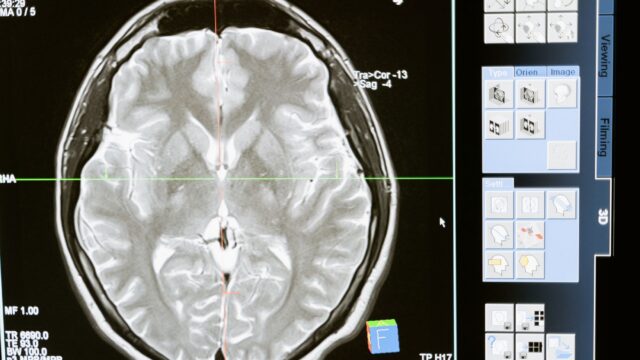
Ozempic-Type Drugs Flopped on Alzheimer’s, but Review Sees Brain Upside
A Science review finds GLP-1 drugs like semaglutide did not slow Alzheimer's, yet may help people with obesity or diabetes keep memory and focus.

Weight-loss and diabetes drugs such as semaglutide (Ozempic) and tirzepatide (Mounjaro) did not slow early Alzheimer’s disease in large clinical trials, but they may still help some people protect memory and thinking, according to a review published in the journal Science. Researchers from the University of Gothenburg and the University of Copenhagen wrote it at the journal’s invitation.
Their conclusion: the best chance of a brain benefit is probably in people with obesity or type 2 diabetes, and possibly before any thinking problems show up.
What the evidence shows so far
The drugs belong to a class called GLP-1 medications, used to treat obesity and type 2 diabetes. Beyond weight and blood sugar, they also act on biological processes involved in brain function.
The evidence is mixed. In animal studies, GLP-1 drugs changed how the animals learned and remembered. Human results are less consistent. Studies of patient health records have found that people with type 2 diabetes who took GLP-1 drugs had a lower risk of dementia. Those are observational findings, though: they show an association and cannot prove that the medicine caused the lower risk.
The strongest test so far came from Novo Nordisk’s EVOKE and EVOKE+ clinical trials. There, semaglutide shifted several biological markers linked to Alzheimer’s, but the disease did not progress any more slowly.
Why the authors still see a possible benefit
People with obesity or type 2 diabetes sometimes struggle with attention, planning and how fast they process information. Those problems tend to track with metabolic health and the condition of blood vessels, which is a different process from the brain damage of Alzheimer’s.
So a drug that improves blood sugar control, metabolism or vascular health might help keep those abilities intact even if it cannot halt a neurodegenerative disease that is already under way.
First author Stina Börchers, who works at both universities, said researchers need to learn whether the drugs help these patients keep their cognitive abilities, “particularly if treatment begins before cognitive problems become established.” Identifying which patients might gain is also part of the task, she said.
What is still unknown
Nobody knows yet how GLP-1 drugs would affect the brain. Any effect could come from better metabolic health, from the drugs acting directly in the brain, or from both.
Senior author Christoffer Clemmensen, who leads a research group at the University of Copenhagen, said newer obesity medicines give scientists a way to study how metabolism shapes brain function. Separating the direct and indirect effects, he said, could eventually lead to treatments built specifically to preserve cognition.
The authors also point to a risk. Fast weight loss can cost muscle mass, which can weaken physical function in older adults and frail people and cancel out some of the possible gains. They say patients will need careful monitoring.
What this means for people taking these drugs
The review does not show that GLP-1 drugs prevent dementia, and it confirms that semaglutide did not slow Alzheimer’s in the EVOKE trials. What it does is lay out a narrower question that trials have not yet answered: whether starting these drugs earlier protects memory, attention and other thinking skills in people with metabolic disease.
To find out, the researchers call for clinical trials that measure memory, attention and other cognitive skills from the day patients start treatment and follow them over time. That would show whether the drugs protect brain function and who benefits most.
Where the review was published
The paper, “Obesity pharmacotherapies and cognition,” by Stina Börchers, Giulia Mazzini, Henrik Zetterberg and Christoffer Clemmensen, appeared in Science, 2026, volume 394, issue 6824, page 633 (DOI: 10.1126/science.aek9987). It is a review of existing studies, not a new experiment.
Source: ScienceDaily