Physicists Hit a Space-Time Limit Tracking Electrons in Attoseconds
Electrons lag laser light by about 500 attoseconds, and timing them precisely spreads them out in space, physicists report in Nature Photonics.
Electrons pushed across a gap by laser light start moving about 500 attoseconds after the light field arrives, and the more precisely scientists fix the timing of that motion, the more the electron spreads out in space. An international team led from the University of Regensburg in Germany reported the measurements in the journal Nature Photonics.
The researchers call this tradeoff the “space-time limit.” According to the university, scientists had suspected such a limit before, but this is the first experimental look at it. It sets a boundary on how sharply anyone can film a single electron in both place and time.
How the electron camera works
The work comes from the Regensburg Center for Ultrafast Nanoscopy (RUN), with groups led by Jascha Repp, Rupert Huber, Franz Giessibl and Klaus Richter, and a team at the Max Planck Institute in Hamburg led by Angel Rubio. The lead author is Simon Maier.
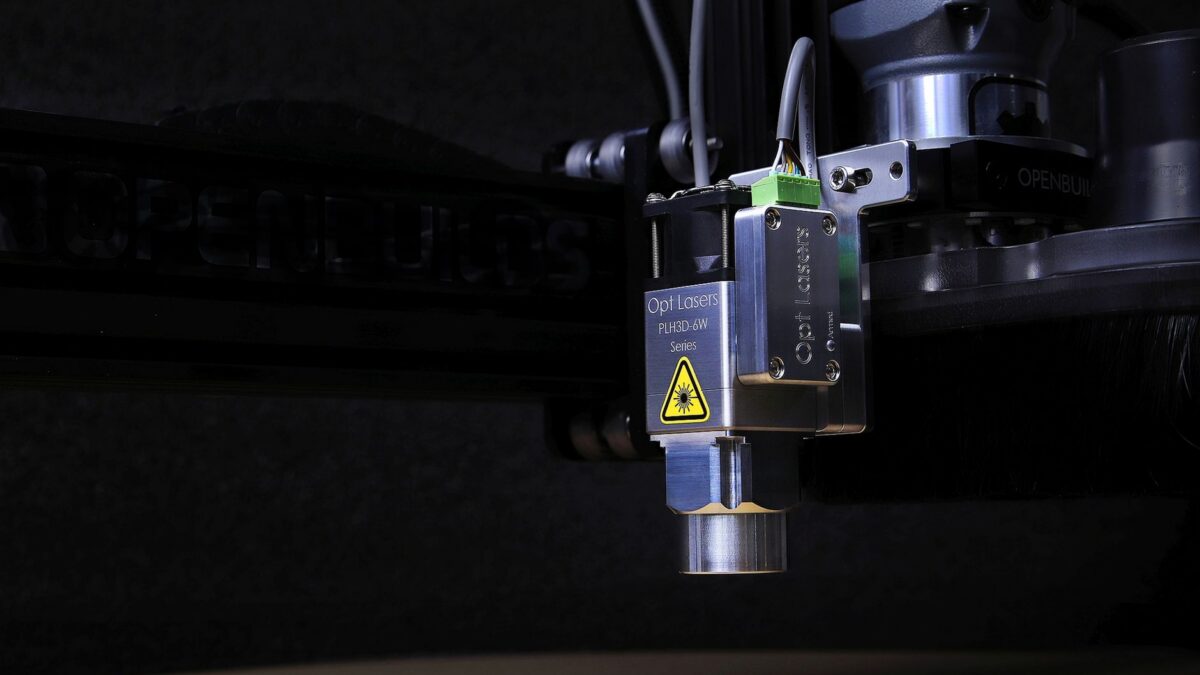
The team built a new laser system with finer time resolution than earlier setups. In the experiment, timed laser pulses drive electrons from an extremely sharp metal tip to a silver surface a few atoms’ widths away. The electrons are detected through the small electrical current they create.
To find out exactly when the electrons jump, the researchers fire two light pulses and vary the delay between them. Maier said that changing that interval lets the team “directly observe how the electrons respond.” Doctoral student Katharina Glöckl compared the setup to a high-speed camera for electron wave packets, the quantum description of where an electron’s wave is spread out.
The electrons cross the gap by quantum tunneling. They act as waves and pass through an energy barrier that classical physics says they lack the energy to cross, roughly like an object slipping through a wall without damaging it.
A 500-attosecond delay and a spreading wave
An attosecond is a billionth of a billionth of a second. The university notes that at these tiny distances electrons can move roughly a thousand times faster than atoms and molecules, which is why the measurement is so hard.
Rubio’s group ran quantum simulations that closely matched the lab results. The calculations showed the electrons do not react to the light field instantly: their motion trails it by about 500 attoseconds. The simulations also showed that the laser pulses could not be treated purely as a wave or purely as a stream of photons. Both pictures were needed.
Co-author Raffael Spachtholz described the tradeoff: pinning down when the electron moves takes more energy, and that extra energy makes the wave packet spread out more in space. To test this directly, the team placed a single atom on the surface to squeeze the electron wave packets into a very small region just before the pulses hit. That let them measure how the spatial spread and the timing are connected.
Even with a lot of energy delivered by the laser, the wave packets stayed compact enough for imaging with atomic-scale detail in space and attosecond detail in time, according to the university.
How this differs from Heisenberg’s principle
Werner Heisenberg’s uncertainty principle says a particle’s position and momentum cannot both be known with unlimited precision. That rule does not restrict position and time in the same way. The new result shows a separate limit that links where an electron is with when its motion happens.
Why it matters for chemistry and electronics
A single electron moved to a molecule is the smallest possible transfer of electric charge. When that electron is packed into a very small region of space and time, the local peak current density can reach up to 1 trillion amperes per square centimeter, the university said. Repp said the group wants to use such wave packets to trigger chemical reactions and watch bonds break or change at the scales where it happens.
Huber said the work could, in the long term, help run electronics and quantum information processing at the natural speed limit of electron motion, which he put at hundreds of thousands of times faster than today’s CMOS chips. The university states plainly that this is a long-term goal and was not demonstrated in these experiments.
The study, “Tracking electrons at the space-time limit,” was published in Nature Photonics in 2026 (volume 20, issue 8, page 961) under DOI 10.1038/s41566-026-01932-0.
Source: ScienceDaily