Polish-Serbian Team Probes Possible Roman Palace Near Sirmium
Radar surveys at Glac in Serbia targeted unexplored ground at a late Roman complex tied to Emperor Maximian. See what the team did and what is unproven.
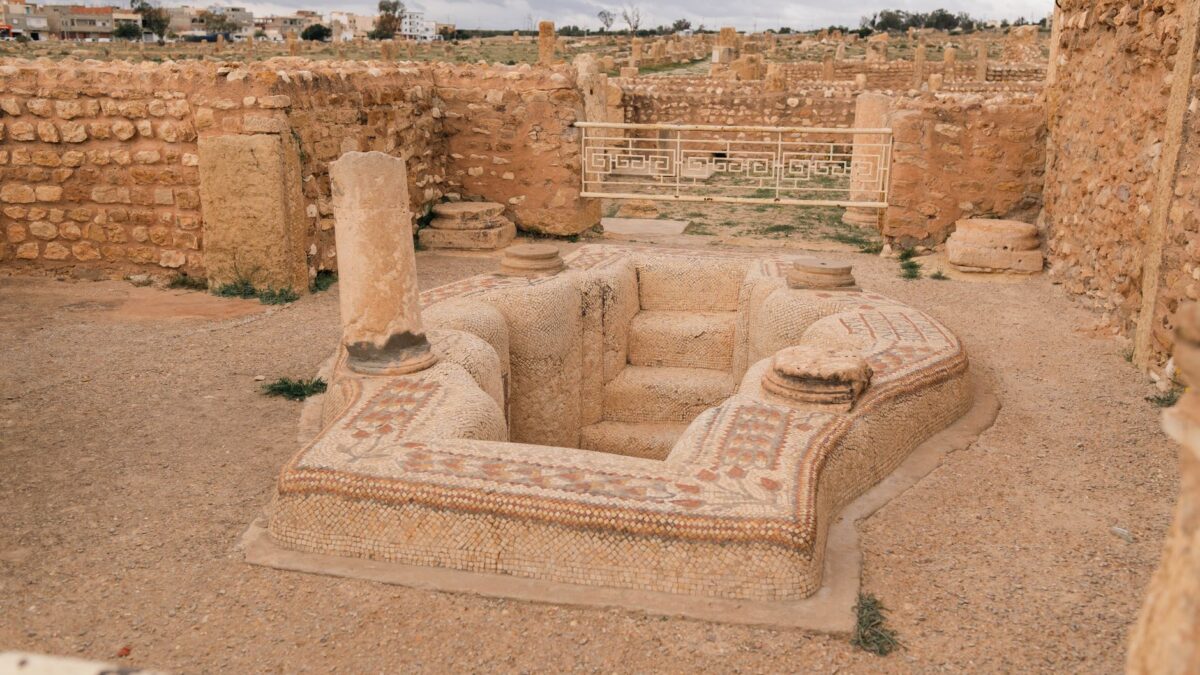
Archaeologists have finished the first season of a joint Polish-Serbian project at Glac, a large late Roman complex near Sremska Mitrovica in Serbia. The site, also called Glacov Salaš, sits beside ancient Sirmium and has long been linked to Emperor Maximian, according to a report from the University of Warsaw carried by HeritageDaily.
The buildings date to the Tetrarchic period, when several emperors shared rule of the Roman Empire. The team says the scale and decoration point to a building of exceptional status, though the exact identity of the complex is still being investigated.
What the team found at Glac
The complex has a monumental reception hall, called an aula, and a large peristyle, which is a courtyard surrounded by columns. Other rooms were decorated with mosaics and wall paintings.
Excavators have also recovered pieces of costly decorative stone: red Egyptian porphyry, green porphyry from the Peloponnese and Numidian marble quarried at Chemtou in present-day Tunisia. These materials traveled long distances and were closely tied to elite and imperial architecture in Late Antiquity.
The historian Aurelius Victor mentions a residence of Emperor Maximian Herculius near Sirmium. That text is the main reason Glac has been connected with his palace.
How the team surveyed the buried southern edge
This season focused on the southern part of the site, which no archaeologist had studied before. Instead of digging first, the researchers used ground-penetrating radar, which sends signals into the soil and reads the echoes to map buried walls and rooms. They paired it with geological surveys and geoarchaeological work, which examines the sediments under the site and how the surrounding landscape formed.
The radar gave preliminary evidence of structures that survive below ground. The sediment studies looked at how the landscape around the complex developed over time.
One open question is how far the complex stretched toward the Sava River, and whether other buildings connected with its operation stood in the riverside zone. The site lies near the Sava and close to routes leading to Sirmium. The team says it may therefore have belonged not only to an imperial residence but also to the administrative and logistical network around one of the empire’s major late antique cities.
How sure is this?
The project is at an early stage. The first season was mainly exploratory, and the University of Warsaw report does not cite a peer-reviewed paper or give sample counts. The radar results are described as preliminary, and the link between the ruins and Maximian’s palace is not settled. The researchers say further work may help show whether the remains match the palace described in the ancient sources.
The people and the city involved
The project brings together the Polish Centre of Mediterranean Archaeology at the University of Warsaw, the Institute of Archaeology in Belgrade and the Museum in Sremska Mitrovica. Dr Piotr Zakrzewski leads the Polish team, and Dr Stefan Pop-Lazić heads the Serbian team.
Sirmium grew into a major political, military and administrative center of the Roman Empire, and several emperors are traditionally associated with the city and its region. Its importance increased in Late Antiquity, when the Balkans moved to the middle of imperial politics and military campaigns.
What comes next
The first season’s results will guide later fieldwork aimed at finding the full extent of the complex and its relationship to the Sava Valley. If the buried structures are confirmed, they could add evidence on how monumental residences and their surrounding landscapes worked inside this imperial center.
Source: HeritageDaily
Site editor: Nikita Sheikin