Possible Red Blood Cells Found in 115-Million-Year-Old Dinosaur Bone
Researchers report heme and cell-like shapes inside a Brazilian dinosaur's leg bone. Here is how they found them and why other scientists are still cautious.
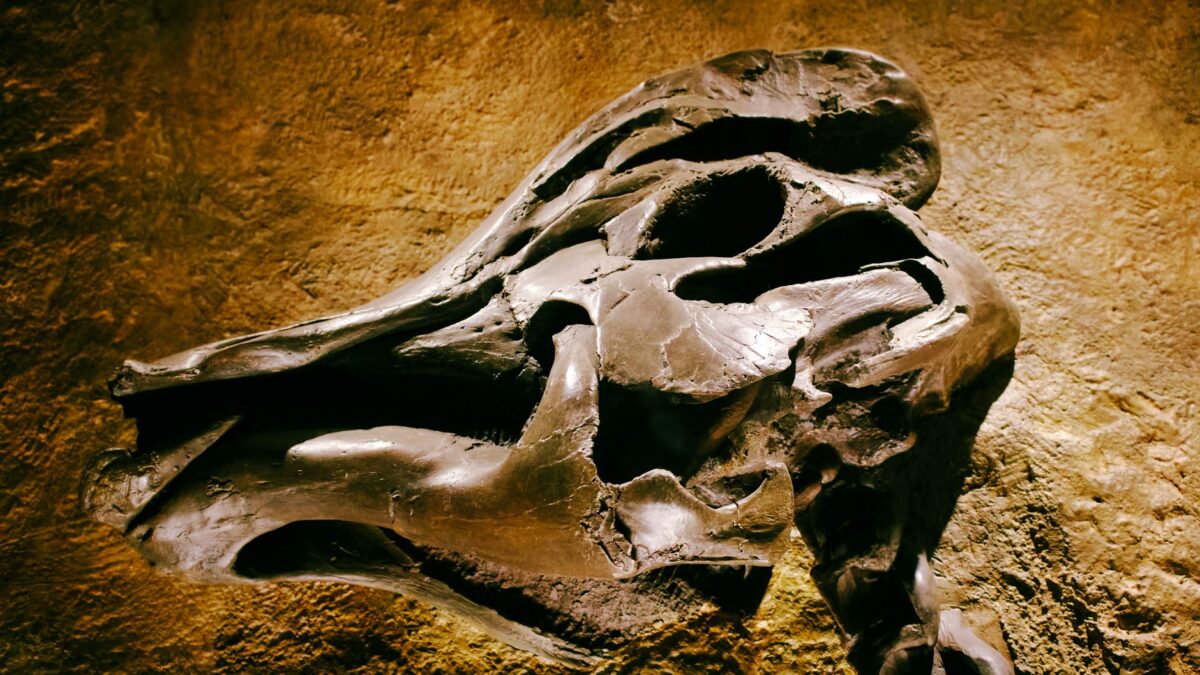
Tiny oval structures inside the leg bone of a dinosaur that lived about 115 million years ago may be the remains of red blood cells, according to a study in the Proceedings of the National Academy of Sciences reported by CNN. The team also found chemical traces of heme, the part of hemoglobin that carries oxygen, inside those same structures.
The result may be the best evidence to date of preserved blood cells in a dinosaur. An outside expert who pioneered this field says the claim does not yet meet every standard used to identify fossil blood cells.
A theropod from northeastern Brazil
The bone belongs to Aratasaurus museunacionali, a theropod (the group of mostly meat-eating, two-legged dinosaurs) dug up in 2008 from the Romualdo Formation in northeastern Brazil. Researchers examined its fossilized leg bone with advanced microscopes and ran chemical tests on what they saw.
Soft tissue almost never survives in fossils. Cells normally break down soon after an animal dies, which is why paleontologists treat finds like this as rare. Reports of similar structures go back to the late 1990s. What sets this study apart, according to the report, is that it lines up four kinds of evidence at once: where the structures sit in the bone, what they look like, the minerals around them and a direct chemical signal of heme.
How the cells could have lasted
The researchers think the animal ended up in still water that held little oxygen, which slowed decay. Over a very long time, small channels inside the bone may have sheltered the cell-like shapes.
The team also detected manganese oxides, specifically a mineral called hausmannite. They believe it helped stabilize the structures while the bone turned to stone. Lead author Kliti Grice, an organic geochemist at Curtin University in Australia, said her group sees the hausmannite as a product of fossilization, not part of the original cells.
Grice said bones already reveal a lot about how an animal was built, grew and moved. Molecules and cells could add another layer: the chemistry of the animal while it was alive. She said the bigger payoff is that the same methods can now be used on other fossils.
Why other scientists are cautious
Mary Schweitzer, a professor emeritus at North Carolina State University who was not part of the study, has spent years researching ancient soft tissue. She said the structures are unusual in size and shape compared with blood cells in today’s birds and reptiles. She also pointed out that manganese oxide is not found in living blood.
Even so, Schweitzer praised the team for combining several techniques and called the work an exciting step. She said the field has long been held back by the assumption that this kind of preservation cannot happen.
What it means for dinosaur research
If the result holds up, museum fossils could carry chemical information that researchers have not looked for, such as clues to how extinct animals breathed and lived. That depends on whether preserved cells turn out to be common or confined to sites with unusual conditions like this one.
The find does not bring dinosaur cloning any closer. Timothy Cleland, a physical scientist at the Smithsonian Institution’s Museum Conservation Institute who was not involved, explained that heme and DNA are very different molecules that survive in different ways, so finding one says nothing about the other. He said the study raises the question of whether the same preservation shows up at other sites known for exceptional fossils.
What happens next
Grice and her colleagues plan to examine fossils from a range of species, time periods and environments to see how often this kind of preservation occurs.
Source: Yahoo