How Memory Works: Forming, Storing and Recalling Memories
A patient known as H.M., a rabbit experiment in 1973 and a film of a car crash changed how scientists think about memory. Here is what they showed.
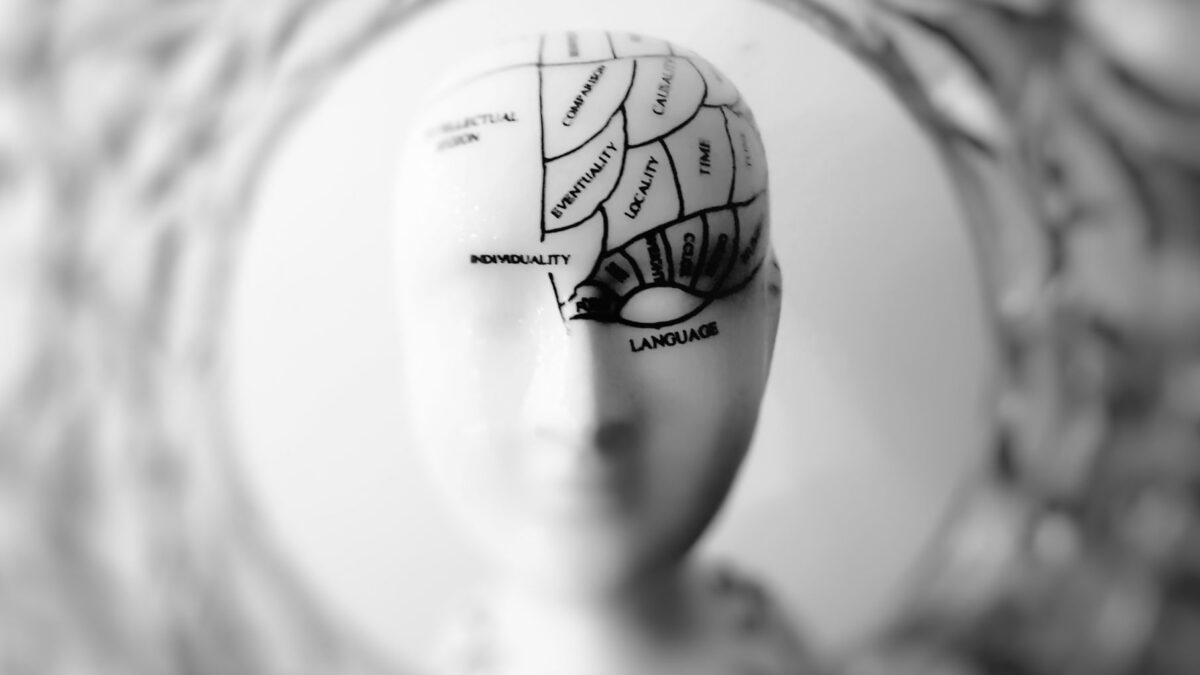
Memory works by changing the connections between brain cells. When you learn something, specific synapses, the junctions between neurons, become stronger, and the pattern of strengthened connections stores the memory. A seahorse-shaped structure called the hippocampus is essential for forming new memories of facts and events, sleep helps stabilize them, and each act of recall can reshape them.
Much of this was pieced together from a few key findings: one patient, one rabbit experiment and a series of studies on eyewitnesses.
What are the main types of memory?
Scientists separate memory by how long it lasts and by what it holds. Short-term memory keeps a small amount of information active for seconds, like a phone number you repeat to yourself. Long-term memory can last for decades.
Long-term memory itself has different kinds. Declarative memory covers facts (Paris is the capital of France) and personal events (your last birthday), things you can consciously recall and describe. Procedural memory covers skills, such as riding a bike or typing, which you perform without thinking through each step.
| Type | What it holds | Example | Key brain areas (simplified) |
|---|---|---|---|
| Short-term memory | A few items for seconds | A number you just heard | Prefrontal cortex and other cortical areas |
| Declarative (facts and events) | Things you can describe | What you ate yesterday | Hippocampus for forming, cortex for long-term storage |
| Procedural (skills) | How to do things | Riding a bicycle | Motor areas, basal ganglia, cerebellum |
The brain regions in the table are a simplification. Memory relies on networks spread across the brain, and researchers still debate the exact roles of each part.
What did patient H.M. teach scientists about memory?
Patient H.M. showed that the hippocampus is needed to form new declarative memories. In 1953, a young man named Henry Molaison had surgery to treat severe epilepsy. The surgeon, William Scoville, removed tissue from the inner part of both temporal lobes, including much of the hippocampus on each side.
The seizures eased, but Molaison could no longer form new memories of facts and events. Scoville and the psychologist Brenda Milner described the case in a 1957 paper titled “Loss of recent memory after bilateral hippocampal lesions.” Known in research only as H.M. until his death in 2008, he took part in studies for decades.
Those studies showed which kinds of memory survived. According to MIT’s account of the research, his short-term memory was intact: he could repeat a string of digits right away, but lost it as the delay grew. He also gradually got better at tracing a star while watching his hand in a mirror, a motor skill, even though he had no memory of practicing. That result showed that skill learning does not depend on the hippocampus the way fact and event memory does.
How do synapses store a memory?
A leading explanation is long-term potentiation, a lasting strengthening of synapses after intense activity. Timothy Bliss and Terje Lømo reported it in a 1973 paper in the Journal of Physiology. Working in anesthetized rabbits, they stimulated a pathway into the hippocampus with short bursts of electrical pulses. In 15 of 18 rabbits, responses to later single pulses stayed stronger for periods from 30 minutes to 10 hours.
The idea is that when two connected neurons are active together, the connection between them grows more effective, so the same pattern fires more easily next time. Long-term potentiation has since been studied in many animals and brain areas and is widely treated as a cellular model of learning. It is one mechanism among several, and linking a specific memory to specific synapses in people remains hard to do directly.
Why does sleep matter for memory?
Sleep appears to help turn fragile new memories into stable ones, a process called consolidation. The National Institute of Neurological Disorders and Stroke says that without sleep you cannot form or maintain the brain pathways that let you learn and create new memories, and that memory consolidation most likely requires both non-REM and REM sleep.
One popular model holds that during sleep, the hippocampus replays recent experiences and helps transfer them to the cortex for longer storage. Evidence for replay comes largely from recordings in rodents, with supporting studies in people. More on what sleep does for the body is in why we need sleep. Animals of many kinds sleep in surprising ways, which we cover in how animals sleep.
Why do memories change each time we recall them?
Recall is not like playing back a recording. Each time a memory is brought back, it is rebuilt, and in that state it can be altered.
Two lines of research support this. In a 1974 study, psychologists Elizabeth Loftus and J. C. Palmer, in the Journal of Verbal Learning and Verbal Behavior, showed people a film of a car crash and then asked how fast the cars were going when they “hit” or “smashed” into each other. The wording changed people’s speed estimates, and the “smashed” group was more likely to say later that they had seen broken glass, which was not in the film.
The second line is biological. A 2000 study in Nature trained rats to fear a tone. When the researchers reactivated the memory by playing the tone and then blocked protein production in the amygdala, the rats later behaved as if they had lost the fear memory. Without reactivation, the same drug left the memory intact. The authors concluded that recalled memories return to an unstable state and must be stored again, a process now called reconsolidation. This was shown in rats, and how far it works the same way in human memory is still studied.
The science here is basic neuroscience. Anyone worried about their own memory should talk with a doctor.
Do other animals have memories like ours?
Many animals show strong memory abilities, though comparing them to human experience is tricky. Octopuses learn from experience and can solve problems, as we describe in how intelligent octopuses are, and many migrating animals remember routes over long distances. Much of what we know about synapses and memory comes from studying rats, mice, rabbits and even sea slugs.
Bottom line
Memories are stored as patterns of strengthened connections between neurons. Patient H.M. showed that the hippocampus is needed to form new memories of facts and events, though not to learn motor skills. Long-term potentiation, first reported in rabbits in 1973, is a leading model for how synapses store information. Sleep helps consolidate memories, and recall can change them.
FAQ
Where are memories stored in the brain?
There is no single storage site. The hippocampus helps form new fact and event memories, and over time they come to depend more on the cortex. Skills rely on other areas, such as the cerebellum and basal ganglia.
Who was patient H.M.?
Henry Molaison had surgery in 1953 that removed much of his hippocampus on both sides to treat epilepsy. Afterward he could not form new memories of facts and events, but he could still learn motor skills. He died in 2008.
Can memories be false?
Yes. Research by Elizabeth Loftus and others shows that wording, suggestion and later information can change what people remember. A memory can feel vivid and still be wrong.
Does sleep help you remember?
The NIH’s neurology institute says sleep is needed to form and maintain the brain pathways behind learning and new memories. Both non-REM and REM sleep likely play a part in consolidation.