Thai Fossil Teeth Reveal a 66-Pound Rodent From 34 Million Years Ago
Two teeth from a Thai lignite mine point to a rodent that may have weighed 66 pounds 34 million years ago, far earlier than giant rodents were known.
A rodent that may have weighed around 66 pounds lived in what is now Thailand 34 million years ago, according to McGill University, whose scientists helped identify it from fossil teeth. The animal, named Yakamys sirindhornae, suggests that rodents grew to enormous size much earlier, and in more places, than researchers had thought.
The team’s report appeared in Scientific Reports in 2026 (DOI: 10.1038/s41598-026-76711-6). The authors are Yaowalak Chaimanee, Laurent Marivaux, Virginie Millien, Chotima Yamee, Pannipa Tian and Jean-Jacques Jaeger.
Two teeth from a Thai lignite mine
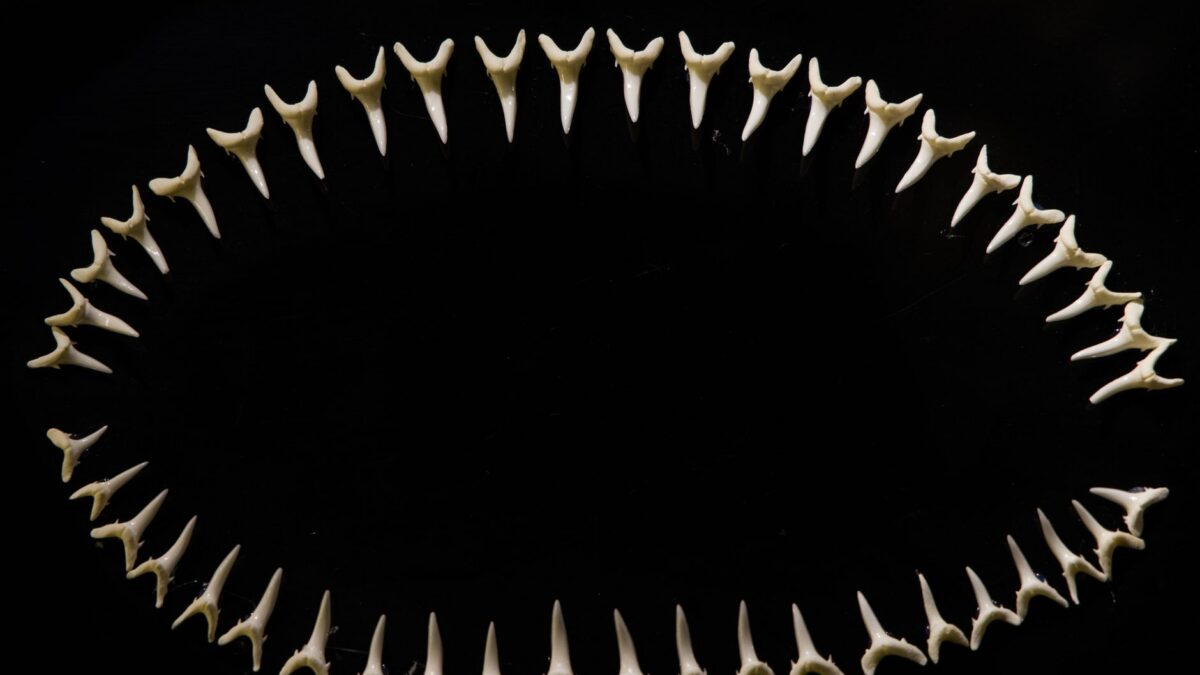
The entire fossil record of this species consists of a lower second molar and a lower incisor. Both came from the Bang Mark Pit at the Krabi lignite mine in Thailand’s Krabi Province. They date to the middle of the Paleogene period, and the researchers described the teeth as “remarkably large.”
The name joins “yak,” the Thai word for giant, with “mys,” the Greek word for mouse or rat. The species name honors Princess Maha Chakri Sirindhorn for her long support of science and paleontological research in Thailand, Millien said.
How the weight was estimated
Nobody weighed this animal, and no skeleton exists. The team applied seven established methods that turn tooth measurements into a body mass. Together they pointed to about 30 kilograms. That is roughly twice the mass of other known rodents from the same period, including one called Hulgana.
The authors say the figure is soft. “This is only a ballpark figure, as there is substantial uncertainty associated with fossil body-mass estimation,” said Millien, a biology professor at McGill and a co-author of the study.
What is still unclear
Two teeth say little about how an animal looked or lived. The researchers note that the thin fossil evidence makes it hard to work out how Yakamys evolved, what role it played in its ecosystem, or which rodents were its closest relatives. More specimens will be needed to answer those questions.
Why it matters for the story of giant rodents
The largest living rodent is the capybara. Millien said very large rodents are not limited to recent ecosystems, and that giant forms evolved repeatedly later in the group’s history, mostly in South America. The Thai find adds Southeast Asia to that picture. In Millien’s words, the region appears to have had an important part in the early history of large-bodied rodents.
The process by which rodents evolve unusually large bodies is called rodent gigantism. Until now, the earliest chapters of that process were less well documented outside South America. A rodent of about twice the usual size for its time, found in Asia and dated to 34 million years ago, changes where scientists look for the origins of the trend.
An international fossil project
The fossils came out of an ongoing collaboration studying ancient mammals in Thailand’s Krabi Basin. It includes scientists from McGill University, Thailand’s Department of Mineral Resources, and French research groups, among them CNRS and Université de Poitiers. Support for the research came from CNRS, Université de Poitiers, Université de Montpellier, McGill University and the Thai Department of Mineral Resources.
The team says future fossil finds could show how these early giants lived and how they relate to the huge rodents that later appeared elsewhere in the world.
Source: ScienceDaily