Triple Star System 28 Light-Years Away Holds Two White Dwarfs
Astronomers found a triple star system 28 light-years away with a red dwarf and two white dwarfs, and its stable orbits are hard to explain.
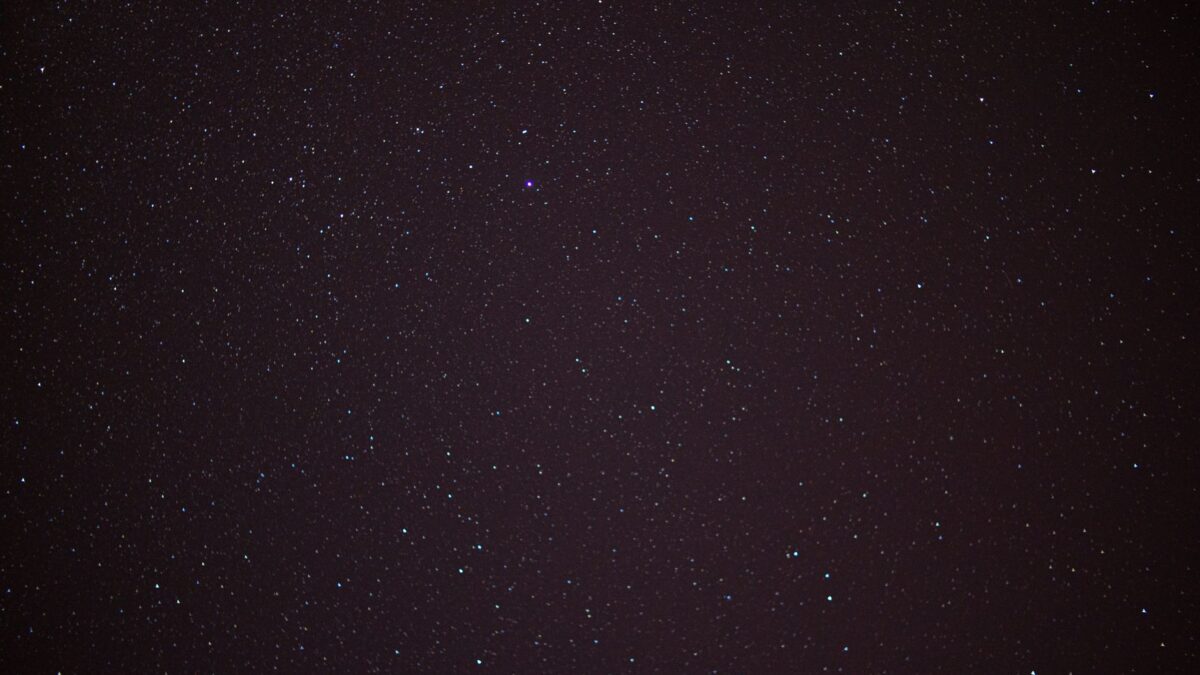
A triple star system only 28 light-years from the solar system holds a red dwarf and two white dwarfs, and astronomers say they cannot yet explain how it ended up in its present, stable form. The team named it Welopō’ai, which Space.com reports combines two Hawaiian words meaning “path of family traits.” No similar system is known within at least 100 light-years.
A white dwarf is the Earth-sized core left behind when a star of roughly the sun’s mass dies. Welopō’ai was once a triple system of two sun-like stars and a red dwarf. Both sun-like stars have since died, while the low-mass red dwarf, which burns its fuel slowly, is still shining.
How the team found the hidden star
Étienne Artigau of the Trottier Institute for Research on Exoplanets at the Université de Montréal led the work. His team was hunting for planets around the red dwarf with SPIRou, an infrared instrument on the Canada–France–Hawaii Telescope on Mauna Kea. SPIRou detects planets through the wobble a planet’s gravity causes in its star. The wobble shows up as a Doppler shift, a change in the color of the star’s light that gives the star’s speed along our line of sight, called radial velocity.
A Jupiter-like planet produces a radial velocity of hundreds of meters per second, and an Earth-mass planet tens of meters per second, according to Space.com. The object near this red dwarf produced a signal of 16 kilometers (10 miles) per second, far too large for a planet. Observations with the eight-meter Gemini North telescope identified it as a white dwarf. Co-author Charles-Antoine Parent of Université Laval said its high mass and very low brightness left only a dead stellar remnant as a plausible explanation.
The new white dwarf sits about 4.6 astronomical units from the red dwarf (688 million kilometers, or 428 million miles), closer than Jupiter is to the sun. An astronomical unit is the average Earth-sun distance. A second, previously known white dwarf orbits the pair at 129.3 astronomical units (19.3 billion kilometers) and takes about 1,000 years to complete an orbit.
Because the inner pair orbits so tightly, the team measured the masses with an uncertainty of less than 1%. The red dwarf has 42% of the sun’s mass and the new white dwarf 62%. Before it died, that white dwarf would have been a star 40% more massive than the sun.
Why the system should not exist
When a sun-like star swells into a red giant, it should disturb nearby companions. Even if the giant did not reach the red dwarf, its expansion should have destabilized the red dwarf’s orbit and might have sent it crashing into the giant. Instead the red dwarf sits in a stable orbit. “This system should not exist,” said Patrick Dufour of the Université de Montréal, who added that the team has no clean explanation for how it arrived at this state.
White dwarf masses are tied to the mass of the star that produced them, so precise masses let astronomers test models of stellar evolution. They also give a starting point for studying the matter inside a white dwarf, which is kept from collapsing further by electron degeneracy pressure, the resistance of electrons to being squeezed together.
How sure is this?
The discovery is described in a paper published Nov. 19 in Astronomy & Astrophysics, a peer-reviewed journal. The masses and orbits come from direct measurements of one system, so the sample is a single triple. How the red dwarf survived is unresolved, and the team has offered no explanation. Binary white dwarf systems are not unheard of, such as WD 0727+482 at 37 light-years, but a two-white-dwarf triple with a regular star is rarer.
What comes next
Dufour said the survival puzzle is the question driving the team’s next observations. They plan more detailed measurements of the gravitational interactions among the three stars to reconstruct the system’s history and orbits. Its closeness to Earth allows high-precision measurements.
Source: Space.com
Site editor: Nikita Sheikin