Supernova SN 2026ahvu Erupts in Galaxy 50 Million Light Years Away
A Type Ia supernova, SN 2026ahvu, is brightening in galaxy NGC 1433, about 50 million light years away. Here is how astronomers are tracking it.
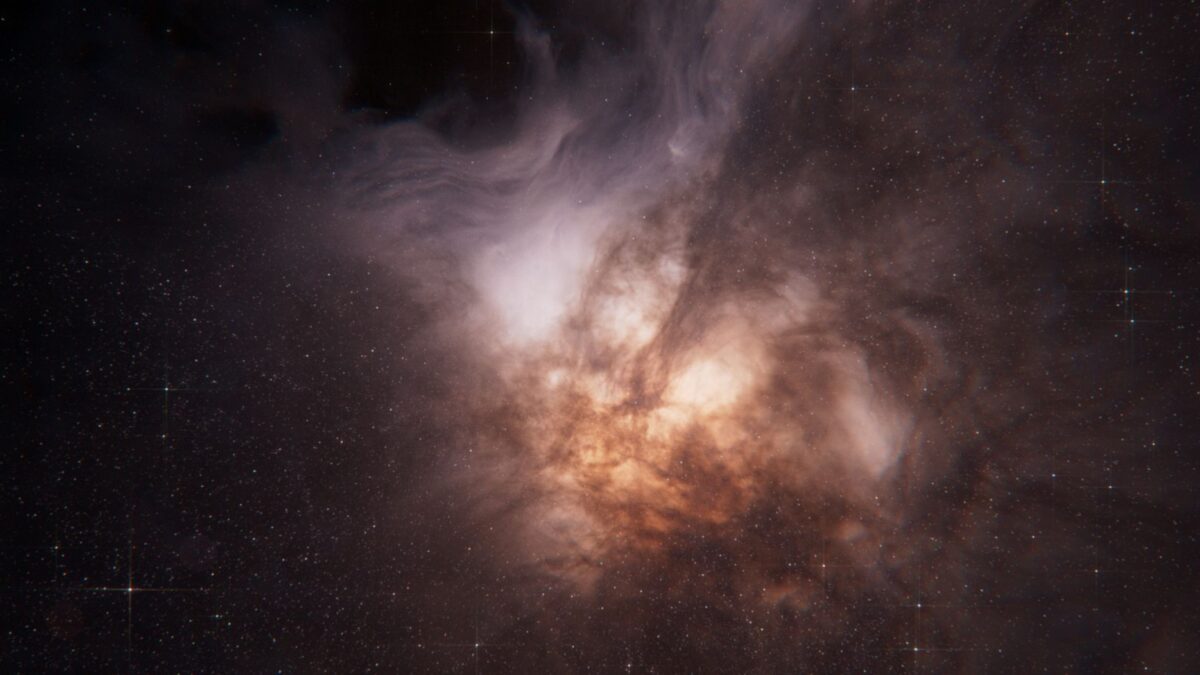
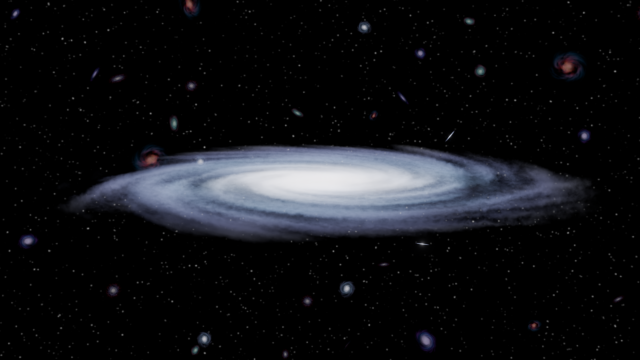
A new supernova has appeared in NGC 1433, a spiral galaxy about 50 million light years from Earth, according to Universe Today. By supernova standards that is close, and astronomers see a chance for detailed follow-up study.
The explosion is named SN 2026ahvu. It is a Type Ia supernova, and it was caught while it is still getting brighter, which lets researchers watch the early stages of the blast.
How the discovery happened
ATLAS, the Asteroid Terrestrial-impact Last Alert System, found SN 2026ahvu on Nov. 2. Its main job is spotting near-Earth objects shortly before they reach us, but it also reports other transients, meaning objects that appear or change quickly in the sky. The system runs four telescopes in Hawaii, Chile and South Africa, plus a fifth unit in Tenerife in the Canary Islands.
The name carries a bit of bookkeeping. The suffix “ahvu” is a chronological identifier, and it marks this object as the 41,855th transient found in 2026. The find was posted to the Transient Name Server, a registry sanctioned by the International Astronomical Union. The server also hosts AstroNotes, short descriptions of new transients. In its note, ATLAS said it submits notes for transients that are within 100 Mpc or have some other feature worth the community’s attention.
When it was first spotted, the supernova had an apparent magnitude of 17. A few days later it had reached 13.5. A lower magnitude means a brighter object, so the climb is steep. Images from the Dark Energy Camera and the Gemini South telescope have already been taken, and more observations are expected.
What kind of explosion is this?
Type Ia is a different kind of event from the more familiar core-collapse supernova, where a massive star runs out of fuel, collapses and explodes. A Type Ia happens in a binary system, and the star that explodes is a white dwarf.
The white dwarf, called the accretor, pulls material off a companion known as the donor star. Gas piles up on the white dwarf’s surface until the star passes the Chandrasekhar limit, about 1.44 solar masses. At that point it explodes and is destroyed. A Type Ia can also come from a pair of white dwarfs that merge and then explode.
What astronomers expect to see
The peak lasts several days and is powered by the decay of an unstable isotope, nickel-56. A weaker tail of light follows as cobalt-56 decays into iron-56. Type Ia supernovae are typically brightest for about 6 months, and then they fade.
About 2 or 3 months after the explosion, the ejecta thin out and spread enough to form a nebula. Spectra taken then show the makeup of the whole exploded star rather than just its core. Universe Today calls this a fairly well-understood progression, though more observations can still refine it.
Why it matters for measuring the universe
Type Ia supernovae serve as standard candles in the cosmic distance ladder, the method astronomers use to find distances to objects too far away for direct measurements such as parallax. Each well-studied Type Ia adds to the data behind that ladder, so a nearby one caught early is useful.
The remains of such explosions can also be spectacular. Universe Today points to the Crab Nebula, whose Hubble image shows it less than 1,000 years after its progenitor exploded. Future observers could see something similar around SN 2026ahvu.
The supernova is also within reach of astrophotographers, so amateur images may appear soon. Researchers plan more images and a detailed study of how the explosion’s light changes over time.
Source: Universe Today