ULA Traces Vulcan Failure to Fuel Supply, Not BE-4 Engines
ULA's early data shows Vulcan's first stage got too little fuel before the Nov. 15 loss of 40 Amazon Leo satellites. The engines themselves look sound.
United Launch Alliance (ULA) said Wednesday that its Vulcan rocket’s first stage most likely received too little fuel on Sunday, Nov. 15, when the launch fell short of orbit and 40 Amazon Leo internet satellites were lost. The company’s preliminary review of flight data points to the fuel supply and not to the two BE-4 engines that burn it.
ULA posted the update at 11 a.m. EST (1600 UTC). The company calls the first stage the booster, and Vulcan’s is powered by two methane-fueled BE-4 engines built by Blue Origin. “Preliminary indications are that the low booster thrust was the result of inadequate fuel supply from the vehicle to the BE-4 engines,” ULA said, adding that the engines’ own performance was not the cause.
What the flight data showed
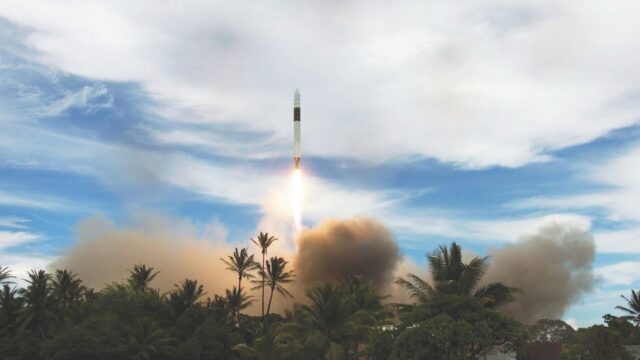
Vulcan lifted off at 12:40 p.m. EST (1740 UTC) from Space Launch Complex 41 at Cape Canaveral Space Force Station. It was the rocket’s fifth flight and its first since February.
ULA said that just after liftoff the vehicle had low first-stage performance. Stage separation then happened when the rocket was too low and too slow to reach orbit. The company lost telemetry about 10 minutes into the flight. Spaceflight Now reported that the BE-4s appeared to fire longer than the prelaunch timeline called for, and that the first stage separated from the Centaur upper stage later than expected.
ULA President and CEO Mark Peller described a “significant shortfall” in first-stage performance. He said the Centaur separated and lit its RL10 engines, but the first stage had left it in too low an energy state to make up the difference.
Which parts were cleared
ULA said the six solid rocket boosters burned out and fell away about 1 minute and 35 seconds after liftoff and performed normally. These boosters, built by Northrop Grumman, were the main worry before the flight. Nozzle problems on two earlier flights, in October 2024 and on Feb. 12, led the Space Force to suspend national security launches on Vulcan, and Vulcan then went about nine months without flying. The nozzles were changed for this launch.
The BE-4 result matters to Blue Origin, whose New Glenn rocket uses the same engine. New Glenn exploded during a test on May 28, and the company’s CEO, Dave Limp, later said the failure began at the main oxygen valve on one of its seven BE-4s. The pair on Vulcan carried a retrofit designed after that explosion. Bloomberg reported this month, citing a Limp memo, that Blue Origin is targeting January for New Glenn’s return.
How sure is this?
The finding is preliminary. ULA said work remains to determine the cause and that it wants to avoid speculation until the investigation is complete. The company did not say which part of the vehicle failed to deliver enough fuel, or why.
The Federal Aviation Administration is overseeing the ULA-led investigation. It will be involved in every step and must approve the final report, including any corrective actions.
What it means for customers
Vulcan is grounded with no return-to-flight date. Amazon had bought 38 Vulcan launches for its Leo network. The lost batch was its largest so far, and a successful launch would have brought its total to 436 satellites. Its other booked rides are on Arianespace’s Ariane 6 and SpaceX’s Falcon 9.
The failure is ULA’s first outright mission loss since Boeing and Lockheed Martin formed the company in 2006. Three of Vulcan’s five flights have now had problems, though Sunday’s is the only one in which the payload missed orbit. ULA said it will release more updates as the investigation continues.
Sources: Spaceflight Now, Space.com
Site editor: Nikita Sheikin