ULA’s Vulcan Fails 10 Minutes Into Flight, Loses 40 Amazon Satellites
A ULA Vulcan rocket failed 10 minutes after liftoff from Cape Canaveral, losing 40 Amazon Leo satellites. What is known about the upper stage problem.
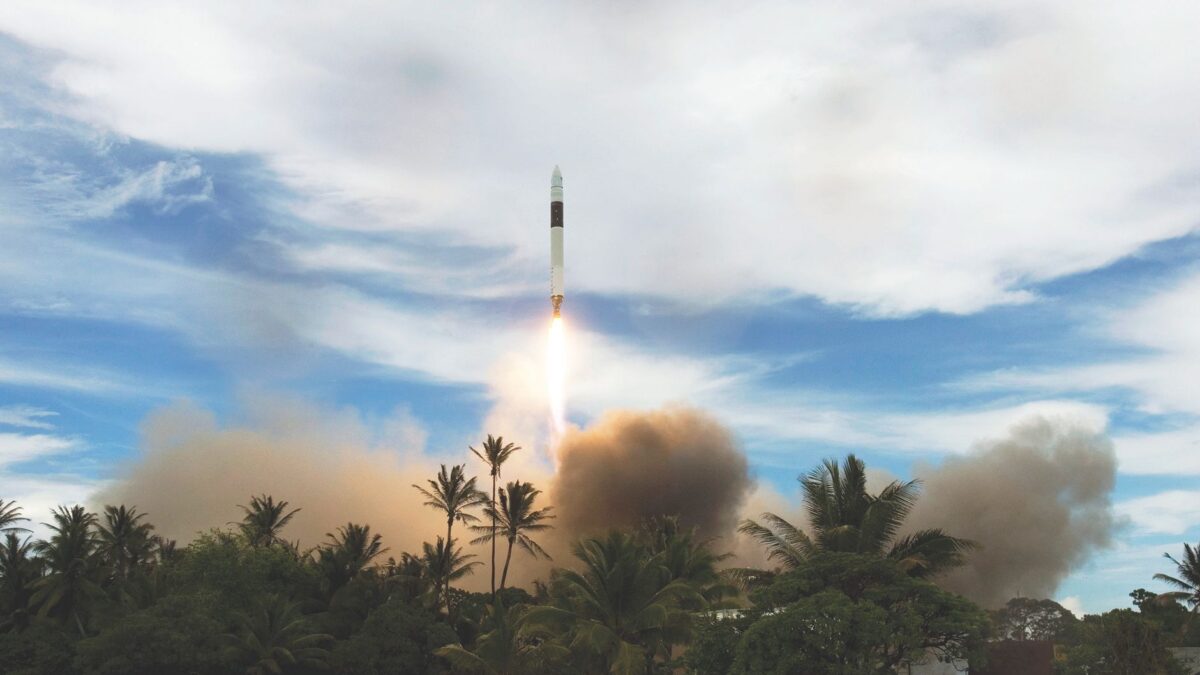
A United Launch Alliance Vulcan rocket failed 10 minutes into its flight on Sunday and did not deliver its 40 Amazon Leo internet satellites to orbit, Spaceflight Now reported. It is the first outright failure of a ULA rocket since the company was formed in 2006 as a partnership between Boeing and Lockheed Martin.
The 214-foot-tall rocket lifted off from pad 41 at Cape Canaveral Space Force Station at 12:40 p.m. EST. ULA confirmed the loss in a statement about 50 minutes later and said it would work to find the cause and “return to flight as quickly as possible.”
What the flight data showed before the failure
The cause is not yet known. What exists so far is ULA’s short statement and what observers could see in the launch broadcast, so the picture is preliminary.
Vulcan left the pad on 3.8 million pounds of thrust from six strap-on solid-fuel boosters built by Northrop Grumman and two methane-burning BE-4 engines. The boosters appeared to work normally. They burned out and fell away about a minute and 40 seconds after liftoff.
After that the flight departed from the plan. According to Spaceflight Now, the first stage appeared to burn longer than ULA’s pre-launch timeline called for and separated from the upper stage later than expected. The hydrogen-fueled Centaur upper stage then began a planned 12-minute 15-second engine firing. Animation driven by telemetry showed the Centaur making unusual adjustments to its orientation early in that burn.
ULA’s update placed the problem during the Centaur firing and gave no further detail. The company’s launch commentators mentioned no trouble, and the broadcast ended without confirming whether the burn ran its full length.
Open questions for the investigation
The countdown had stopped at the T-minus 20-second mark because of an unexplained technical issue with the rocket. ULA resolved it and launched at the end of the window. Whether that issue played any part in the failure is not known.
Two earlier launch attempts were called off. On Friday, problems knocked out a gaseous nitrogen plant that serves several launch providers. On Saturday, network problems between the rocket and ground systems forced another delay.
The flight was the fifth for Vulcan and its first in nine months. ULA and Northrop Grumman had spent that time on nozzle problems with the solid boosters that affected two earlier flights, one in 2024 and one this past February. ULA CEO Mark Peller told Aviation Week & Space Technology before the launch that the company had identified three credible causes and taken steps against all of them.
The BE-4 engines had also been modified. Blue Origin, which builds them, lost a New Glenn rocket in an explosion on the pad last May, a failure traced to an oxygen valve in one of that rocket’s seven BE-4 engines. Peller said Blue Origin fitted the engines on this Vulcan with a retrofit kit to fix the valve issue.
Why it matters for Amazon’s satellite network and beyond
Sunday’s launch was the first of 38 Vulcan flights Amazon bought for its Leo satellites, which are meant to compete with SpaceX’s Starlink. More than 3,300 satellites are needed to complete the constellation. This flight would have brought the number launched to 436.
Amazon has also booked 24 launches on Blue Origin’s New Glenn, 24 on Europe’s Ariane 6 and 13 on SpaceX’s Falcon 9. New Glenn is itself waiting to fly again after the May explosion, so two of Amazon’s rockets are now out of service at once.
Vulcan is the replacement for ULA’s Atlas 5 fleet, and Spaceflight Now expects a potentially significant grounding while engineers go through the telemetry. The U.S. Space Force had already put Vulcan launches of national security payloads on hold because of the nozzle issue.
NASA Administrator Jared Isaacman offered the agency’s help with the investigation in a post on X. “We are in your corner and here to help,” he wrote.
Source: Spaceflight Now
Site editor: Nikita Sheikin