How Microwave Ovens Heat Food: Water, Waves and Hot Spots
Microwave ovens heat food with 2.45 GHz radio waves that make water molecules spin and collide, warming the outer inch first. Hot spots and safety explained.
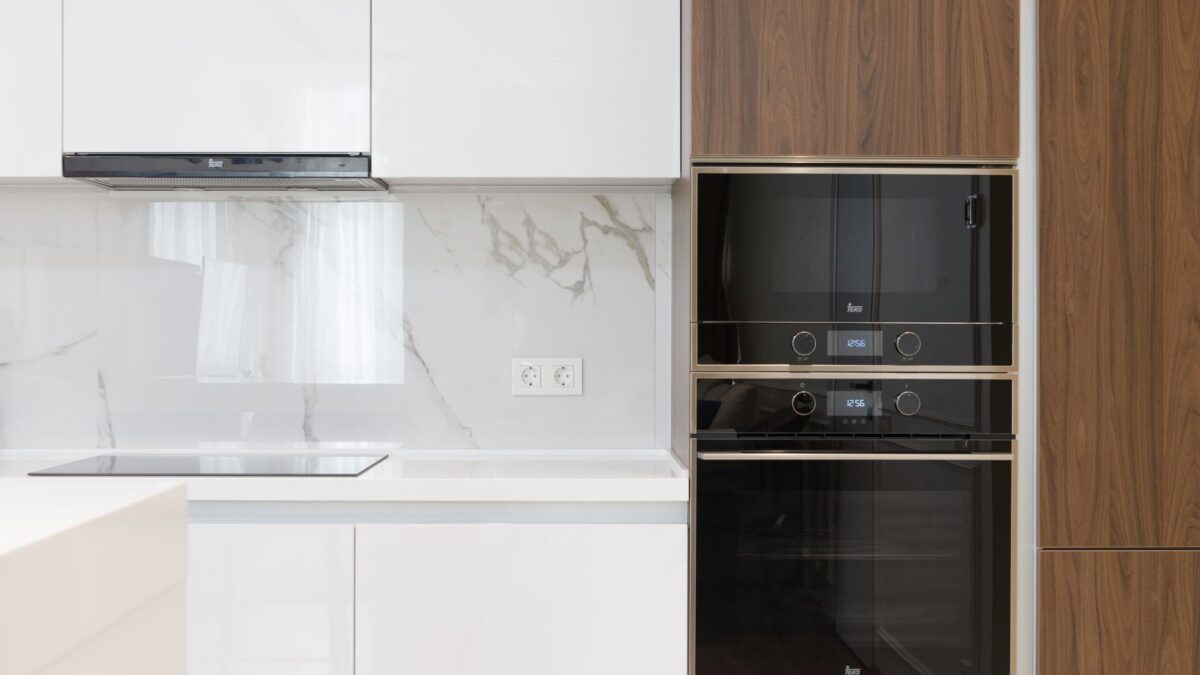
A microwave oven heats food with radio waves at a frequency of about 2.45 gigahertz (GHz), which makes water molecules in the food flip back and forth roughly 2.45 billion times per second. The jostling creates friction between neighboring molecules, and that friction is heat. The waves penetrate only about 1 to 1.5 inches (2.5 to 4 cm) into most foods, so the outer layer heats first and the center warms mainly by conduction.
What are microwaves, and how does the oven make them?
Microwaves are electromagnetic waves that sit between radio waves and infrared light. Inside the oven, a vacuum tube called a magnetron converts electricity into microwaves at 2.45 GHz, a wavelength of about 4.7 inches (12 cm). A metal channel called a waveguide carries them into the cooking chamber, where a rotating plate or a metal stirrer fan spreads them around.
The magnetron is the only part that makes the waves. The rest of the oven aims, spreads and contains them.
Why does water matter so much?
Water molecules are polar: one end, near the oxygen atom, carries a slight negative charge, and the other end, near the hydrogen atoms, carries a slight positive charge. The microwaves create an electric field that reverses direction billions of times per second, and each water molecule turns to line up with it again and again. Collisions with neighboring molecules turn that motion into heat.
Fats and sugars also absorb microwaves, and they reach higher temperatures than water does. A jam filling or a cheese topping can be far hotter than the bread or pastry around it, which explains many burned tongues.
Why do microwaved foods heat unevenly?
Microwaves bounce around the chamber and form standing waves, a pattern of strong and weak zones, so some spots get more energy than others. The turntable moves food through those zones to even out the heating, but cold spots remain, especially in thick or dense portions.
A few habits reduce the problem:
- Spread food in a shallow, even layer, or arrange pieces in a ring with the thickest parts toward the outside.
- Stir or turn the food partway through.
- Cover it with a vented lid to hold in steam.
- Let it stand for a minute or two afterward so heat spreads inward.
The USDA Food Safety and Inspection Service (FSIS) advises heating leftovers to 165°F (74°C), and checking with a food thermometer in several spots.
Why does frozen food heat slowly at first?
Ice absorbs microwaves poorly because its molecules are locked in a crystal lattice and cannot rotate freely. Once a patch melts, the liquid water absorbs energy quickly and heats fast, so a block of frozen food can have hot, melted edges beside an icy middle. The defrost setting cycles the power on and off, giving heat time to spread into the frozen parts between bursts.
Why don’t microwaves leak through the door?
The door has a metal mesh with holes much smaller than the wavelength of the waves, so the waves reflect back into the chamber while light passes through for viewing. Door interlocks switch the magnetron off when the door opens. The FDA page on microwave oven radiation describes the federal limits on leakage. Microwaves are non-ionizing radiation: they add heat, and they do not make food radioactive.
What should never go in a microwave?
- Metal pans, foil with crumpled edges and utensils with points, which can spark.
- Whole eggs in the shell and sealed containers, which can burst from built-up steam.
- Plastic that is not labeled microwave-safe.
- An empty cavity: running the oven with nothing inside can damage the magnetron.
Plain water in a smooth cup can also heat past boiling without bubbling, then erupt when moved or stirred. Heating it in short intervals and leaving it to sit briefly before taking it out lowers the risk.
Quick answers
Do microwaves cook food from the inside out?
No. The waves reach about 1 to 1.5 inches (2.5 to 4 cm) into food, so the outer layer absorbs them first. Heat reaches the center of a thick item by conduction from the outside in.
Why does the plate get hot if only the food absorbs microwaves?
Hot food warms the plate by direct contact. Ceramic and glass absorb little microwave energy themselves, though some dishes with metallic trim or glaze can heat by themselves.
How is a microwave different from other ways of making heat?
A microwave oven creates heat inside the food by agitating water molecules. A conventional oven heats the air and surfaces around the food, and a heat pump moves existing heat from one place to another, as described in how heat pumps make heat from cold air.