How Heat Pumps Make Heat From Cold Air: 4 Steps Explained
A heat pump moves heat from cold outdoor air into a building using a refrigerant loop. Here is the four-step cycle, why it works below freezing, and its limits.
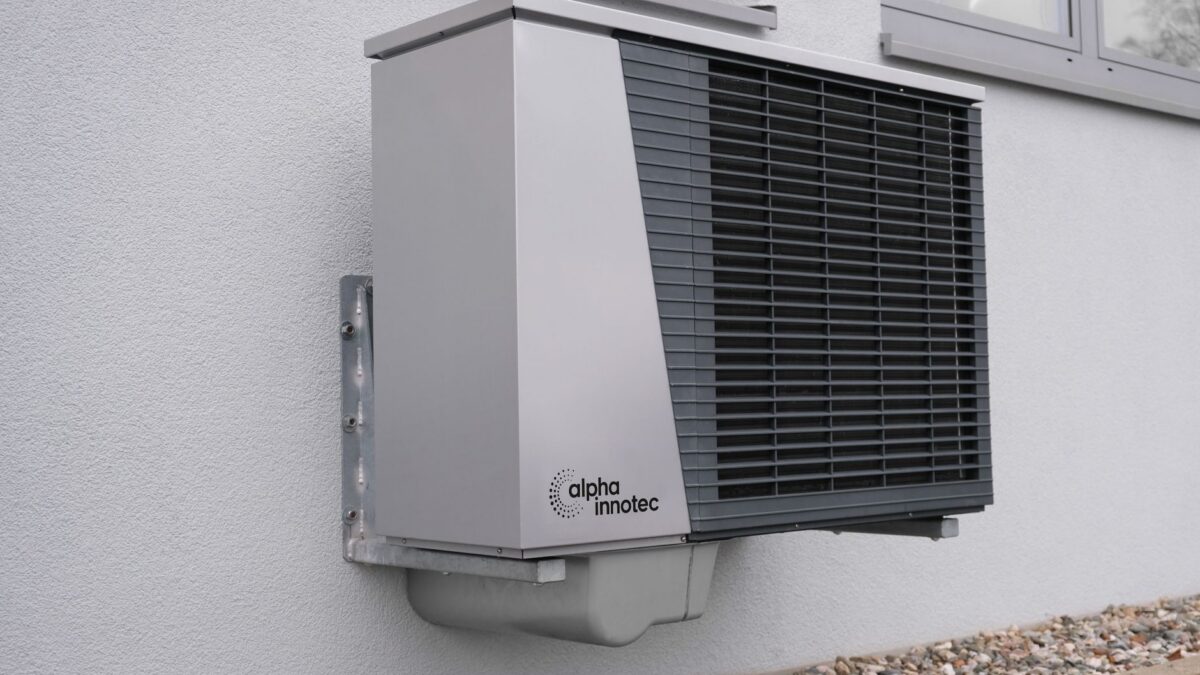
A heat pump heats a building by moving existing heat from the cold outdoor air to the inside, using a refrigerant that is compressed and expanded in a closed loop. Cold air still holds heat, because any temperature above absolute zero (-459.67°F, or -273.15°C) means the molecules are moving. A typical heat pump delivers about two to four units of heat for every unit of electricity it uses, which is why it can beat a plain electric heater that makes one unit of heat per unit of electricity.
The machine does not create heat from nothing. It spends electricity on a compressor to carry heat across a temperature gap, the way a pump spends energy to lift water uphill.
Why does cold air have any heat to give?
Air at 20°F (-7°C) contains thermal energy because its molecules still move, and heat flows from anything warmer to anything colder. A refrigerant coil that is colder than the outdoor air will absorb heat from that air, even on a freezing day.
That is the whole trick. The heat pump keeps its outdoor coil colder than the air around it, so heat keeps flowing in. Then it raises the refrigerant to a temperature well above room temperature, so the heat flows out again inside the house.
What are the four steps of the heat pump cycle?
The cycle has four stages, and the refrigerant passes through them again and again in a sealed loop.
- Evaporator. Cold, low pressure liquid refrigerant flows through the outdoor coil. Because its boiling point at that pressure is far below freezing, it absorbs heat from the air and turns into a gas.
- Compressor. An electric compressor squeezes the gas. Compressing a gas raises its pressure and its temperature, and the refrigerant leaves the compressor hot.
- Condenser. The hot gas flows through the indoor coil. Room air or water in a heating system is cooler than the refrigerant, so heat passes into the building and the refrigerant condenses back into a liquid.
- Expansion valve. The liquid passes through a narrow valve, its pressure drops sharply, and it cools well below the outdoor temperature. It is ready to absorb heat again.
How can a heat pump work when it is freezing outside?
A heat pump works below freezing because its refrigerant boils at temperatures far lower than water does. Common refrigerants boil at well below -40°F (-40°C) at normal atmospheric pressure, so the outdoor coil can be much colder than the air and still pull in heat.
The colder it gets outside, the harder the machine works. The compressor must lift heat across a larger temperature gap, so efficiency falls and the unit draws more electricity per unit of heat. Models sold as cold climate heat pumps use variable speed compressors and other design changes to keep delivering heat at low temperatures, and some are rated to operate at 5°F (-15°C) or below. Check the manufacturer’s rating for the lowest outdoor temperature a specific model supports.
Why does a heat pump use less energy than a regular electric heater?
A resistance heater turns each unit of electricity into one unit of heat. A heat pump uses electricity mostly to move heat that already exists outdoors, so the heat it delivers can be a multiple of the electricity it consumes.
Engineers describe this with the coefficient of performance, or COP: heat delivered divided by electricity used. A COP of 3 means three units of heat for one unit of electricity. The U.S. Department of Energy describes heat pumps as able to deliver more heat energy than the electrical energy they consume, and its Energy Saver guide to heat pump systems covers the main types for homes.
This does not break the law of conservation of energy. The extra heat comes from the outdoor air, which ends up slightly colder. Energy in equals energy out once the outdoor heat is counted.
Why do heat pumps also cool a house?
Most heat pumps cool a house because a reversing valve can switch the direction of refrigerant flow. In summer the indoor coil becomes the evaporator and absorbs heat from room air, and the outdoor coil becomes the condenser and releases it outside. This is the same cycle an air conditioner or refrigerator uses.
A refrigerator is a heat pump with a fixed direction. It moves heat from the food compartment to the warmer coils on its back or underside, which is why that part of the appliance feels warm.
What are the main limits of a heat pump?
The main limits are falling efficiency in deep cold, frost on the outdoor coil and the cost of the equipment.
- When the outdoor coil is cold and the air is damp, frost builds on it. The unit runs a defrost cycle, briefly reversing the flow to melt the ice, and during that time it may draw heat from the indoor side or switch on backup heat.
- Many systems include electric resistance backup heat for the coldest hours, which uses more electricity per unit of heat than the heat pump itself.
- Efficiency depends on the temperature gap. Low temperature heat delivery, such as large radiators or floor loops running warm rather than hot, lets the compressor work with a smaller gap.
- Insulation and air sealing matter, because a heat pump has to replace the heat the house loses.
Air in heated rooms also gets drier as outdoor air warms up indoors, which is one reason static shocks get worse in winter, as covered in this explainer on dry winter air and static. A heat pump does not add moisture to a room.
How does a heat pump compare with the way living things make heat?
A heat pump moves heat with a pressure cycle, while animals generate it by burning fuel in their cells. Humans, for example, shiver to produce extra heat in muscles when the body gets cold, as described in this article on how the body makes heat. Both are ways of keeping a space warm against a colder surrounding, but one relocates heat and the other releases chemical energy.
Cold snaps matter for heat pump performance because the temperature gap grows with the cold. For the weather pattern behind some of the sharpest outbreaks, see what the polar vortex is and how it sends Arctic cold south.
Quick answers
Does a heat pump make its own heat?
No. It collects heat from outdoor air, the ground or water and moves it indoors. The electricity it uses runs the compressor and fans.
What is COP on a heat pump?
COP is the ratio of heat delivered to electrical energy used. A COP of 3 means three units of heat for every one unit of electricity, and the figure drops as outdoor temperatures fall.
Is a heat pump the same as an air conditioner?
The two use the same refrigerant cycle. A heat pump adds a reversing valve so the cycle can also run in the heating direction.
Does a heat pump work below zero?
Cold climate models are built to heat at low outdoor temperatures, and some are rated to 5°F (-15°C) or lower. Standard models lose capacity as it gets colder, so the rating of the specific unit is the number to check.