Why Water Pipes Burst When They Freeze, and How to Prevent It
Water pipes burst when they freeze because ice expands and traps pressure between the blockage and a closed faucet. Causes, warning signs and prevention.
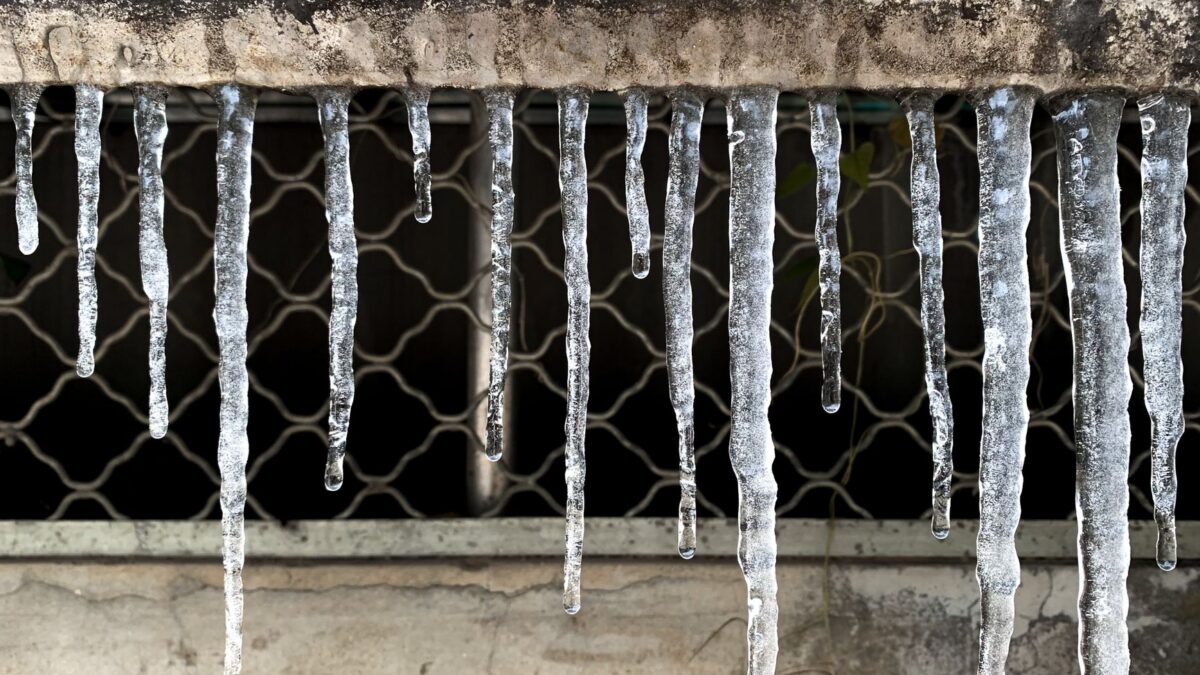
Water pipes burst in freezing weather because water expands by about 9% when it turns to ice, and a pipe has nowhere for that extra volume to go. The split usually does not happen at the ice itself: the growing ice plug pushes water toward a closed faucet, and pressure in that trapped section climbs until the pipe gives way. Pipes in unheated spaces or outside walls are most at risk once outdoor temperatures fall to around 20°F (-7°C) or lower.
Why does water expand when it freezes?
Water expands on freezing because its molecules lock into an open, hexagonal crystal when they form ice. In liquid water the molecules tumble past each other and pack fairly closely. As water cools toward 32°F (0°C), hydrogen bonds hold the molecules in a fixed lattice with more empty space between them, so the same mass takes up more room.
This is unusual. Most substances shrink when they solidify. It is also why ice floats on a lake instead of sinking.
A 9% increase sounds small, but water barely compresses. When it is sealed inside copper, steel or plastic, the expanding ice has to push on something, and it pushes hard.
Where does a frozen pipe actually burst?
A frozen pipe usually bursts in a stretch where there is no ice at all. Ice tends to form first at the coldest point, such as a pipe running along an exterior wall. That plug acts like a stopper. As it grows, it squeezes the liquid water ahead of it toward the nearest closed faucet or valve.
The water in that dead-end section cannot escape and cannot be compressed, so its pressure rises sharply. Once it exceeds what the pipe wall can take, the pipe splits, often along a seam or at a fitting. That is why a crack can show up several feet away from the coldest spot.
The leak often goes unnoticed while the pipe is frozen, because ice blocks the flow. The flooding starts when the pipe thaws and full water pressure returns.
Which pipes are most at risk?
Pipes most likely to freeze are the ones exposed to cold air with little insulation:
- Pipes in unheated basements, crawl spaces, attics and garages
- Supply lines inside exterior walls, especially on the north or windward side
- Pipes under kitchen and bathroom sinks on outside walls, where cabinet doors keep room heat away
- Outdoor hose bibs, sprinkler lines and swimming pool supply lines
Material matters somewhat. Flexible PEX plastic tubing can stretch a little more than rigid copper or PVC, but it can still burst, and its brass or plastic fittings remain weak points.
How cold does it have to be for pipes to freeze?
Water freezes at 32°F (0°C), but pipes inside a house rarely freeze the moment the outdoor temperature drops that low. Walls, insulation and household heat buy time. Trouble is commonly expected when outdoor temperatures stay around 20°F (-7°C) or colder for several hours, and much sooner for pipes that are fully exposed outdoors. Wind speeds up heat loss from walls and exposed lines, so a windy cold night is riskier than a still one at the same temperature. The National Weather Service issues hard freeze warnings and wind chill alerts for local areas.
How can you stop pipes from freezing?
Keeping warm air around pipes, and keeping water moving, prevents most freeze damage:
- Insulate exposed pipes in basements, attics and crawl spaces with foam pipe sleeves.
- Disconnect garden hoses, drain them and shut off and drain outdoor spigots before winter.
- On very cold nights, open cabinet doors under sinks on outside walls so room heat reaches the pipes.
- Let a faucet fed by a vulnerable pipe drip slowly. Moving water is harder to freeze, and an open tap relieves pressure if ice does form.
- Keep the thermostat at the same setting day and night, and no lower than 55°F (13°C) if you will be away.
- Seal drafts and gaps near pipes where cold air leaks in.
The federal Ready.gov winter weather page lists the same core steps for preparing a home.
What should you do if a pipe is frozen or burst?
If a faucet gives only a trickle in freezing weather, a pipe feeding it is probably frozen. Keep the faucet open, then warm the suspected section gently with a hair dryer, a heating pad or towels soaked in warm water, working from the faucet end back toward the frozen area. Never use an open flame, a blowtorch or a propane heater, which can start a fire or damage the pipe.
If you cannot find or reach the frozen section, or a pipe has already split, shut off the main water valve right away and call a licensed plumber. Knowing where the main shut-off is before winter saves time when water is pouring out. If water has reached electrical outlets or appliances, turn off power to that area at the breaker panel if it is safe to do so.
Quick answers
Do hot water pipes freeze too?
Yes. A hot water line that sits unused overnight cools to the temperature around it and can freeze just like a cold line, especially in an outside wall.
Does dripping a faucet really help?
A slow drip helps in two ways: moving water resists freezing, and the open tap gives pressure an escape route so the pipe is less likely to split if ice forms.
Why does a burst pipe leak only after it warms up?
While the water is frozen, ice blocks the crack and the flow. Once it thaws, water under full supply pressure pours through the split.
Can a frozen pipe thaw on its own without damage?
It can, if pressure did not build enough to crack it. Check the line for drips, damp drywall or a drop in water pressure after any hard freeze.