What Are Extremophiles? Life in Boiling Water, Acid and Deep Rock
Some microbes multiply above the boiling point of water, others live in mine runoff as acidic as battery acid, and one bacterium has a whole ecosystem to itself 2.8 km underground.
Extremophiles are organisms, almost all of them microbes, that live and grow in conditions that would kill most life: water above 100 C (212 F), acid near pH 0, crushing pressure, or rock kilometers underground. The current heat record belongs to an archaeon called Methanopyrus kandleri strain 116, which multiplied at 122 C (252 F) under high pressure in a 2008 study.
These organisms are more than curiosities. One of them supplied a key tool for modern DNA testing, and they show scientists where else in the universe life might be able to survive.
Where do extremophiles live?
Extremophiles have been found almost everywhere scientists have looked with the right tools. The table below lists some of the best-studied examples and the published sources behind them.
| Environment | Example | What makes it extreme |
|---|---|---|
| Hot springs, Yellowstone | Thermus aquaticus (bacterium) | Grows best around 70 C (158 F), up to 79 C |
| Deep-sea hydrothermal vents | Strain 121 and Methanopyrus kandleri strain 116 (archaea) | Growth at 121 C and 122 C |
| Acid mine water, Iron Mountain, California | An iron-oxidizing archaeon | Grows at about pH 0.5 and can grow at pH 0 |
| Gold mine fracture water, South Africa | Desulforudis audaxviator (bacterium) | 2.8 km (1.7 miles) underground, no sunlight |
| Subglacial Lake Whillans, Antarctica | Bacteria and archaea living on minerals | About 800 m (2,600 ft) of ice overhead, permanent dark and cold |
Microbes are grouped by the extreme they like: thermophiles and hyperthermophiles love heat, acidophiles love acid, psychrophiles love cold, halophiles love salt and piezophiles love pressure. Many are archaea, a branch of single-celled life that looks like bacteria under a microscope but differs in its chemistry and genes.
How hot can life get?
The highest temperature at which any organism is known to have multiplied is 122 C (252 F). A research team reported in PNAS in 2008 that a newly isolated methane-producing archaeon, Methanopyrus kandleri strain 116, could grow at up to 116 C under low pressure, and at 122 C when kept under high pressure similar to that at a deep-sea vent.
The record before that came from “Strain 121,” an archaeon from a hydrothermal vent on the Juan de Fuca Ridge in the northeast Pacific. Kazem Kashefi and Derek Lovley reported in Science in 2003 that it grew at 121 C, the temperature used in hospital autoclaves to sterilize equipment. Cells held at 130 C stopped growing but could resume once cooled. Water at a deep vent stays liquid at these temperatures because of the pressure of the ocean above, the same deep habitats we describe in what lives in the deep sea.
How did a hot spring microbe change biology labs?
In 1969, Thomas Brock and Hudson Freeze described Thermus aquaticus, a bacterium they isolated from hot springs in Yellowstone National Park. A heat-stable enzyme from it, Taq DNA polymerase, works best around 80 C, according to a 1976 study that purified it. That stability made it ideal for PCR, the technique that copies DNA by repeatedly heating and cooling a sample, now used in everything from crime labs to virus tests. Our explainer on how DNA works covers what that enzyme copies.
Can microbes live in acid and solid rock?
Yes. At Iron Mountain, an old mine site in northern California, researchers found an archaeon growing in slimy streamers on pyrite in water at about pH 0.5, and it could grow even at pH 0, according to a 2000 study in Science. It made up as much as 85% of the microbes in parts of that system and helps produce the acid drainage that pollutes water around old mines.
Deep rock is even stranger. In water from a fracture 2.8 km below the surface in a South African gold mine, a team reported in Science in 2008 that a single bacterium, Desulforudis audaxviator, made up more than 99.9% of the microbes. Its genome shows it can make its own food from chemicals in the rock and water and fix its own carbon and nitrogen, a whole ecosystem coded in one species, cut off from sunlight.
What lives under Antarctic ice?
Lakes of liquid water lie under the Antarctic ice sheet, and some hold living microbes. Subglacial Lake Whillans sits beneath about 800 m of ice in West Antarctica. A US team drilled into it in January 2013 with a specially cleaned hot-water drill and found a community dominated by bacteria. Many were related to microbes that get energy by oxidizing iron, sulfur and nitrogen compounds, which makes sense in a place that never sees sunlight.
A 2025 study in Nature Communications recovered 1,374 single-cell genomes from Mercer Subglacial Lake, also beneath the West Antarctic Ice Sheet, most of them from species new to science.
Are tardigrades extremophiles?
Tardigrades, or water bears, are often called extremophiles, but they are tiny animals, not microbes, and they mostly endure extremes rather than thrive in them. When their habitat dries out, many species curl into a dried-out state called a tun and slow their metabolism almost to a stop. In that state they can survive heat, cold and radiation that would kill them when active, then revive when water returns. They do not grow or reproduce while dried out, which is the key difference from a microbe that multiplies at 122 C.
Bottom line
Extremophiles are microbes that grow where most life cannot: an archaeon multiplied at 122 C under pressure, another species grows in acid at pH 0, and a single bacterium lives alone 2.8 km underground. A hot spring bacterium from Yellowstone gave biology the Taq enzyme behind PCR. Tardigrades survive extremes by shutting down, which is different from thriving in them.
FAQ
Why do extremophiles matter for the search for life on other worlds?
They show that life can run on chemical energy in darkness, heat, cold and acid. That widens the range of places scientists consider, such as underground water on Mars or the oceans beneath icy moons. See our guide to NASA’s Mars missions for the current search there.
What is the coldest temperature life can grow at?
Some microbes keep growing below the freezing point of pure water in salty brines and ice. Reported lower limits vary by study and method, so there is no single agreed record comparable to the 122 C heat record.
Are extremophiles dangerous to people?
The extremophiles described here are not known to cause disease. They are adapted to conditions very different from the human body.
Can you see extremophiles?
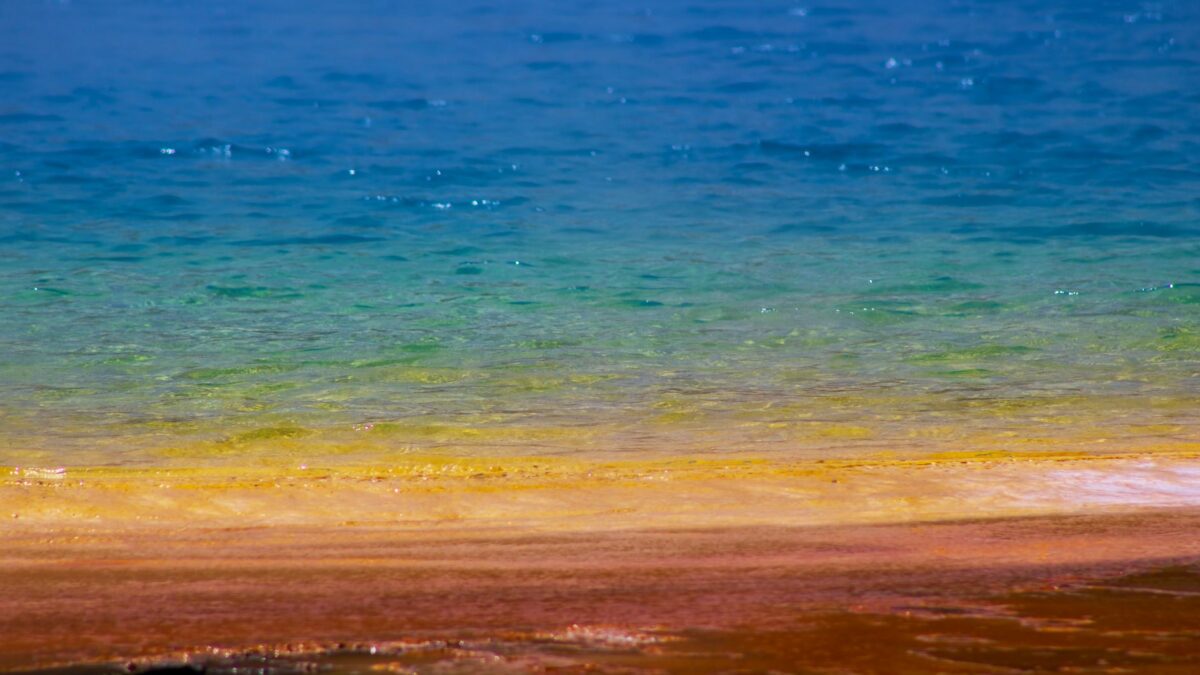
Individually they are microscopic, but large colonies can be visible. The bright orange, yellow and green bands around many Yellowstone hot springs are mats of heat-loving microbes, with different colors at different temperatures.