Hoarfrost vs Rime Ice: How Each Forms and How to Tell Them Apart
Hoarfrost grows from water vapor on clear, calm nights; rime forms when freezing fog droplets hit cold objects. How to tell them apart by shape, side and feel.
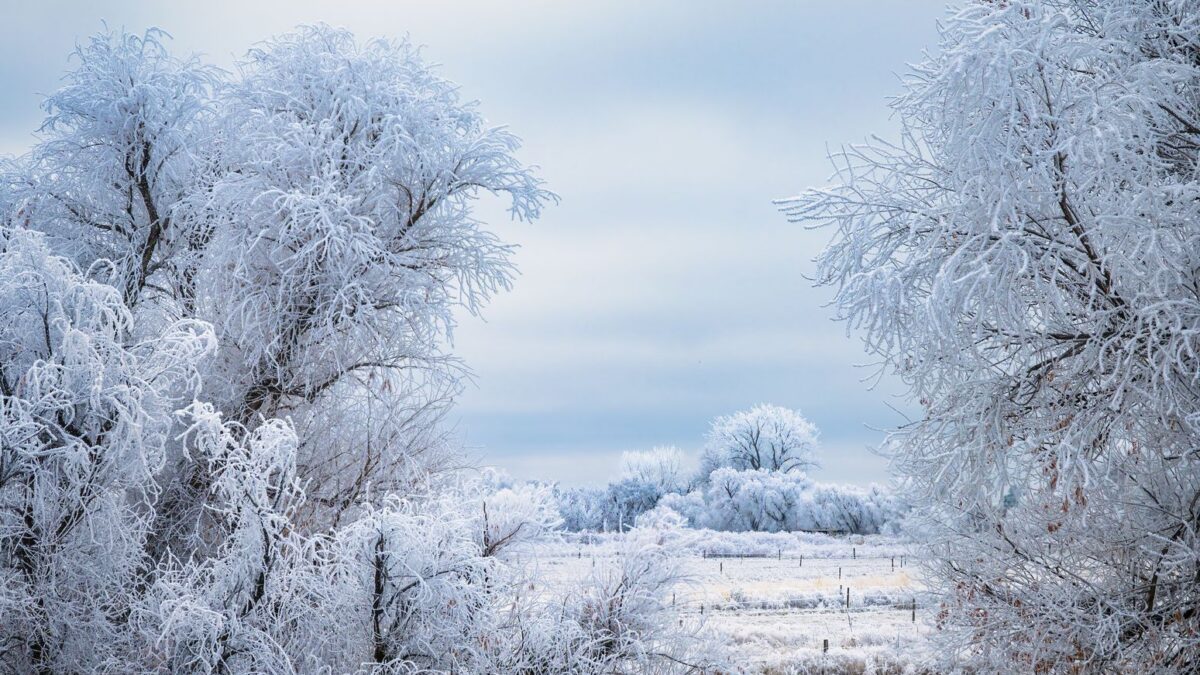
Hoarfrost and rime ice are both white ice coatings that build up on trees, fences and grass in cold weather, but they come from different sources of water. Hoarfrost grows when water vapor in the air turns directly into ice crystals on a surface that is below freezing, usually on a clear, calm night. Rime forms when tiny supercooled droplets of fog or cloud freeze the instant they touch a cold object, usually when freezing fog is drifting on a breeze.
The quickest way to tell them apart is to look at shape and direction. Hoarfrost looks like delicate feathers, needles or flat plates spread fairly evenly over a surface. Rime looks like crusty, grainy white ice that piles up thickest on the side of an object facing the wind.
How does hoarfrost form?
Hoarfrost forms by deposition, the process in which water vapor changes straight from gas to solid ice without becoming liquid first. It needs a surface colder than the frost point, the temperature at which the air’s moisture starts to deposit as ice.
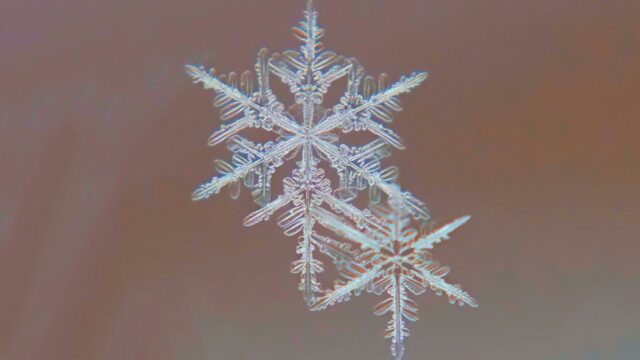
The best conditions are a clear, still night. With no clouds to hold heat in, grass, cars and branches lose heat to the sky and cool below the surrounding air. Calm air lets water vapor settle onto those cold surfaces and keep building the same crystals hour after hour. The result is ice that grows outward from the surface into branching shapes, much like the way snowflakes grow their arms in a cloud.
Ordinary morning frost on a windshield and hoarfrost come from the same process. People usually save the name hoarfrost for the thicker, more feathery version that develops when moisture and cold last long enough for large crystals to grow.
How does rime ice form?
Rime starts with liquid water, not vapor. Fog and cloud droplets can stay liquid well below 32°F (0°C) because they are so small; water in this state is called supercooled. When wind carries those droplets into a tree, a power line or a mountaintop sign, they freeze on contact.
Each droplet freezes almost instantly and traps tiny pockets of air between it and its neighbors. That trapped air is why rime looks white and opaque instead of clear. The same light scattering that explains why snow is white when ice is clear applies here.
Because the droplets arrive on the wind, rime builds up into the wind. On exposed ridges and summits, long-lasting freezing fog can grow rime into thick, sideways spikes that point toward the direction the wind came from.
How can you tell hoarfrost and rime apart?
A few simple checks usually settle it:
- Shape: hoarfrost has clear crystal forms such as needles, feathers, cups or flat plates. Rime is granular and lumpy, with no neat crystal shapes visible to the eye.
- Direction: hoarfrost covers surfaces fairly evenly on all sides. Rime is much thicker on the windward side of branches, posts and wires.
- Weather the night before: hoarfrost follows clear skies and calm air. Rime follows fog, especially freezing fog with some wind.
- Feel: hoarfrost crystals are fragile and fall off at a light touch or a puff of breath. Rime clings more firmly and often has to be scraped or knocked off.
- Appearance up close: hoarfrost can sparkle because its crystals have flat faces. Rime looks dull, chalky white.
Are there different kinds of rime?
Weather observers split rime into two main types. Soft rime is light, feathery-looking and fragile; it forms from small droplets in fairly light wind and is easy to brush away. Hard rime is denser and more solid, forms when droplets are larger or the wind is stronger, and sticks tightly to whatever it covers.
When droplets do not freeze instantly and instead spread out before freezing, the ice turns clear and smooth. That clear ice is called glaze, and it is the same coating left by freezing rain. The article on freezing rain, sleet and snow explains how glaze forms during ice storms.
Is hoarfrost or rime dangerous?
Both can cause problems, in different ways. Heavy rime adds weight to tree limbs, power lines and towers, and a thick buildup can bring branches or lines down. Rime on aircraft wings changes their shape and reduces lift, which is why pilots and forecasters track icing conditions in freezing fog and clouds.
Hoarfrost is light, but it can make roads, bridges and walkways slippery on clear winter mornings. Bridges and overpasses lose heat from above and below, so frost often forms there first. Thin ice on pavement can be hard to spot, a problem covered in more detail in the guide to why black ice is so hard to see.
In the mountains, hoarfrost that forms on top of the snowpack is called surface hoar. If new snow buries it, the fragile crystals can form a weak layer that later fails, which avalanche forecasters watch closely. Anyone heading into avalanche terrain should check the local avalanche center forecast before going.
When and where are you most likely to see each one?
Hoarfrost is most common in valleys, open fields and low spots on clear, calm winter nights, when cold air drains downhill and pools. It tends to be best just after sunrise, before sunlight warms the crystals.
Rime is most common on hills, mountains and coastal or lake areas where fog forms often. Mountaintops that sit inside clouds for long stretches can be coated in rime for days. In lowlands, rime shows up during spells of freezing fog. The National Weather Service issues freezing fog advisories in many areas when fog is expected to coat surfaces with ice.
Quick answers
Is hoarfrost the same as frost?
Hoarfrost is a type of frost. Both form when water vapor deposits as ice on a cold surface; hoarfrost is the larger, feathery form that grows when conditions stay right for longer.
Can rime and hoarfrost form at the same time?
Yes. On a foggy night, droplets can freeze as rime while vapor deposits as frost crystals on the same branch, so the coating can be a mix of both.
Why does rime point into the wind?
The droplets that make rime are carried by the wind and strike the side of an object facing it first, so ice keeps stacking up on that side and grows toward the wind.
Is rime the same as freezing rain?
No. Freezing rain falls as liquid drops and freezes into clear glaze. Rime comes from much smaller fog or cloud droplets that freeze instantly into white, opaque ice.
Site editor: Nikita Sheikin