Why Is Snow White When Ice Is Clear? Light Scattering Explained
Snow is white because countless ice crystals scatter all colors of light equally, while a solid block of ice lets light pass. See why thick ice turns blue.
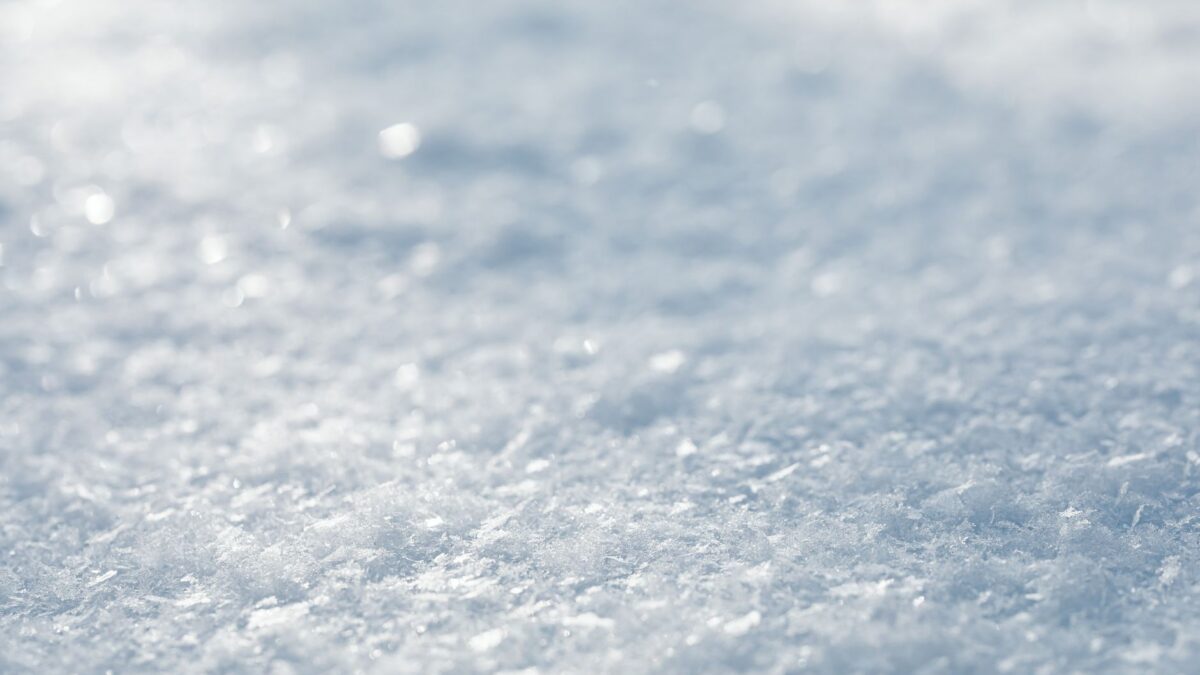
Snow is white because it is a loose pile of tiny ice crystals, and every surface inside the pile bounces visible light in a new direction. Ice itself is transparent, so a single clear crystal or a solid block lets light through. Packed together with air in between, the same material scatters sunlight so thoroughly that all colors leave the snow again, and the mix of all colors looks white.
What makes a pile of clear crystals look white?
Each time light crosses the boundary between ice and air, a small share of it reflects and the rest bends. Ice bends light more than air does (its refractive index is about 1.31, against about 1.00 for air), so every crystal edge acts like a tiny mirror and lens at once.
A snowbank holds an enormous number of these boundaries. A ray entering the surface is reflected and redirected again and again, and most of it eventually turns back toward your eye before the ice can absorb much of it. Fresh snow sends back the large majority of the visible sunlight that lands on it, commonly described as roughly 80 to 90 percent.
Why is a block of ice clear?
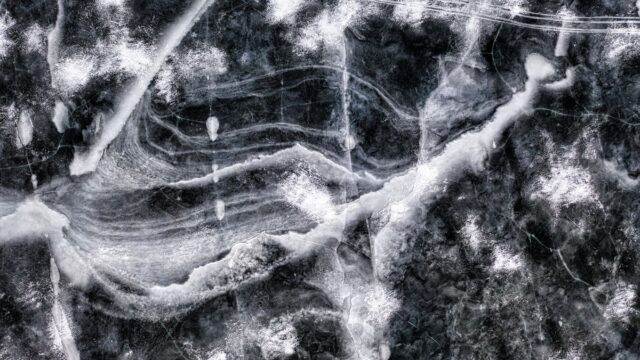
A solid block of pure ice has very few internal boundaries, so light travels straight through it. Water that freezes slowly, from one direction, pushes dissolved gases out before they can form bubbles. The result is a single continuous crystal structure with nothing to scatter the light.
Ice cubes from a home freezer look cloudy for the opposite reason. Tap water holds dissolved air, and when the cube freezes from the outside in, that air collects in the center as tiny bubbles and the water also freezes in many small crystals. Each bubble and each grain boundary scatters light, so the middle turns white. Commercial clear ice is made by freezing in one direction so the gas and impurities are pushed away.
Why does snow look white and not colored?
The surfaces in snow are much larger than the wavelength of visible light, and they reflect and refract every color almost equally. Because red, green and blue leave the snow in about the same proportions as they arrived, sunlight keeps its balance and the snow looks white. White is the look of light that has been scattered without losing any one color.
The same thing explains other white materials made of clear stuff. Crushed glass, table salt, sugar, sea foam and the water droplets in clouds are all transparent or nearly so. A grain of salt is clear when you look through it, but a heap of salt is white. Wet snow and slush look grayer and more see-through than dry powder, because water fills the gaps between crystals and reduces the difference in refractive index at each boundary, so less light is redirected.
Why does thick ice and deep snow look blue?
Water and ice absorb red light slightly more than blue light, so over a long path through clear ice the red is removed and blue remains. Glacier ice, which is compressed so tightly that most of its air bubbles are squeezed out, can be very clear and look deep blue. A crack in a glacier or a hole poked into deep snow often shows the same blue glow.
The absorption per inch is tiny. It only shows when light travels through many feet of ice, which is why a thin sheet of ice on a puddle looks colorless. Snow also turns blue in a shorter distance than you might expect: in a footprint or a drift, light penetrates several inches and the red end is absorbed along the way, leaving a bluish tint in the shadows. For more on how glacier ice forms and compacts, see how glaciers move through deformation and sliding.
Why does snow sparkle?
Sparkle comes from flat crystal faces that happen to line up and reflect the sun directly into your eye. Freshly fallen snow has many such faces, and a small change in your position changes which ones catch the light, so points flash on and off as you move. Snow crystals are six-sided because of how water molecules arrange themselves as they freeze. The exact shape depends on the temperature and humidity where the crystal grew, and temperature also decides whether precipitation falls as snow at all, a topic covered in how cold it has to be to snow.
Why is some snow not white?
Snow turns gray, brown or yellow when it holds something that absorbs light or tints it. Dirt, soot, dust and road grime absorb visible light, so dirty snow reflects less and looks dull. Old snow also changes form: repeated melting and refreezing rounds the crystals into larger grains, which scatter less efficiently and look more translucent.
The brightness of snow has practical effects. Because it reflects so much sunlight, a snow-covered area absorbs less heat than bare ground, which is one reason snow cover keeps cold air cold. The U.S. National Weather Service at weather.gov publishes winter forecasts and explanations of how snow cover interacts with temperature.
Quick answers
Is snow actually white?
Individual snow crystals are transparent. The white appearance comes from the mass of crystals scattering all visible colors equally in every direction.
Why does ice from my freezer look cloudy?
Dissolved air in the water comes out of solution as the cube freezes and forms tiny bubbles, and the water freezes in many small grains. Both scatter light and make the cube look white inside.
Why is snow in shadow blue?
Shaded snow is lit mostly by blue-rich skylight instead of direct sunlight, and light that travels a few inches into the snow loses some red. Both effects push the shadows toward blue.
Is crushed ice white for the same reason?
Yes. Crushing clear ice creates countless new surfaces and small air gaps, and each one scatters light, so the pile looks white like snow.