Penguins Drop Over 40% on Antipodes but Hold Steady on Tiny Bounty
A drone count of every Erect-crested penguin colony finds one island group down more than 40% since 1995 and the other unchanged. What is behind the split.
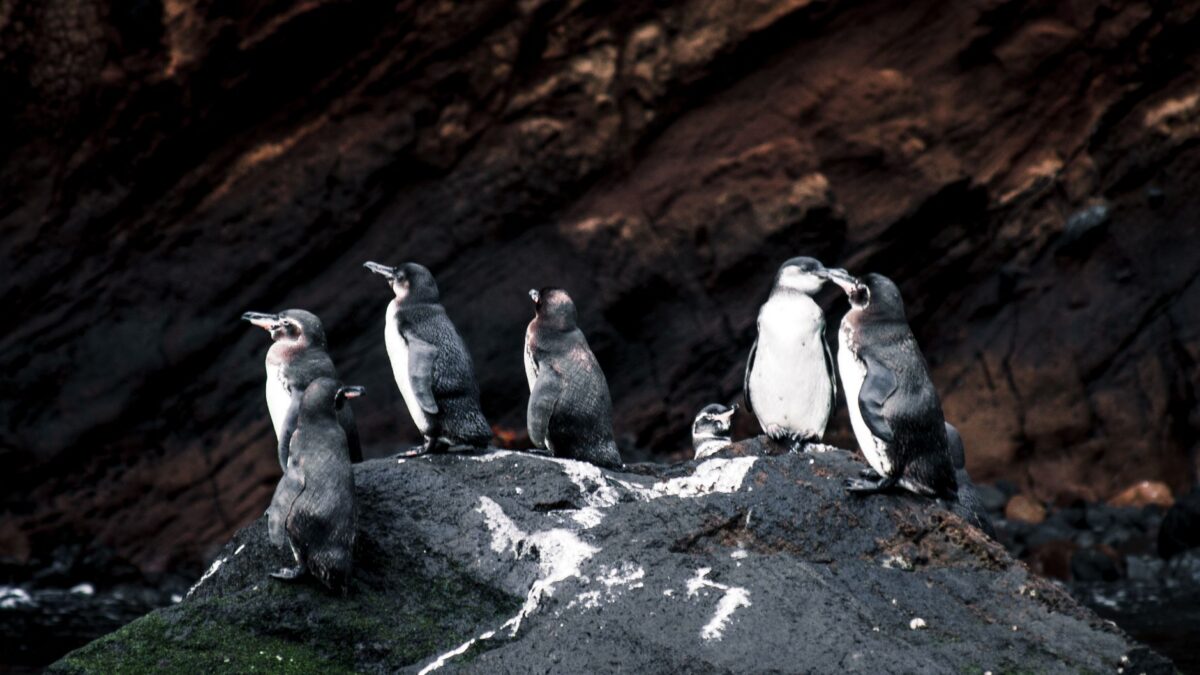
Erect-crested penguins on New Zealand’s Antipodes Islands have declined by more than 40 percent since 1995, while the population on the nearby Bounty Islands has barely changed in at least 25 years, according to a study from the University of Otago published in PLOS ONE.
The same drone survey found that the Bounty Islands, which cover just 50 hectares, hold about 27,800 breeding pairs. That is close to the roughly 29,800 pairs on the Antipodes Islands, an island group 40 times larger that was long treated as the species’ stronghold.
A drone count of every colony
Erect-crested penguins breed in only two places: the Bounty and Antipodes islands, which sit about 800 kilometers southeast of New Zealand’s South Island. Between 2022 and 2024, the research team flew drones over both island groups, photographed every breeding colony and counted the nests. The university describes it as the first full population survey of the species.
The team then set the new counts beside historical records that reach back to the mid-1990s. The study was led by Dr. Thomas Mattern of the Tawaki Project, a group of scientists from the university’s zoology and marine science departments, working with the Antarctic Research Trust and the Global Penguin Society. The paper’s DOI is 10.1371/journal.pone.0359075.
Why the Antipodes birds are disappearing
The researchers point to several pressures acting together, and they present them as likely explanations rather than measured causes. The first is the skua, a native subantarctic seabird that eats penguin eggs and chicks. Penguins nesting in large, dense colonies defend each other against skuas. As the Antipodes colonies shrank, that shared defense weakened, more eggs and chicks were taken, and the colonies split into smaller groups.
Co-author Dr. Klemens Pütz of the Antarctic Research Trust suggests a second species is part of the story. Eastern Rockhopper penguins collapsed across their Southern Ocean range in the second half of the 20th century, probably because of warming water, and fewer than 1,000 breeding pairs are left on the Antipodes. “Skuas may have turned to Erect-crested penguin eggs and chicks instead,” Pütz said.
Storms add to the damage. Stronger storms, in line with wider climate trends in the Southern Ocean, have set off landslides that break colonies apart. The two populations also spend the off-season in different places. According to Mattern, Antipodes birds travel far into the Antarctic Polar Frontal Zone after breeding, while Bounty birds stay closer to home in more sheltered water that may hold more food.
The “Schrödinger’s Penguin” problem
The team named the situation after the physics thought experiment in which a cat in a sealed box is treated as both alive and dead until someone looks. Mattern says the penguins work the other way around: people assumed one answer for the whole species, and looking closely turned up two, stable on the Bounty Islands and declining on the Antipodes.
What it means for the species’ Red List status
The Erect-crested penguin is one of four penguin species listed as “Endangered” on the International Union for Conservation of Nature Red List. New Zealand’s hoiho, or yellow-eyed penguin, is another, and it has drawn far more public attention and conservation work.
Mattern says the current listing rests on population estimates from the 1970s that were badly inflated. Judged against the new counts, “Endangered” still fits the shrinking Antipodes population but not the stable Bounty one. If both are averaged together, the species could move down a level to “Vulnerable,” which the authors say would hide how fast the Antipodes birds are falling.
The researchers add that the Bounty Islands, likely the species’ last secure stronghold, remain exposed to industrial fishing even though their numbers are steady. Mattern compared a single improved ranking to “putting the lid back on Schrödinger’s box.” The authors argue that each population should be assessed on its own circumstances.
The study was funded by the Vontobel Foundation in Switzerland, through the Antarctic Research Trust, and by the Global Penguin Society, and was carried out under permits from the New Zealand Department of Conservation.
Source: ScienceDaily