Olive Ridley Hatchlings From California’s First Nests Reach the Sea
Dozens of olive ridley hatchlings from the first known natural sea turtle nests on the U.S. West Coast were released in California. Here is what scientists say.
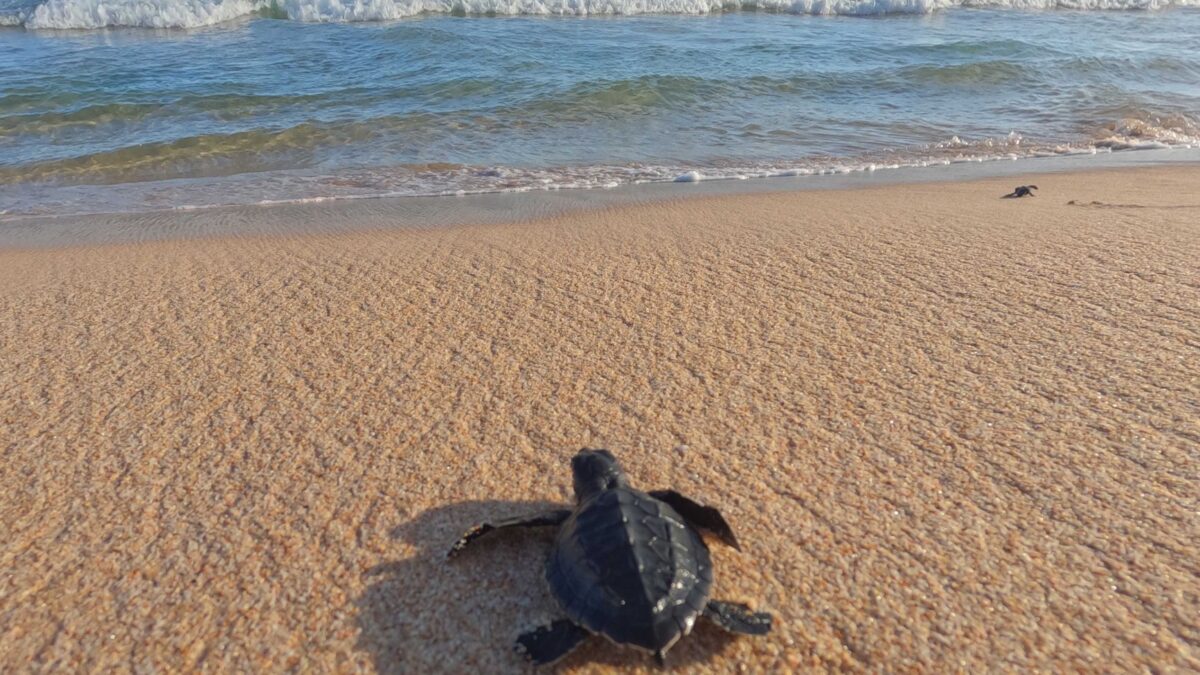
Dozens of baby olive ridley sea turtles have been released on the California beaches where their nests were found, Smithsonian Magazine reported. The two nests, at Seal Beach and Huntington Beach in Orange County, are the first natural sea turtle nests ever confirmed on the U.S. West Coast.
Authorities found the nests in September. Because a tropical storm was on its way, biologists moved more than 200 eggs to the Aquarium of the Pacific. Researchers still do not know why or how the mother turtles ended up nesting this far north.
How the eggs were hatched
The eggs, about the size of Ping-Pong balls, spent weeks in closed incubators under sand in a room with controlled temperature and humidity, set up to mimic natural nest conditions.
Lance Adams, the aquarium’s veterinarian, said at a Nov. 14 press conference that staff first noticed changes in the sand of the Seal Beach container on Nov. 12. A depression and some cracks appeared on the surface. The first turtle came out the next day at around 7:15 p.m. Pacific time, and about two hours later more followed, for a total of 54 hatchlings from that nest.
Adams described the scene as going from smooth sand to “an eruption of baby sea turtles.” At the time of the press conference, 50 eggs from the Seal Beach nest had not hatched. Experts do not know whether those eggs are viable, and staff are still monitoring them.
Many hatchlings from the Huntington Beach eggs emerged soon after the Seal Beach group.
The release
The Seal Beach hatchlings went back to their original beach very early on Saturday, before sunrise, according to a social media post. Hatchlings use moonlight to find the ocean, so the timing matters. Once in the water, they enter what the post called a “frenzy period,” swimming nonstop for 24 to 48 hours.
The Huntington Beach turtles were returned to their beach on Sunday, also in the dark hours of the morning. According to the statement, every released hatchling reached the water.
The odds after that are poor. Experts estimate that only one in 1,000 olive ridley hatchlings survives to adulthood.
Why the turtles came this far north
Olive ridleys are among the smallest sea turtles, growing to about two feet long and weighing 70 to 100 pounds. They are among the most abundant and widespread sea turtles, living mostly in the tropical Pacific, Indian and Atlantic oceans. Every population is considered threatened or endangered.
Jeff Flocken, president and CEO of the Aquarium of the Pacific, told SFGate in September that no sea turtle had ever been recorded nesting on a California beach. The northernmost known nesting for olive ridleys, he said, is in Mexico.
Justin Viezbicke, California stranding coordinator for the National Oceanic and Atmospheric Administration, told the Guardian that a hurricane may have thrown the mothers off course. The “super” El Niño now under way in the Pacific, which is affecting water temperatures, currents and weather, may also have pushed them toward California.
Why it matters for sea turtle conservation
Jonathan Snyder, a biologist with the U.S. Fish and Wildlife Service, said at the press conference that warm coastal water is part of the explanation. He pointed to a second factor: decades of conservation work have “really moved the needle” for olive ridleys. Their populations have grown substantially across parts of their range, he said, which is why turtles were around to take advantage of unusual conditions.
A third nest turned up farther north, in Ventura County, on Nov. 1, but high tides destroyed it, Snyder told the Los Angeles Times. Experts say they cannot yet tell whether the recent nests were a one-off or the start of a new pattern.
Source: Smithsonian Magazine