Study of 1,758 Butterfly Species Ties 79% of Range Shifts to Climate
A global study of 1,758 butterfly species found 79% of range shifts came with climate change or extreme weather. Sri Lanka is seeing a mass movement.
Climate change or extreme weather events accompanied 79% of the documented shifts in where butterflies live, according to a 2026 study in the journal Nature Ecology & Evolution that covered 1,758 species. Most of the species surveyed, 80%, had expanded their ranges.
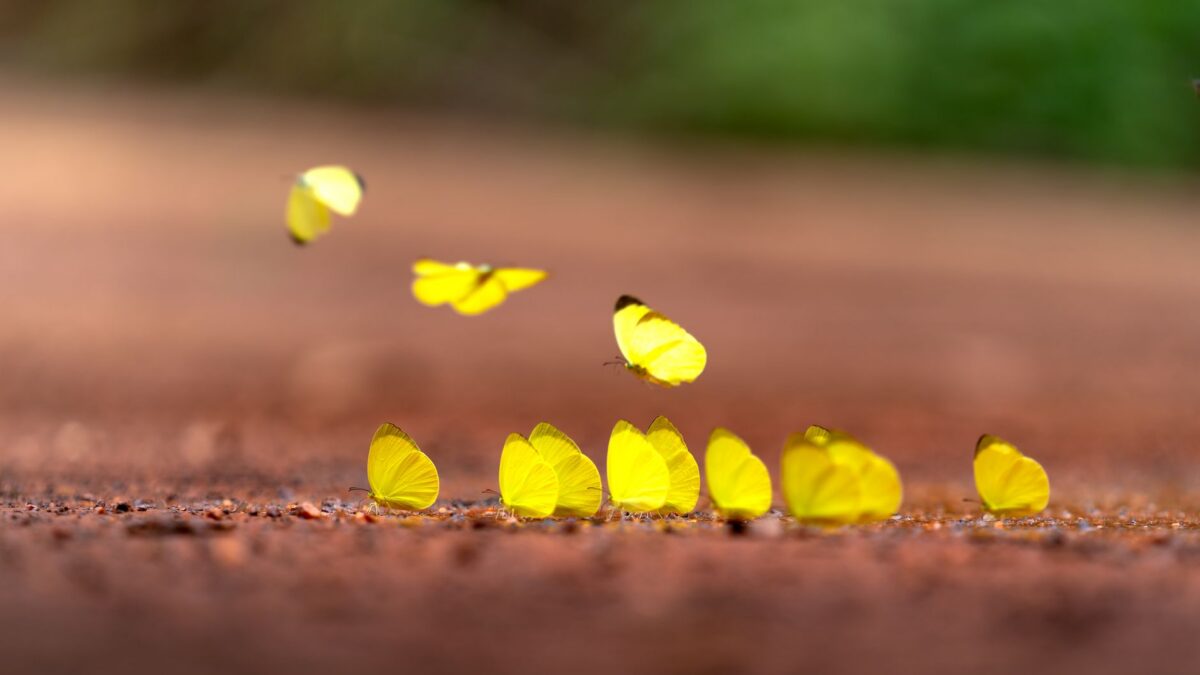
Mongabay reported the findings as thousands of yellow and white butterflies crossed Sri Lanka in early November, a seasonal movement that local researchers say is unusually large this year.
What the global butterfly study measured
The research team analyzed more than 6,000 records of range shifts from 105 countries and territories. A range is the area where a species is found, and a shift means that area grew, shrank or moved. The work is a compilation of documented cases, so it shows a pattern across many earlier observations and is not an experiment.
Lead author Shawan Chowdhury, a biologist at Monash University in Australia, told Mongabay that 80% of surveyed species had expanded their ranges. The study also found that 27% contracted their ranges and 22% moved along elevational gradients, meaning up or down slopes. The paper’s DOI is 10.1038/s41559-026-03117-y.
Chowdhury gave Europe as an example. Warmer temperatures are letting some species spread north, and Finland is recording several butterflies never seen there before. He said that if warming continues and suitable habitat runs out farther north, those butterflies could end up with nowhere to go.
Where the tawny coster complicates the picture
A fast spread does not always trace back to warming. The study looked at the tawny coster (Acraea terpsicore), a butterfly from the Indian subcontinent that crossed Southeast Asia and reached Australia in 2012. Research published in 2020 put its advance across Australia at an average of about 135 km (84 mi) per year.
That research found little evidence the butterfly had changed its climatic niche, the set of climate conditions it lives in. It was mostly settling in places with a climate like the one it came from. Chowdhury told Mongabay that more research is needed before movements like this can be attributed directly to global warming.
Why Sri Lanka is full of butterflies this November
In the first week of November, clouds of yellow and white butterflies passed through Colombo, and the same was reported from several other parts of the island, said Lakshman Kumara, secretary of the Butterfly Conservation and Research Group of Sri Lanka. Numbers usually peak twice a year, from October to November and from February to March.
The current wave is mostly the lemon emigrant (Catopsilia pomona), with smaller numbers of two albatross butterfly species, according to Kapila Dissanayake, a professor at Sabaragamuwa University.
Himesh Dilruwan Jayasinghe of Sri Lanka’s National Institute of Fundamental Studies said the main driver is the northeast monsoon. Rain ends the dry spell in the island’s dry zone, and host plants such as cassia and senna put out new growth. Caterpillars then have plenty to eat, and butterfly numbers can rise faster than those of their predators. Jayasinghe said rains in October may have added to this year’s unusually large numbers.
Where the insects are going is unknown. An earlier study suggested they could fly the roughly 280 kilometers (174 miles) between Kumana National Park and Wilpattu National Park in around three days under ideal conditions, but that route is still a hypothesis. Dissanayake said researchers call the event a “mass movement” and stop short of calling it a migration, because its direction, continuity and extent have not been verified.
What it means for mountain butterflies
Tharindu Ranasinghe, a researcher with the Wild Island Foundation who contributed to the global study, said the species most exposed in Sri Lanka are those found only in cool, high places. He named the Sri Lanka treebrown, the Sri Lankan hedge blue and the Sri Lankan tiger.
As temperatures rise, such butterflies may move uphill, and those already living on summits could run out of suitable habitat, he said. Changes in monsoon patterns, droughts and extreme heat could also disturb breeding cycles and the supply of host plants and nectar.
Ranasinghe told Mongabay that more research and long-term monitoring are required to establish whether climate change is already altering butterfly populations and their distribution within Sri Lanka.
Source: Mongabay