Amber Mantis Shows Leaf Disguise Is at Least 98 Million Years Old
A mantis trapped in Myanmar amber 98 million years ago is the earliest clear fossil sign of leaf mimicry in mantises, with leaves only on its abdomen.
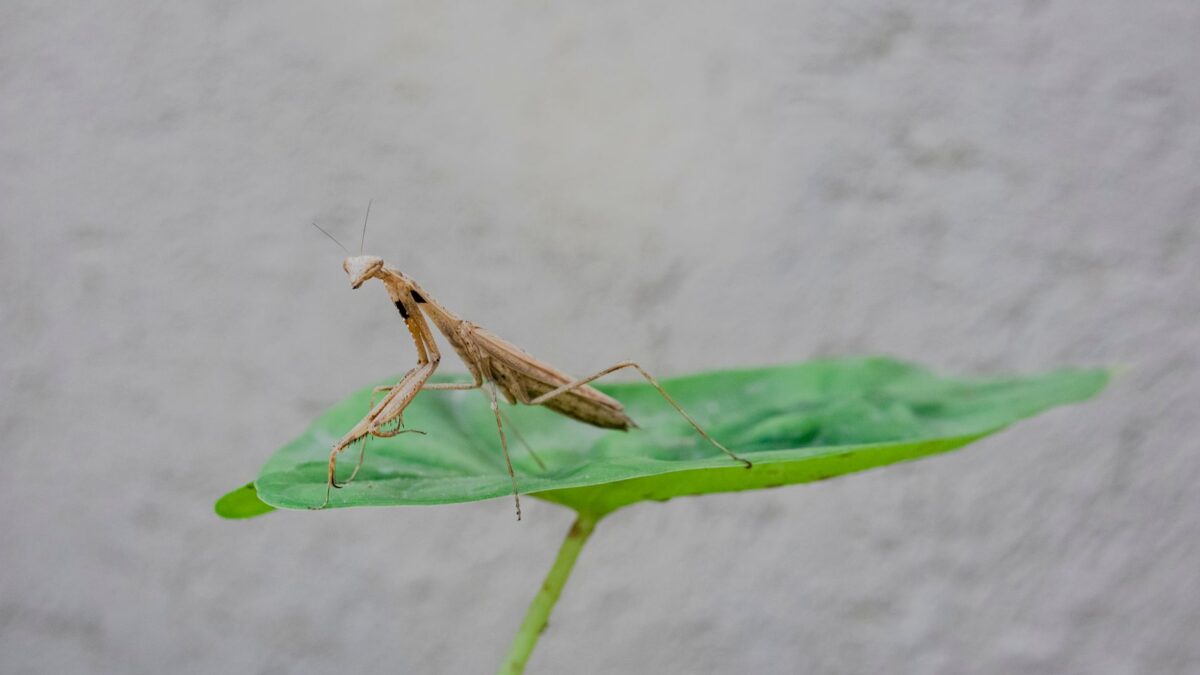
A praying mantis sealed in tree resin 98 million years ago carried leaf-shaped flaps on its abdomen, and scientists say it is the earliest clear fossil evidence of mantises disguising themselves as plant leaves. The insect has been named Folimantis hyalinala in a paper in the journal New Phytologist, according to a report on Yahoo.
The find pushes this kind of plant mimicry in mantises back to at least 98 million years. It also shows a disguise unknown in any living mantis: the abdomen of the fossil resembles Selaginella grimaldii, an extinct plant that has also turned up in amber from the same region.
A mantis from a Cretaceous rainforest
The insect lived in the mid-Cretaceous, in a tropical rainforest in what is now Myanmar, where sticky resin from trees trapped it and later hardened into amber. The researchers chose the genus name Folimantis, which literally means “leaf mantis.” The species name hyalinala refers to its wings, which are clear like glass.
Paleoentomologist Hongru Yang and colleagues write that insects and plants have had mimicry relationships for at least 200 million years, yet trustworthy fossil examples of insects copying plants are rare. They also note that copying Selaginella has not been reported before, and that “there are no species that mimic Selaginella among modern Mantodea,” the scientific name for the mantis order.
Living mantises have many plant disguises. The orchid mantis, Hymenopus coronatus from Southeast Asia, looks like a flower, with a pink and cream body shaped like petals, and it sways as if moved by wind. When F. hyalinala was alive, flowering plants had not yet become dominant, so this mantis came to look like leaves.
Why a leaf disguise pays off
According to the report, the explanation comes from evolutionary theory. A mantis that looked slightly more like its host plant could creep up on prey more easily and was harder for its own predators to spot, so it had better odds of surviving and passing on its genes. Repeated over many generations, small advantages like that can produce a close match to a plant. The plants may have gained something too, since mantises living on them kept away insects that eat leaves.
Leaves only at the back
One detail sets this fossil apart. Mantises today that mimic plants often have leafy features on several body parts. F. hyalinala has them only on its abdomen. The authors suggest this could mean the disguise started at the rear of the body, with changes to the wings, thorax and other parts arriving later. That is an idea drawn from a single specimen, not a settled sequence.
What this means for the mantis family tree
Mantises and cockroaches share an ancestor that lived about 274 million years ago. Recent classification work suggests the first true mantises appeared around 185 million years ago, in the Jurassic, while the supercontinent Gondwana was splitting apart. That long history may help explain why mantises live in so many places and fit their habitats so closely.
Mantises were not alone in taking on plant-like shapes early. Fossils of some cockroaches, grasshoppers, stick insects and members of other insect groups show plant-like features from around the same period, which suggests plants and insects shaped each other as both spread across land.
The trouble with Myanmar amber
Kachin amber from Myanmar carries an ethical problem. Mining and selling it is connected to ongoing political turmoil in the country, and there are concerns that the trade helps fund what the United Nations has condemned as a “genocidal crime against humanity.” Myanmar banned fossil exports in 2015, but fossils inside amber have sat in a legal gray area. After a military coup in 2021, the Society of Vertebrate Paleontology called for a halt on publishing amber fossils obtained from Myanmar after January 2021.
This specimen predates that cutoff. A collector, Fangyuan Xia, bought it in 2015 and donated it the same year to the insect evolution lab at Capital Normal University in Beijing.
Source: Yahoo