Utah Dig Near Arches Yields Likely New Armored Dinosaur Species
A bonebed near Moab, Utah, 138 to 141 million years old, appears to hold a new armored dinosaur. Here is how it was found and why its age matters.
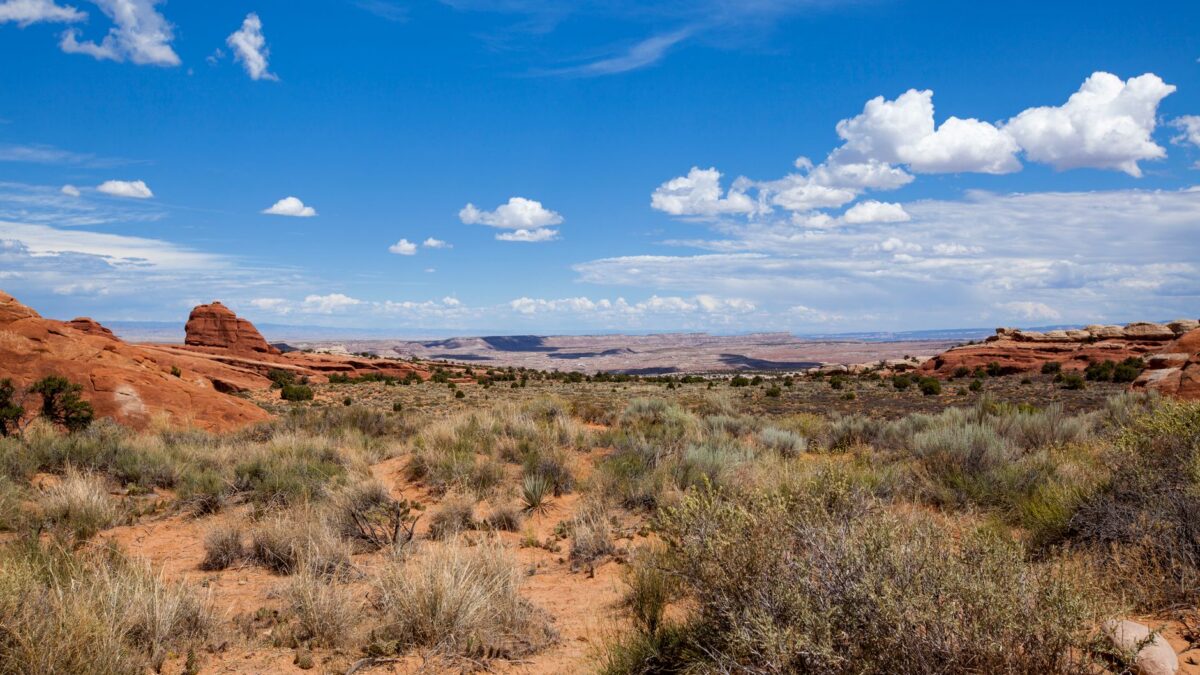
A fossil site north of Arches National Park in eastern Utah appears to contain a species of armored dinosaur that science has not described before, according to the Utah Geological Survey (UGS). The rocks are estimated at 138 million to 141 million years old, which the agency says puts the site in a tie for possibly the oldest Cretaceous dinosaur bonebed in North America.
The UGS began digging at the location, which its team calls the Ironstone Bonebed, in mid-October 2026. State Paleontologist Jim Kirkland is preparing the formal description of the animal and plans to name it after Don DeBlieux, Utah’s assistant state paleontologist, Earth.com reported.
A shoulder blade spotted on a hike
DeBlieux has said he noticed the first bones while walking the area. They were a shoulder blade and an upper arm bone, both from an armored dinosaur, a group known as ankylosaurs. Kirkland has said the crew has so far identified roughly four different kinds of dinosaurs at the site.
It is not DeBlieux’s first find of this kind. In 2002 he spotted a skull eroding out of sandstone in Grand Staircase-Escalante National Monument in southern Utah. He then spent more than 800 hours across two years freeing it from the rock, and it became the horned dinosaur Diabloceratops eatoni. He runs the UGS field paleontology program and its fossil preparation lab, and he plans to retire at the end of 2026 after 25 years of working alongside Kirkland.
The new species has not yet been formally published, so its status as a new animal rests for now on the agency’s early assessment.
A neighboring site six miles away
Geologically, the Ironstone Bonebed is close to the same age as Doelling’s Bowl, another UGS site about six miles (10 kilometers) to the east. DeBlieux found that one too, in 2005, when he came across vertebrae and a hip bone from a raptor-like predator. A 2012 study named that animal Yurgovuchia doellingi.
Doelling’s Bowl covers tens of acres. Plant-eating iguanodonts dominate it, with at least ten individuals, and at least three armored polacanthine ankylosaurs have turned up there. It also produced Mierasaurus bobyoungi, a long-necked sauropod whose ancestors lived on the Iberian Peninsula, described by Kirkland and DeBlieux in 2017, plus teeth from a large predator and a still-unnamed armored species.
Utah’s long record of armored dinosaurs
The rocks of the region, known as the Cedar Mountain Formation, are rich in ankylosaurs. In 2011, Kirkland and Mark Loewen, then at the Utah Museum of Natural History, wrote that these animals “were so well protected that even their eyelids were armored.” At that time the formation had produced more ankylosaur species than any other geologic formation in the world.
Earlier finds include Gastonia burgei, a close relative of an English species from the Isle of Wight, and Animantarx ramaljonesi, found in 1994 by a radiological technician who mapped low-level radiation across a quarry. It was the first dinosaur discovered only through technology.
Why it matters: a window on a mass die-off
The UGS expects the site to show how dinosaur life changed between the Jurassic and Cretaceous periods. At the end of the Jurassic, a catastrophic event wiped out nearly all of the dinosaurs of Utah’s Morrison Formation, including Stegosaurus.
In most of the western North American mountain belt, rocks from that transition are missing, leaving a gap of 20 million to 25 million years. In eastern Utah, the gap is far shorter. Microfossils, chemical signatures and uranium-lead dating of ancient soils narrow it to five million to seven million years, Kirkland, DeBlieux and two colleagues reported in a 2025 conference abstract. Conference abstracts get less review than full journal papers.
Kirkland has argued that buried salt explains why the oldest Cretaceous dinosaurs in Utah show up only in northern Grand County. As salt beds were squeezed into ridges, the ground beside them sank, and sediment piled up in those low spots while erosion was stripping rock away across much of the rest of the continent. The Salt Valley anticline at Arches and the Moab fault are traces of that salt movement.
Source: Earth.com