Eagles Likely Killed Baboons Up to 58 Pounds in Chad, Study Finds
Verreaux's eagles in Chad's Sahara appear to have killed baboons up to 58 pounds, a size close to early human ancestors. One outside expert urges caution.
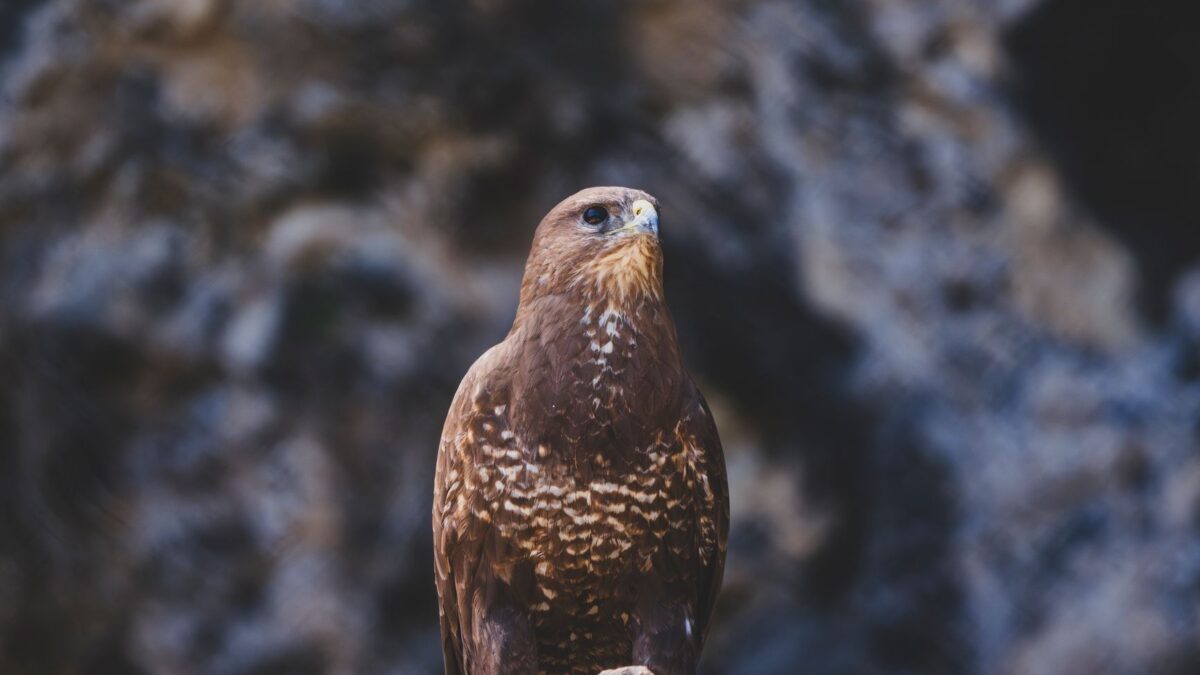
Eagles in the Sahara Desert of Chad appear to have killed adult baboons, including one that weighed about 58 pounds (26 kilograms). Researchers had assumed eagles could not lift nonhuman primates heavier than 29 pounds (13 kilograms), so the finding doubles that ceiling.
The team reports the work in the American Journal of Biological Anthropology, in a paper published Nov. 18. Because some early human relatives were about the same size as these baboons, the authors ask whether such relatives also fell to eagles.
What the team found in the Chad desert
While doing research in the Sahara, the scientists came across the remains of at least nine adult baboons that had been killed recently. The area is home to Verreaux’s eagles (Aquila verreauxii), which hunt from cliff tops, sometimes in pairs. Their talons have a grip diameter of 16 inches (40 centimeters), meaning the span the grip can reach.
The bones carried deep talon marks. The researchers read them as a sign that the eagles killed the baboons and carried parts back to their nests. The baboons averaged an estimated 49 pounds (22.2 kilograms), and the heaviest was the 58-pound animal.
Why the researchers think these were kills
Eagles sometimes feed on carcasses, but the team does not think that happened here. The authors wrote that the severity of the punctures suggests a killing grip. They also point to the sex of the animals: eight of the nine baboons were male. Scavenged remains would not be expected to favor one sex, so the pattern points to hunting. Why eagles took mostly males is unclear, and the authors call the male bias in their sample puzzling. Male primates sometimes charge at eagles to defend themselves, the team added in a statement.
What this could mean for human ancestors
Hominins are the group that includes humans and the close relatives that arose after the split from chimpanzees and bonobos. The Australopithecus afarensis individual known as Lucy weighed about 62 pounds (28 kilograms) and lived in what is now Ethiopia around 3.2 million years ago. That is close to the largest baboon in the study.
Only one eagle kill of a hominin is confirmed so far. It is the Taung Child, an infant Australopithecus that lead author Catherine Hobaiter, a professor at the University of St. Andrews in the U.K., said was probably taken by a large eagle around 2.8 million years ago. That child weighed around 22 pounds (10 kilograms). Hobaiter told Live Science that several australopithecine species living between 1 million and 3 million years ago were in the same weight range as the adult male baboons. Other large predators, such as hyenas and crocodiles, would also have threatened them.
Some living primates reduce the risk by traveling together. Hobaiter said species that eagles prey on often forage in mixed groups, which means more competition for food but apparently better protection. Hominins may have done something similar.
How sure is this?
The paper is published in a journal, but it describes remains found in one desert region, and the sample is small: nine baboons. Researchers outside the study were mixed in their reactions.
Robert Simmons of the FitzPatrick Institute of African Ornithology at the University of Cape Town, who was not involved, called the findings fascinating. He said such kills are certainly rare. In his view, Verreaux’s eagles in this dry region have limited prey and have been pushed toward larger, more dangerous animals than is typical for an eagle of about 9 pounds (4 kilograms). A lone old or young male baboon moving to a new troop could become prey, he said, and the lack of cover in a desert leaves baboons exposed.
W. Scott McGraw, an anthropology professor at The Ohio State University who also was not involved, said early hominins may have been attractive targets because of their small bodies, especially infants and juveniles. He said they likely evolved behavioral defenses such as living in groups, calling out warnings and choosing protective habitats.
Jesús Bautista-Rodríguez, coordinator of the Desert Golden Eagles Project, was more cautious. He found the marks interesting but said it is quite possible that some or all of the baboons were already dead, dying or too weak to defend themselves when the eagles fed on them. Punctures and scratches on the skulls and shoulder blades fit eagle talons, he said, but they could also come from handling and feeding on an animal that was already dead. He added that more fieldwork is needed to learn how the eagles encountered the baboons.
The paper is titled “Signs of eagle predation on a 22-kg adult primate” (DOI: 10.1002/ajpa.70377). Its authors are Hobaiter, T.J.D. Akpona, G.H. Kopp and N.J. Dominy.
Source: Live Science
Site editor: Nikita Sheikin