Chandra Turns X-Rays From 4 Star-Forming Regions Into Music
NASA's Chandra released four sonifications on Nov. 17 of star nurseries, from Orion to M82. Here is what each one sounds like and who made them.
NASA’s Chandra X-ray Observatory released four new sonifications on Nov. 17, each turning data from a region where stars are forming into sound, Astronomy Magazine reported. The pieces pair Chandra’s X-ray data with views from other NASA telescopes.
Sonification maps an object’s brightness, color and position onto pitch, volume and tone, much as astronomers assign visible colors to X-rays or infrared light that human eyes cannot see. Each new piece plays as a short video in which a line sweeps across the image and whatever it crosses becomes audible. Most regions come in three versions: Chandra alone, the companion telescope alone, and the combined view.
What each region sounds like
The Rho Ophiuchi cloud complex, about 400 light-years away, is the closest of the four. Chandra’s X-rays pick out individual newborn stars, and the James Webb Space Telescope (JWST) maps the surrounding gas, dust and other stars. The X-rays play as bright, shimmering notes, the clouds as shifting chords, and single stars as sharp pings. A hush partway through marks a patch of dark dust that hides nearly all light.
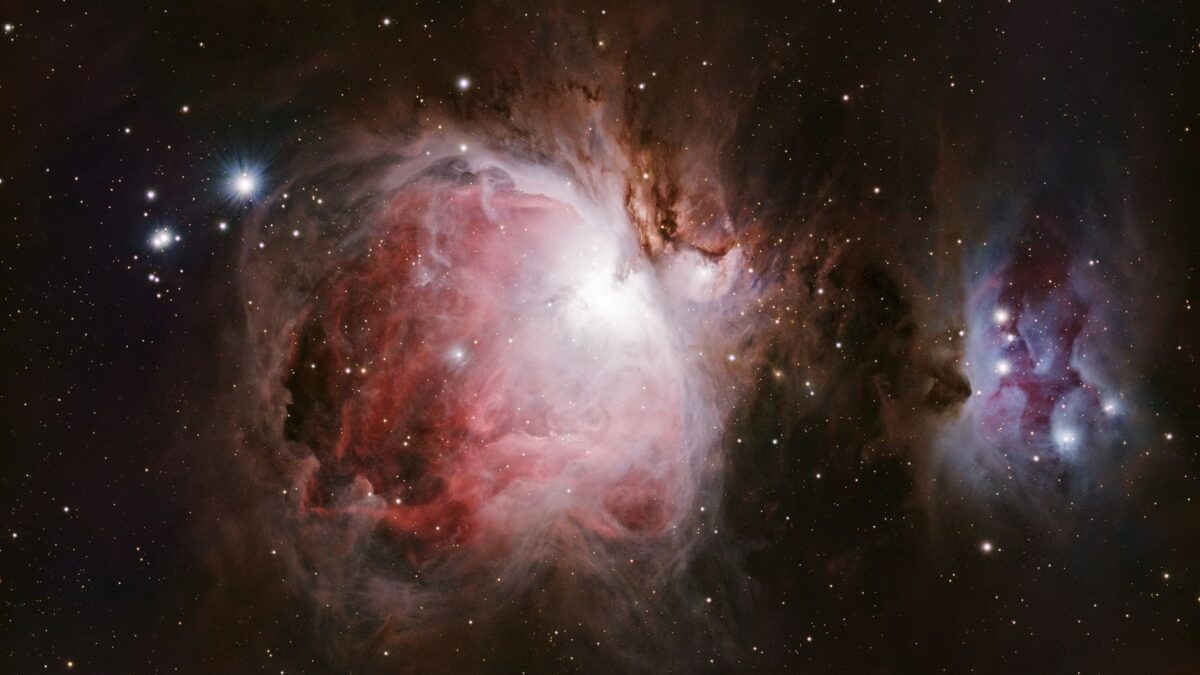
The Orion Nebula lies about 1,310 light-years away, just below Orion’s Belt. Chandra sees more than 1,000 young stars there, each a sparkle in the sound. The nebula’s diffuse X-ray glow holds steady as a ringing whistle, while JWST’s infrared view of dust and gas becomes bent, warbling strings and a synthesized harp that swell in the densest region.
The Carina Nebula’s “Cosmic Cliffs” are roughly 7,670 light-years away and became one of JWST’s best-known images in 2022. Chandra’s X-rays cut through the dust to infant stars hidden inside. Each star is a quick stab of sound, and the faint X-ray glow becomes slow droning notes played on a real cello by musician Johnny Mok. JWST’s cliffs form a steady drone underneath.
M82 is the only object in the set outside the Milky Way, about 12 million light-years away in Ursa Major. This starburst galaxy builds stars many times faster than our own. Chandra’s data is combined with Hubble’s visible light and infrared from JWST and the retired Spitzer Space Telescope. X-rays sit at the very top of the pitch range, the busy center whooshes like moving air, and infrared is a low hum broken by picked notes.
Why it matters
Young, massive stars emit X-rays in fierce winds and outbursts, and studying these nurseries helps astronomers reconstruct how stars, the Sun included, got started. Sonification also gives people who are blind or have low vision a way into cosmic data, and researchers in fields from astronomy to volcanology have found that listening can reveal patterns a plot hides.
The idea is old. The Geiger counter, invented in 1908, clicks faster as radiation rises. The Chandra X-ray Center started its A Universe of Sound program in 2020 as NASA’s first ongoing effort to sonify astronomical data.
Who made them
The team was led by visualization scientist Kimberly Arcand of the Chandra X-ray Center. Astrophysicist Matt Russo and musician Andrew Santaguida of the SYSTEM Sounds project worked on it with Christine Malec, a blind astronomer and musician. The four pieces are on the Chandra release page, and earlier ones are at chandra.si.edu/sound.
Russo and Santaguida also built Skysynth for the Vera C. Rubin Observatory’s SkyViewer app. Users drift across Rubin’s wide view of the southern sky, where galaxies strum a harp and stars ring a glockenspiel, with color setting pitch and brightness setting volume.
Source: Astronomy Magazine
Site editor: Nikita Sheikin