Researchers Find Inherited Eye Disease That Erodes Night Vision
A newly described inherited retinal disease narrows side vision and slows dark adaptation, JAMA Ophthalmology reports. Rod tests may flag it early.
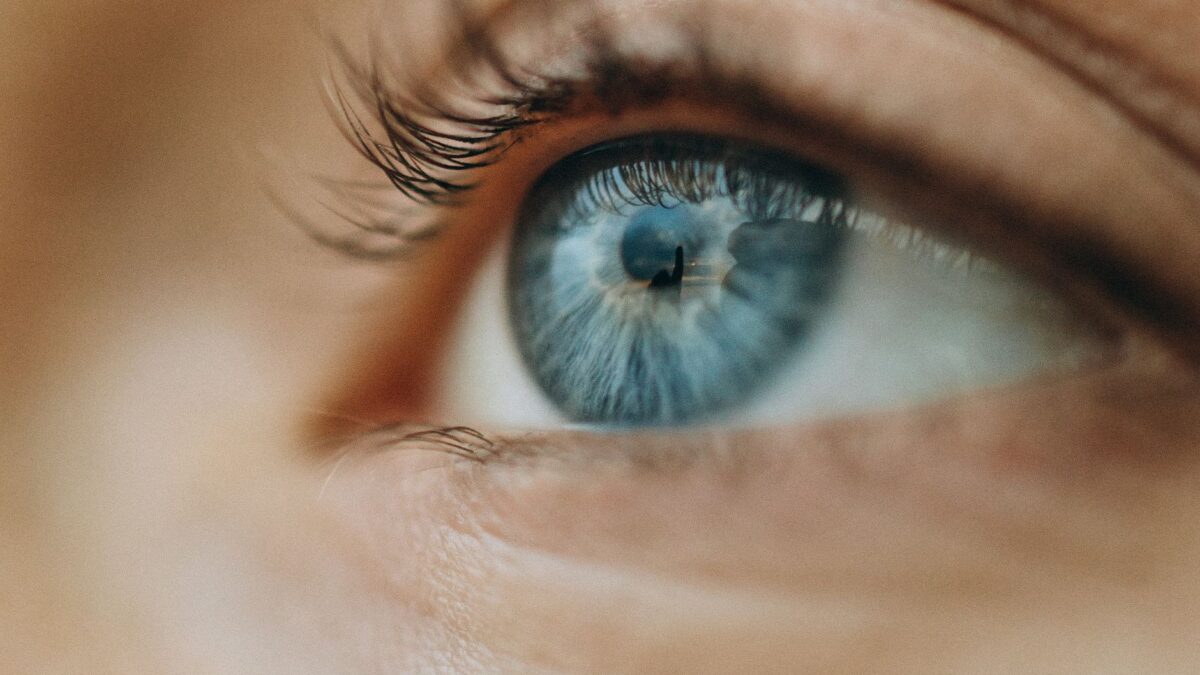
An international team has described a new inherited eye disease that narrows side vision and makes it hard to see in the dark, while central sight can stay good for much of a person’s life. The researchers, including scientists at the Scheie Eye Institute in the University of Pennsylvania’s Perelman School of Medicine, traced it to a gene already known for a different kind of vision loss, according to Penn’s School of Medicine.
The condition has no official name yet. The team is calling it EFEMP1-associated late-onset retinal degeneration (L-ORD), after the gene involved.
A family first documented in 1998
The story starts in 1998, when doctors recorded an unusual pattern of vision loss in a family in the United States. As new genetic evidence came in, the researchers connected that family to relatives in Europe with similar symptoms.
The earliest suspicion was a different genetic disorder, one caused by variants in a gene called C1QTNF5. Testing found none of those variants. Collaborators then found a new variant in EFEMP1, a gene that normally causes a disease in which the macula, the part of the retina behind central vision, fails first. The new variant is called p.Arg140Trp, and the researchers say it causes an unusually thick buildup of material between cells in the eye.
How the team compared the families
The study, published in JAMA Ophthalmology (DOI 10.1001/jamaophthalmol.2026.3828), examined three unrelated families from different countries who carry p.Arg140Trp. The researchers compared their symptoms with those of another family that carries a different change in the same gene, p.Arg345Trp. That change causes the previously recognized disease that attacks central vision.
Researchers from Penn Medicine, the University of Edinburgh, the University of Basel, Charles University and the University of Bonn took part.
The comparison showed two diseases from one gene. The older disorder begins in the macula. The new one starts in the outer, peripheral retina, the light-sensing tissue at the back of the eye that turns light into signals the brain reads as images. People may see normally for years before noticing that their side vision is shrinking or that dim light has become harder to handle. Dusk and nighttime problems are typical, because the eyes lean on light-sensitive cells called rods in low light.
A possible early warning
The disease is hard to diagnose because the rods can look structurally normal at first. The team found a functional clue instead: in affected people, rods take unusually long to recover when the eyes move from bright surroundings into darkness. The slow recovery shows up while the retina still looks intact.
“We can detect a major abnormality in the way rod photoreceptors recover in darkness with retinas that still look structurally intact,” said Artur V. Cideciyan, an ophthalmology researcher and co-director of Penn’s Center for Hereditary Retinal Degenerations. He called it a functional marker of disease before photoreceptor cells have been lost.
How sure is this?
The work appeared in a peer-reviewed journal, but it rests on a small number of families: three carrying the new variant and one carrying the older one. It is a genetic and clinical comparison in people, not a treatment trial.
One basic question is open. The researchers suspect the condition is relatively uncommon, but they do not have enough information to say how many people carry the variant. Larger studies will be needed to establish that.
The authors also say the findings may help explain how vision declines with age. Tomas S. Aleman, a professor of ophthalmology and the other co-director of the center, noted that age-related macular degeneration is the most common retinal condition of aging. He said lessons from rare, late-onset genetic eye diseases give glimpses of possible mechanisms behind more frequent retinal problems. That is a suggestion from the researchers, not a result the study tested.
Anyone with concerns about their night vision or side vision should talk to an eye doctor.
The research received support from several funders, including the BrightFocus Foundation, the Medical Research Council and the Swiss National Science Foundation.
Source: Science Daily
Site editor: Nikita Sheikin