Massive Stone Foundations Found in Alexandria’s Royal Quarter
Archaeologists in Alexandria found massive stone foundations and a tunnel in the ancient Royal Quarter. A committee is weighing whether it was a royal tomb.
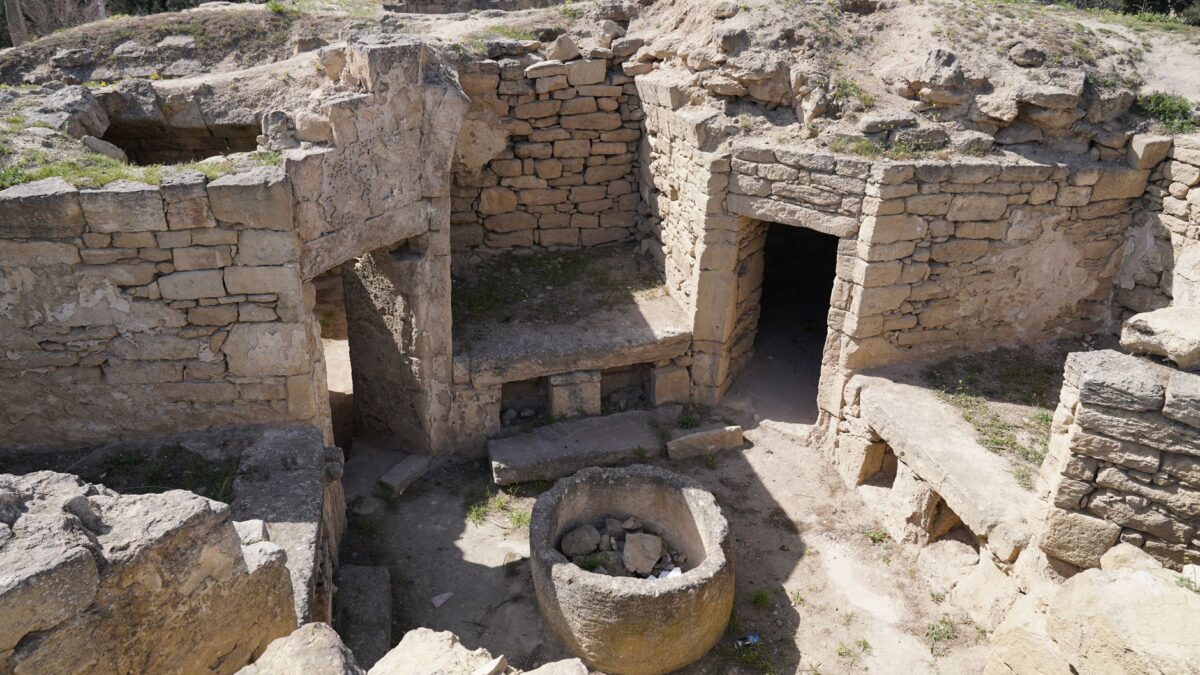
Archaeologists in Alexandria have exposed the foundations of a large, square stone building in the city’s ancient Royal Quarter, together with a tunnel that runs north beneath it. According to Egypt’s Ministry of Tourism and Antiquities, as reported by HeritageDaily, the structure may have been part of a royal funerary complex described in ancient sources. That identification is preliminary.
The find lies in the Shallalat area. It was made by a mission led by Dr Kalliopi Limneos-Papakosta, whose team has investigated the area for almost 20 years.
What the excavation uncovered
The mission exposed massive stone foundations enclosed by walls. The surviving masonry suggests the foundations once carried a substantial structure. A tunnel extends beneath the building towards the north.
The excavation is funded by the Moheb Kassabgui Foundation and Reliance Egypt. After the mission submitted its report, the Minister of Tourism and Antiquities, Sherif Fathi, appointed a scientific committee. It is headed by Dr Ayman Ashmawy of the Supreme Council of Antiquities and includes specialists in Greek and Roman history and archaeology from Alexandria and Tanta universities.
How the committee assessed the site
The committee inspected the remains and judged their archaeological and historical significance. It concluded that the foundations belonged to a large and imposing building. It recommended following the surviving masonry further, which could help reconstruct the layout of a part of ancient Alexandria that remains poorly understood.
The architecture led the committee to consider a funerary purpose. Ancient writers describe royal burial monuments in Alexandria, and the building’s position in the Royal Quarter raises the question of whether it belongs to that lost group of monuments. Much of the ancient city lies beneath the modern one, which makes the quarter hard to reconstruct.
Dr Hisham El-Leithy, Secretary-General of the Supreme Council of Antiquities, said the committee’s initial assessment confirmed the site’s importance, particularly because of its place in the Royal Quarter.
How sure is this?
Not very, yet, and the officials say so. Ashmawy stressed that the proposed identification is preliminary and under investigation. The building’s date and purpose cannot be established until more of it is exposed. No finds such as burials, inscriptions or dated objects were reported, and the sources describe no peer-reviewed publication. The account comes from the Ministry of Tourism and Antiquities.
The tunnel is also unexplained. Archaeologists say it may help show how the building was used and whether it connects to other remains nearby. For comparison, a different monument that was built as a tomb and is tied to a precise date is described in this site’s piece on how sunlight fills the 5,000-year-old Newgrange tomb.
What comes next
Limneos-Papakosta’s mission is continuing its excavation. The next work will follow the foundations, investigate the tunnel and establish the building’s chronology. Only then, according to the report, can archaeologists say whether the structure was funerary and whether it relates to the royal tombs the ancient writers describe.
Source: HeritageDaily
Site editor: Nikita Sheikin