Europa’s Sodium Cloud Stays Constant for 8 Years of Keck Data
Eight years of Keck data show a steady sodium cloud around Jupiter's moon Europa, pointing to its ocean, not Io's volcanoes, as the likely source.
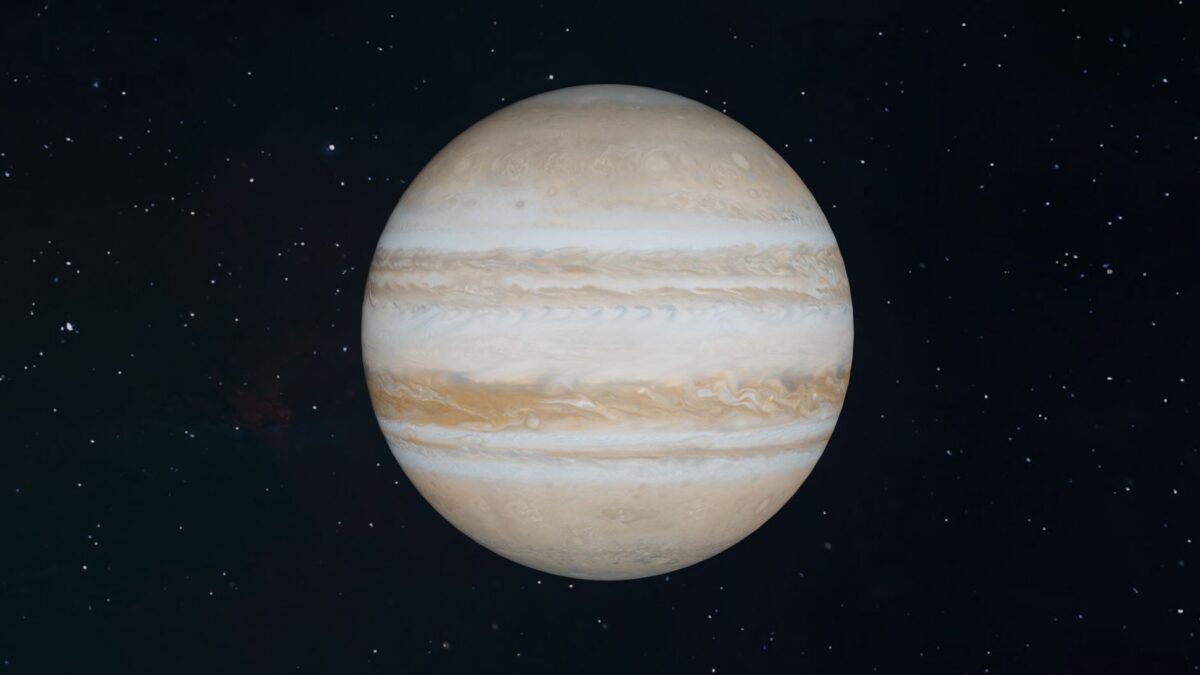
The sodium cloud around Jupiter’s moon Europa stayed remarkably constant across eight years of observations with the Keck Observatory, even when the neighboring moon Io grew more volcanically active, according to a study in JGR: Space Physics. The team concludes that the sodium most likely comes from Europa itself, probably from its subsurface ocean, as reported by Sky & Telescope.
Europa’s ocean lies under kilometers of ice and is potentially larger than Earth’s. Magnetic measurements had already suggested it is very salty. The new work adds evidence that salt from that ocean reaches the moon’s thin atmosphere.
How the team tracked the sodium
Researchers have known since the 1990s that sodium is present around Europa. What they could not tell was whether it was native or delivered from Io, the most volcanically active body in the solar system, whose eruptions send gases including sodium across the Jovian system. Carl Schmidt of Boston University and Queen’s University Belfast, a coauthor, said the older idea was that Io was effectively “painting” Europa with sodium.
Schmidt and colleagues examined eight years of Keck Observatory data and added archival observations. Sodium is a convenient tracer because it glows brightly in sunlight and can be studied from the ground with a high-resolution spectrograph, an instrument that splits light into fine wavelengths. By following the sodium, researchers can infer how the whole atmosphere behaves and, indirectly, something about the ocean’s chemistry.
The measurements were hard. Europa’s icy surface is highly reflective, which makes it difficult to separate sodium emission from reflected sunlight. Most observations were therefore limited to about 6,000 kilometers (4,000 miles) above the surface. First author Emma Lovett, a graduate student at Boston University, said the team expected variation as Europa moves around Jupiter and through its magnetosphere, but “all of it stays the same.”
From ocean to atmosphere
The salt probably does not travel straight from ocean to sky. The ice shell averages tens of kilometers thick, so there is no direct path. The sources describe a likely route: pockets of briny water eventually reach the surface and deposit salts on the ice. Jupiter’s plasma-rich environment then knocks those particles loose in a process called sputtering.
Schmidt said he was surprised by how uneventful the atmosphere looked. Unlike the thin atmospheres of Mercury or Earth’s Moon, which turned out to be dynamic, Europa’s appears uniform and symmetric in every direction.
How sure is this?
The study is published in a journal, and Schmidt said researchers can now state the ocean origin “with confidence.” Outside scientists are more measured about what it means. Planetary scientist Paul Byrne of Washington University in St. Louis called it “a robust result” but said it generally does not advance understanding of Europa’s habitability.
A major question is open. The sodium could come from the ice shell, which is essentially frozen ocean water, or more directly from the liquid ocean below. “We have no idea,” Byrne said. The sources do not give the number of observations beyond the eight-year span.
Europa is one of the few places beyond Earth that has liquid water, organic chemistry and an energy source, in this case geological activity powered by Jupiter’s tidal pull.
What comes next
The team plans new observations with the Hubble Space Telescope to look for magnesium, which is likely also among the salts dissolved in Europa’s ocean. Schmidt described the work as “prep work” for NASA’s Europa Clipper and ESA’s Jupiter Icy Moons Explorer (JUICE), two spacecraft due at Europa and the Jovian system within the next decade. Researchers hope it will help mission teams choose the right wavelengths and locations to observe.
Source: Sky & Telescope
Site editor: Nikita Sheikin